
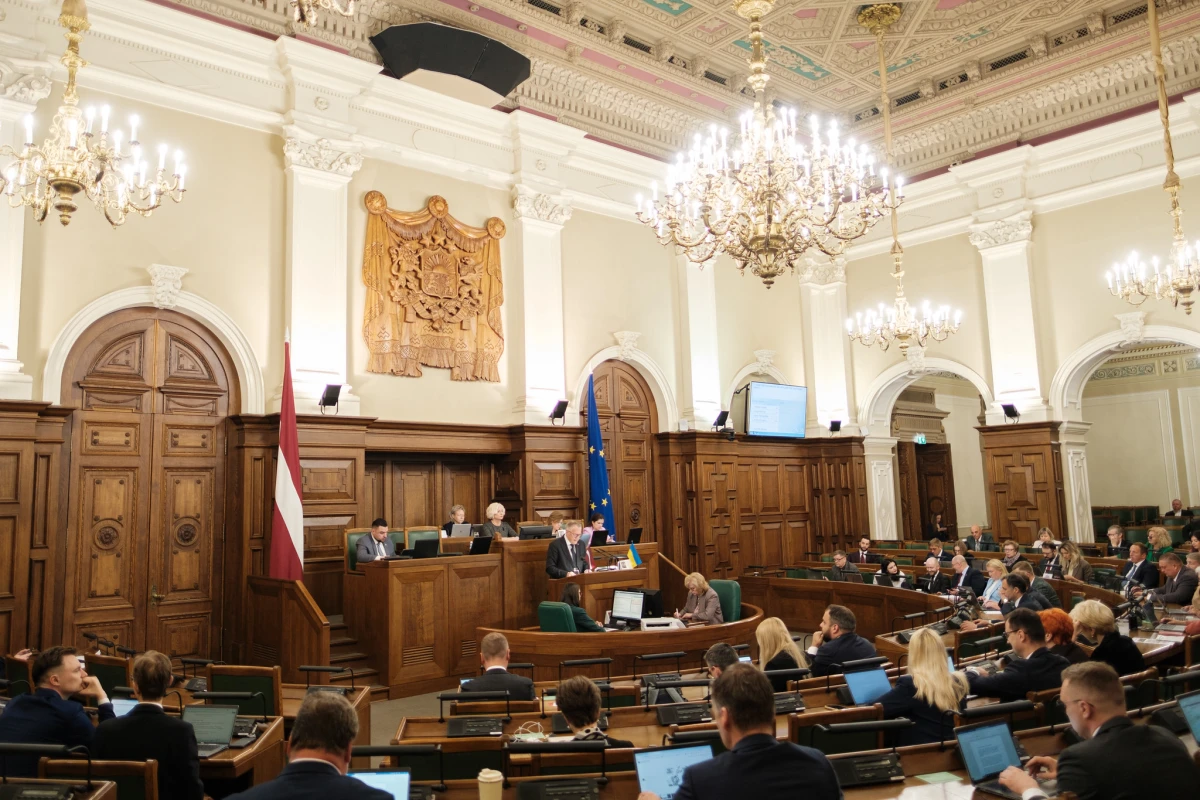
Yesterday, debates took place in the Saeima about the current situation in the country's economy and prospects for the future.
Economy and Drones
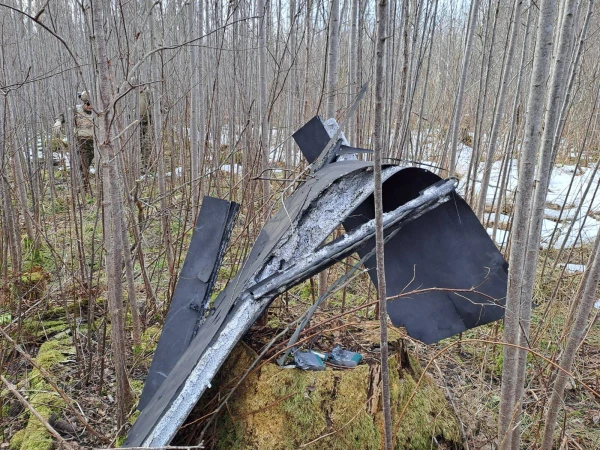
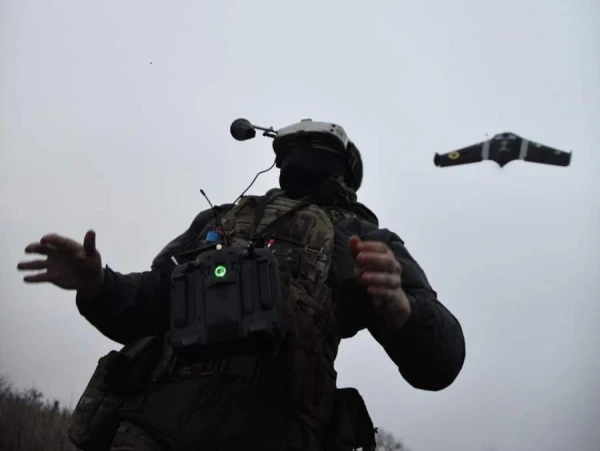
By a cruel twist of fate, the debates began just a few hours after combat drones flew into Latgale, and it was clear to the deputies that if such incidents become more frequent, as it seems they will, it will greatly affect the country's economy! After all, more funds will have to be spent on defense, on mitigating the consequences of drone incursions (if, God forbid, there are specific destructions and fires), and on supporting Latgale, from which the already few entrepreneurs and investors may leave.
However, even without drones, the Latvian economy faces enough challenges and problems, as acknowledged by the Minister of Finance Arvils Ašeradens (“New Unity”) when opening yesterday's debates.
Notably, the report was based on forecasts from January-February, and by March, due to the war in the Persian Gulf, everything in the world changed, and instead of the expected rapid economic growth, today we would be happy with any progress at all...
It is still growing...
At the same time, the Minister of Finance tried to be optimistic: he spoke a lot about the historic decision to increase defense funding to 5% of GDP (though at the expense of European Union loans, and the remaining budgetary funds still need to be found), about how entrepreneurs have successfully adapted to the changing geopolitical situation, and that the economy will continue to grow...
According to the Ministry of Finance's forecasts, GDP could grow by 2.6% this year, but... the crisis in the Persian Gulf intervened, and if it does not end in the next couple of months, we can forget about relatively rapid economic growth.
Moreover, the Minister of Finance openly stated that Latvia needs "modernization of the public sector," which in simple terms means: more compact government administration and reduction of administrative expenses.
Where to find money for airBaltic?
The Minister of Finance warned parliamentarians that this year they would have to address the issue of finding capital for airBaltic! In translation, this means that the government will need to find money in the coming months for the national airline to continue its operations.
At the same time, Ašeradens noted that investing funds in airBaltic does not meet fiscal discipline requirements. We would add that Brussels prohibits the use of budget funds to subsidize businesses.
The Minister reminded that the state also lacks funds for Rail Baltica, so construction will have to rely only on the funds allocated by Brussels.
In turn, the Minister of Economics Viktor Valainis continued to urge the implementation of ambitious plans. He reminded that last year total investments in the economy reached 4.3 billion euros, while economists had predicted investments of... 600 million!
In the Minister's opinion, the strategic goal proclaimed by the Ministry of Economics — to double the economy by 2035 — is quite achievable. And in 10 years, it is quite realistic to attract 175 billion euros into the economy — that is how much is needed, according to calculations, for our country to reach the average level of the EU and continue to develop.
How will we defend ourselves?
Interestingly, Viktor Valainis did not avoid the topic of drone incursions in his speech, calling on the government, that is, himself. "I just returned from Ukraine, received all the information about how this country is defending itself against drones. These systems do not cost fantastic amounts of money; we can afford them. Everything has already been worked out in this country, and we do not need to reinvent the wheel — just take and use this experience, as the countries of the Persian Gulf have already done," said the Minister of Economics.
The opposition, of course, was not so optimistic. Deputy Aiva Viksna (United List) pointed out the Minister of Finance's admission that many political priorities have already been accepted, although there is currently no money for them.
"This all resembles a situation where banquet participants are drinking, eating, and dancing. But when the bill comes, they say that the next participants of the banquet should pay... This is how the new government will have to pay for the banquet that the current government arranged!" said A. Viksna.
Soon we will have to cut expenses by a billion!
Yes, many opposition deputies in their speeches seemed to be looking ahead, imagining what awaits the new government and what piles it will have to clear. This reaction is understandable, as elections are in just 5 months...
By the way, according to the Minister of Finance, in the 2027 budget, the "fiscal space" will amount to 80 million — that is, only that much money will be available for all additional state needs. To put it mildly, not much...
However, it is never so bad that it cannot get worse! In 2030, the fiscal space will amount to... minus 883 million! This means that the issue will not be how to divide conditionally additional money, but how to... cut expenses by almost a billion!
Don’t touch the second pension...
It is clear that the Minister of Finance is very afraid of the ongoing discussion, and now even the collection of signatures for a referendum (!) on granting residents the right to withdraw their savings from the second pension level. Ašeradens could not avoid this issue even during the economic debates.
"Let me touch a little on the use of the second pension level. A political process has begun. I understand it. Yes, it has already been done in Lithuania and Estonia. In conversations with the finance ministers of Estonia and Lithuania, they do not consider this process a good one. All that has happened is that these funds have gone more to daily consumption and less to investments.
But what has it resulted in? In both countries, inflation has risen, and there has simply been an increase in the prices of goods and services. And I believe that this could be the case where Latvia can differ from both neighbors. And we could act completely differently. And believe me, they would appreciate it as a smart move," said A. Ašeradens.
In summary
If we summarize the lengthy discussion, the conclusions are as follows.
First — the economy of Latvia, albeit with difficulty, is alive and even showing growth, which is already significant in the current uncertain geopolitical conditions.
Second — if it is possible to reduce bureaucracy, strengthen security, and create a favorable business environment, investors will definitely come to us.
Third — it is time, to put it mildly, to slow down on living on credit, as by 2030 the level of public debt will reach 53% of GDP!



Leave a comment