
In the event of war, the task of the armed forces of Belarus would likely be to deter and weaken the troops of a potential adversary until the main forces of Russia are deployed, states the annual threat assessment and activity report for 2025 of the Military Intelligence and Security Service (SVRB), writes LETA.
The organization and training of the armed forces of Belarus are primarily aimed at ensuring the defense of their own country. The Belarusian armed forces themselves are not considered a potential military threat to the security of Latvia and NATO; however, within the framework of the Regional Grouping of Troops and the Unified Regional Air Defense System, they are closely linked to the armed forces of Russia and serve the geopolitical and military-strategic interests of Moscow, notes the Military Intelligence Service of Latvia (SVRB).
The number of armed forces in Belarus in 2025 remained at the same level — about 50,000 servicemen, of which 20,000 are conscripts and 30,000 are professional military personnel, including officers.
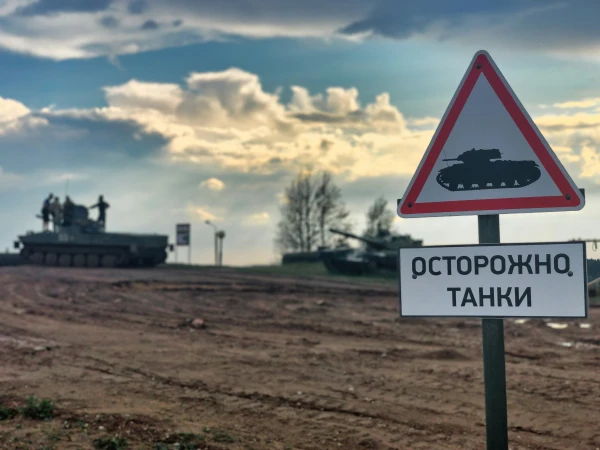
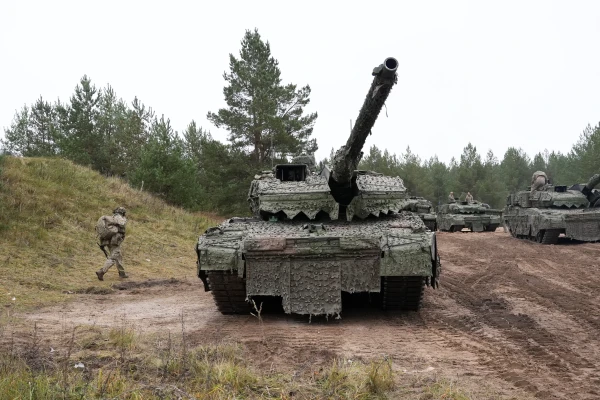
Belarus has a significant amount of Soviet-made armored vehicles and artillery; however, most of the equipment is in storage and is likely in poor technical condition, according to Latvian intelligence. The share of new and modernized equipment is relatively small, which does not allow for sufficient and quality rearmament of the ground forces.
The Special Operations Forces of Belarus (SSO), which consist of three brigades, are relatively better equipped, staffed, and trained, reports SVRB.
Belarus is unlikely to experience a shortage of pilots; however, problems arise from the aging fleet and a lack of aircraft.
SVRB reminds that until 2022, combat interaction among all branches of the armed forces of Russia and Belarus was regularly practiced and tested. Although full-scale joint exercises have not been conducted recently, the Belarusian armed forces are likely capable of participating in operations of the Regional Grouping of Troops, according to the intelligence service. In the event of war, their task would likely be to deter and weaken the enemy until the main forces of Russia are deployed.
In recent years, new elements borrowed from the experience of Russia's war against Ukraine have been introduced into the training of the Belarusian armed forces. Improvements pertain to both individual training of servicemen and the tactics of maneuver and fire units, reports SVRB. Increasing importance is being placed on the use of various unmanned systems and protection against drone attacks.
Given the economic situation and financial capabilities of Belarus, further growth in the potential of its armed forces will depend on the political will of the Kremlin and the readiness to supply modern weapons, predicts the intelligence service. So far, this has occurred sporadically and in relatively small volumes.
At the end of last year, Belarusian President Alexander Lukashenko announced the deployment of the Russian medium-range ballistic missile system "Oreshnik" on the territory of Belarus, which is likely part of Moscow's strategic communication towards the West, rather than a real contribution to the development of Belarus's military potential, notes the Latvian military intelligence.
SVRB is a state security institution under the Ministry of Defense that conducts military counterintelligence, intelligence, and other tasks defined by the law on state security agencies and other regulatory acts. Since 2002, the head of the service has been Indulis Kreikis.






Leave a comment