
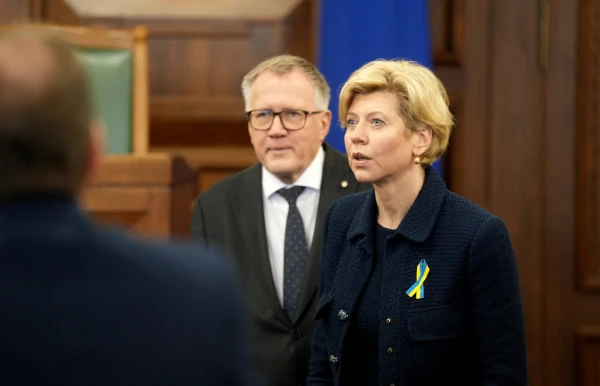
Latvia is preparing to live under a temporary budget in 2027.
This year has been marked by severe financial austerity – money has been generously allocated only for military needs. Next year, budgeting will be radically revised again, and precautions will be taken against possible surprises from the newly elected XV Saeima.
A Complete Revision is Coming
"The Cabinet of Ministers sets annual goals for reducing state budget expenditures and performance indicators for expenditures," begins the material distributed by the Ministry of Finance in the Saeima. The Parliamentary Budget and Finance (Tax) Commission studied the "improvement of the budget" prepared by the ministry of Arvils Ašeradens.
The Law on Budget and Financial Management stipulates that every four years "the expenditures of each budget institution are fully reviewed at least once every four years." Now, as can be seen, that time has come. The expected schedule is as follows: at the end of March, the Ministry of Economics will provide the Ministry of Finance with a Progress Report for 2026 on the Fiscal Structural Plan for 2025-28; then, by April 20, all ministries will submit reports on fiscal risk to the Ministry of Finance; by September 18, municipalities will send their reports on the implementation of the framework budget for 2026-28; by October 5, ministries will provide the Ministry of Finance with drafts of the main and special budgets; by November 10, the government will review the Declaration of Fiscal Risks and approve the volume of fiscal support, as well as forecasts of macroeconomic indicators, revenues, and the balance of the general government budget.
The visibility of democracy in financial matters is intended to be demonstrated by the Budget and Tax Sub-Council of the National Tripartite Cooperation Council. In it, the Ministry of Finance consults with the Latvian Chamber of Commerce and Industry and the Latvian Association of Local Governments.
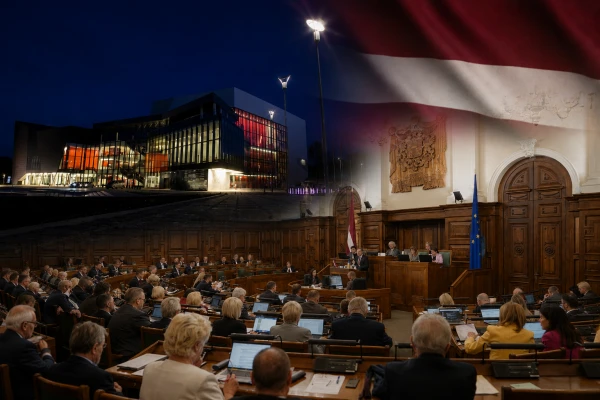
However, since there are parliamentary elections in the country this year, "if trust is not expressed in the new Cabinet of Ministers by mid-November (~19.11.2026), a temporary budget for 2027 will be prepared."
Departmental Accounting Will Be Consolidated and Then Replaced by Robots
The establishment of budget indicators in Latvia should resemble a kind of price tag for services: "Services provided to residents and institutions of state administration." The state guarantees the following: "A results-oriented budget. Strengthening the accountability of ministries for achieving goals. Efficiency of public services and cost-effectiveness. Transparency."
Each of the 14 ministries is proposed to implement specific budget programs. The Ministry of Foreign Affairs has the least – 1, "Planning and Implementing Latvia's Foreign Policy." The Ministry of Defense has 2; 9 other ministries have 3 each; and 3 ministries have 4 each.
Against this backdrop, the Ministry of Finance criticizes its colleagues from other departments, which, together with ministries, number about 160. All have their own IT systems, with 500 personnel specialists, 950 accountants, and 350 finance specialists. Departmental practices in Latvia do not have a unified data system for decision-making, and all institutions have different budgeting practices.
Therefore, in the short term, a single service center will be created for all ministries and departments, unified IT solutions for accounting and budget management will be developed, processes will be standardized, and data analytics will be developed.
In the longer term, a "high level of electrification and robotization" is planned. It is expected to introduce "a reduced number of employees to perform administrative functions." Thus, "quality data and analytics will be ensured for making strategic decisions in the state."
The Reform Will Affect 2000 People
The Ministry of Finance refers to this number of lower and middle-level officials as a "broad circle of stakeholders." It is expected that this will not create significant social tension, as 44% of accountants are already of pre-retirement age.
There has already been a wave of layoffs of individuals in this profession in the ministries – for example, the Ministry of Education and Science previously employed 132 accountants, but by January 1, 2026, only 71 remained; in the Ministry of Justice, there were 106, and now there are 64; in the Ministry of Culture, respectively, 93 and 38;
Meanwhile, some doubts still exist – the ministry of A. Ašeradens is concerned that "the infrastructure is not ready to accommodate everyone before the reform."
Everyone Should Contact the State Treasury
Now all institutions can obtain the required financial solutions on the e-services portal of the State Treasury, which provides:
- Detailed planning of departmental budgets;
- Preparation of medium-term budgets;
- Management of changes throughout the year;
- Creation of estimates;
- The process of approval at the departmental and state level;
- Comparison of budget execution with the plan.
In general, "a single digital platform for the budget life cycle – from initial planning to approval by the Ministry of Finance and control of execution."
At the same time, the Ministry of Smart Administration and Regional Development (VARAM) is doing its part, developing the VIRSIS data architecture, together with the State Chancellery, which oversees "political documents, major sectoral goals."
The Ministry of Finance sets the priority task for 2026 as follows:
"Sectoral ministries should analyze the expenditures of sectoral budgets, prepare proposals for revising the expenditures of their budget institutions – for optimizing expenditures while assessing public services and implementing structural reforms, and present them to the Ministry of Finance for summarization and for submission to the Cabinet of Ministers for consideration of possible changes in sector policy and redistribution of funding."
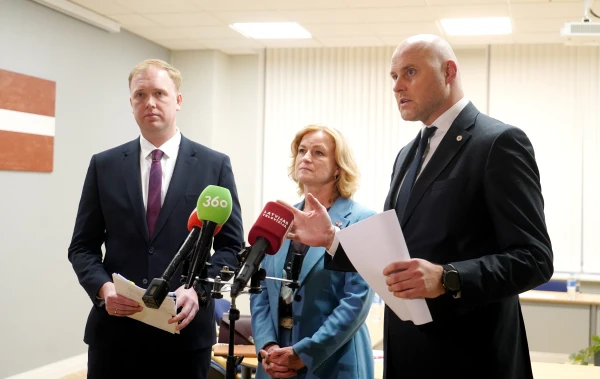
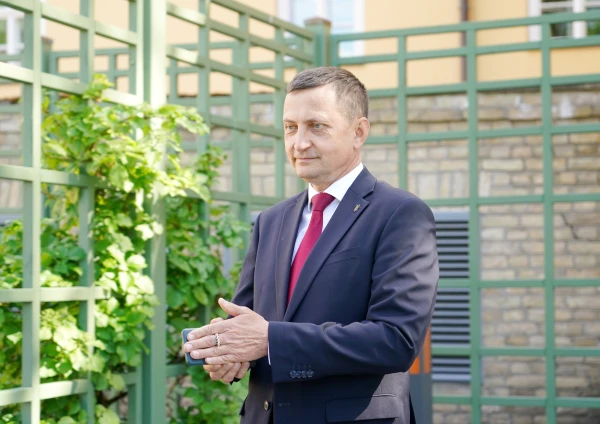
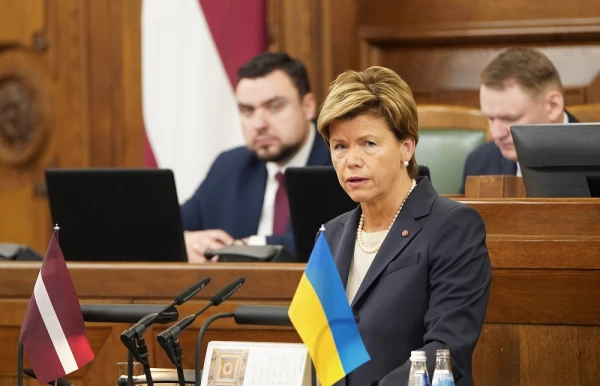
All of the above will be done under the continued control of the Ministry of Finance by Arvils Ašeradens from "New Unity," and his party mate at the head of the budget commission – Anda Čakša. Thus, for 2027, an "additional reduction in expenditures" of 89.4 million euros has already been planned; for 2028 – 83.3 million euros. The total savings in 2026-28 is expected to amount to a staggering 844.1 million euros. One of the most important points for officials is that starting in 2027, "performance bonuses" will be abolished, which will save 20,000,000 euros.










Leave a comment