The renowned economist calls for urgent and radical reforms.
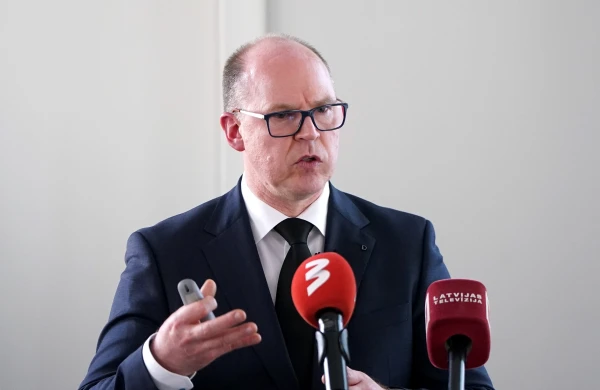
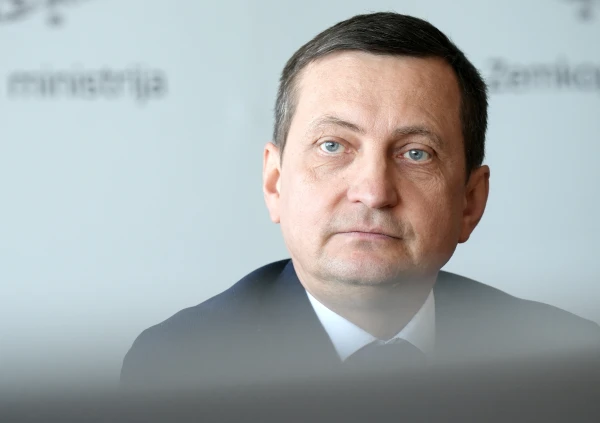
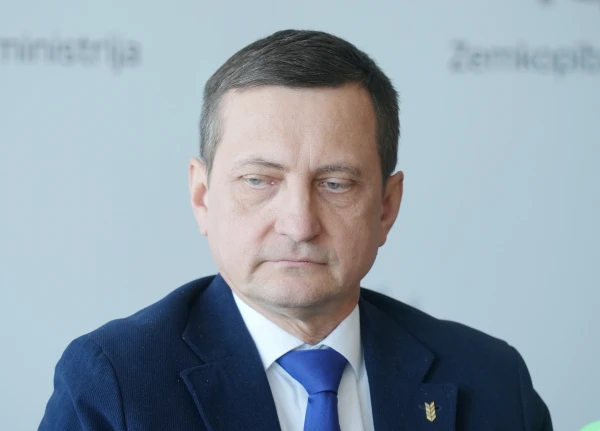
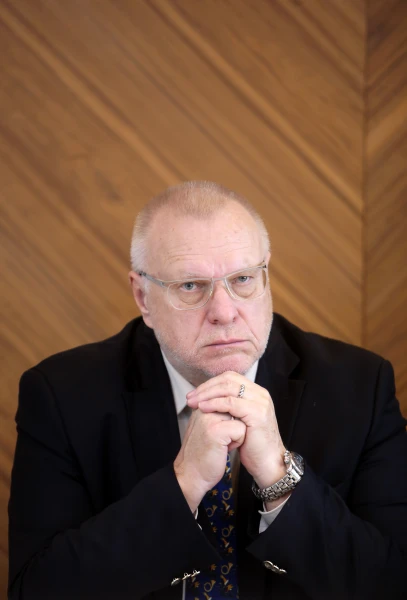
"Latvia's existential choice in 2026 has narrowed significantly - now only between stagnation and the 'chainsaw'. The political system, in the face of growing security threats, has reached a critical turning point. While the external threat at our eastern borders has reached its highest intensity since the restoration of independence and continues to grow, the internal 'engine' of the country – its governance apparatus and political culture – is operating with a dangerously low utility rate," stated economist and former finance minister Uldis Osis.
In his publication, he delivers a harsh diagnosis of the situation in the country - systemic paralysis and collective irresponsibility.
"For years, the political elite has allowed a dangerous deepening of the divide between the 'Riga bubble' and the regions (especially Latgale). Economic inequality and slow access to services have created fertile ground for hybrid warfare operations, where external and already 'distorted' internal propaganda sows a distorted worldview, unrealistic hopes, and illusions among the population.
Currently, the most radical response to this stagnation, in my opinion, is the emergence of Alvis Hermanis's party 'We Change the Rules', which is inspired by other global 'systemic' movements.
For example, the experience of Argentina (the 'chainsaw' of President Milei) shows that radical cuts to ministries and bureaucracy can free up significant resources. In Latvia's case, this would mean 'drying up the excess water' of the state apparatus in favor of direct investments in security and development," believes U. Osis. He outlines two scenarios for the further development of events in Latvia, depending on the outcomes of the elections to the 15th Saeima.
"The first - slow erosion: with the continuation of the current political-administrative course, Latvia could become a militarily more powerful, but socially and administratively devastated 'buffer zone'. Growing emigration and distrust in the state would then make us vulnerable even without direct military conflict.
The second - the victory of radical forces (such as Hermanis's party and others) introduces a systemic reboot. This could lead in the future to the creation of a 'Northern Israel' model (let's call it that) – a highly efficient, bold, and technologically advanced country – or to the collapse of state governance if reforms are not managed professionally.
What needs to be done to maintain balance? The 15th Saeima should introduce a 'Law on Security and Efficiency' or something similar that combines stability with efficiency.
Firstly. This is individual responsibility. There should be established property and criminal liability at the legislative level for specific officials for the failure or intentional obstruction of strategic state security projects (border, crisis reserves, energy).
Secondly. Structural 'chainsaw'. It is necessary to reduce the number of ministries, state and state-supported ('non-state') bodies and centralize their functions by eliminating unnecessary bureaucratic and equivalent layers. The saved funds should be immediately directed towards creating civil defense (shelters, autonomous energy systems) or other critical priorities of a strictly limited number.
Thirdly. Strengthening sovereignty. Priority in public procurement should be given to domestic, especially military industries and technologies. Dependence on external supply chains at critical moments is a threat to national security. This, of course, does not refer to equipment that is only available from certain technologically advanced countries in the world, which cannot be replaced with the potential of the domestic industry.
Fourthly. Border revitalization - Latgale has already been granted the status of a special economic zone with tax and other benefits and incentives. But behind the formal regulatory norms should stand a philosophy - Latgale must become a long-term anchor for state security and the economy. However, this law is not enough. Experience has already shown that it will not work if there are no changes in the areas of education, healthcare, culture, and others, which form the basis of a stable and self-assured society.
In conclusion. Latvia's security depends not only on Article 5 of NATO but on our own ability to make decisions swiftly and responsibly. We no longer have time for 'slow evolution'. Political courage is needed to introduce efficiency as the highest standard of security, otherwise, we risk losing the country not on the battlefield, but in endless discussions of soft-hearted politicians and the labyrinths of bureaucracy," writes U. Osis.