
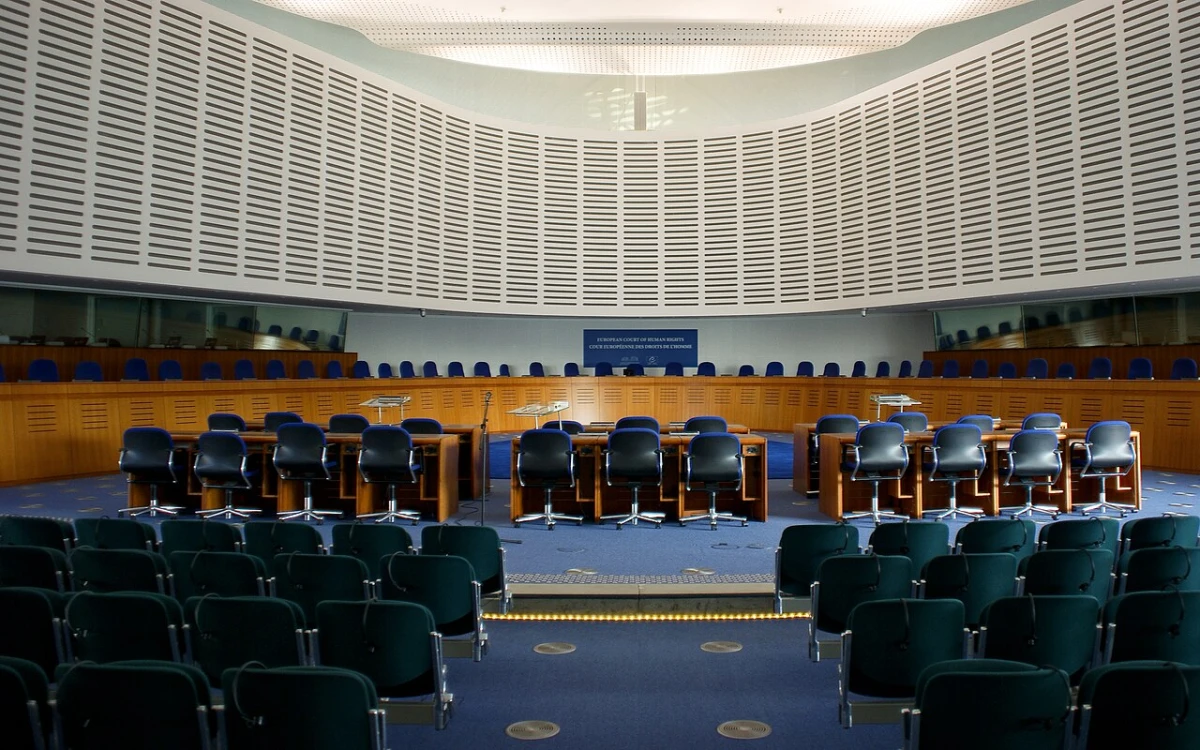
On June 27, 1997, Latvia became a full-fledged subject of the European Court of Human Rights (ECHR) – and our lawyers began to examine complex cases, while the people of the republic turned to their native country with their claims.
Over the past 29 years, the republic has had to answer for 468 cases, but in recent years there has been a trend towards a decrease – if in 2021 Latvia was sued 21 times by its residents, in 2025 it was only 5 times. This may indicate an improvement in the level of law enforcement in the country itself – after all, only those court cases that have passed through all instances in their homeland reach Strasbourg. It seems that according to the current political situation, Latvia appears as a bastion of civilized Western values, on the border of the European Union – and therefore it should not be judged too harshly...
Detainees, Journalists, and Russia
The breakdown of complaints against Latvia is quite interesting: out of the 5 new cases received last year by the European Court of Human Rights (ECHR), four involve the justification for the application and extension of detention (the right to personal freedom and security).
Also in 2025, a case was received in which a major enterprise distributing news online is contesting the decision of the National Council for Electronic Media (NCEM) to impose an administrative fine for not adhering to "sufficient accuracy and neutrality."
It is possible that this concerns a news portal that referred to the forced eviction of Russian citizens from Latvia as deportation. And it faced a fine from the NCEM. Deportation is when the Soviet authorities expelled Latvians. But when the Latvian authorities evict Russians – that cannot be said. Local courts supported such a decision. We will see what the ECHR will say.
Moreover, the European Court last year introduced a "temporary protective measure," demanding not to deport a specific individual to Russia. However, "based on the information provided by Latvia," the judiciary from Strasbourg revoked its own decision.
In the Role of a Third Party
Relations with the Russian Federation at the ECHR are currently quite strange. On September 16, 2022, Moscow announced that it no longer considers itself a party to the European Convention on Human Rights, following its exclusion from the Council of Europe, thus ending its 26-year participation in this system. Accordingly, neither Strasbourg accepts claims from Russians anymore – nor does Russia comply with ECHR decisions.
However, alongside this, last year Latvia facilitated the examination of the case "Ukraine v. Russia," in which the plaintiff complained about violations of the right to life. Our state provided information about "violations related to possible killings or attempts to kill both on the territory of Russia and other states, including Latvia, of individuals whom the Russian government considers its political opponents."
In 2025, Latvia also participated as a third party in the joint claim "Ukraine and the Netherlands v. Russia," which examined the disaster of the Malaysian Boeing-777 flight MH-17 over Donbas. The ruling stated that "Russia, having begun a large-scale aggression against Ukraine, was responsible for a number of mass human rights violations..."
"No Place in a Democratic Society"
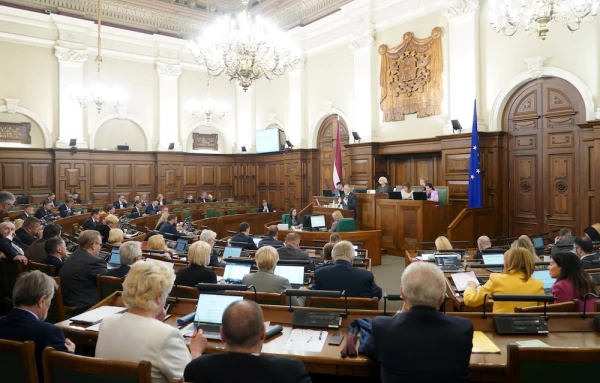
A number of cases that the ECHR examined last year, thanks to the open name of the plaintiff, sound quite striking, for example, "Medved against Latvia." In other cases, the data is encrypted – like "X.M.M. and others against Latvia." The latter is mentioned in the report for the Saeima by the representative of Latvia at the ECHR, concerning "possible violations" at the Latvian-Belarusian border. But these arose, the official Riga is confident, as a result of the "instrumentalization of migrants." That is, the neighboring state is using incoming people...
A particularly telling case is that of the registered society "Rodina" and A. Borisova against our state. In 2025, a complaint regarding claims about events... in 2014 was reviewed. It was then, near the Ukrainian embassy, that marches and pickets were announced. But they were not allowed to take place.
The European Court of Human Rights in its ruling "did not find a violation of rights guaranteed by the European Convention on Human Rights in Article 10 (freedom of expression) and Article 11 (freedom of assembly and association). Strasbourg supported Latvia's position, emphasizing that considerations of state security justify restrictions on holding assemblies and marches that contradict the values of a democratic state, devalue the status of the Latvian language as the sole state language, and emphasize the superiority of Russia and Russians, as well as support illegitimate separatist formations in eastern Ukraine."
The ECHR "noted the sensitive geopolitical situation of Latvia and the historical context, and agreed that events aimed at spreading such aggressive rhetoric have no place in a democratic society."
Guarding the Feelings of Sexual Minorities
In the case of "Khanov against Latvia," the ECHR ruled against our state – establishing a violation of rights guaranteed by Article 3 (prohibition of torture, inhuman and degrading treatment) and Article 8 (right to respect for private and family life).
Professor Denis Khanov won 10,000 euros in court. In 2021, he and his partner were subjected to a homophobic attack at the Kengarags market, when the offender kicked him in the back. And when the victim took refuge in a flower kiosk, he was shown the offender's genitals. The attacker was found guilty of committing an administrative offense and fined 70 euros.
Meanwhile, the High Court concluded that such a process does not guarantee that state officials properly investigate and effectively prevent attacks motivated by homophobia.
"In this case, the court noted that the attacker admitted during the first interrogation that his aggressive reaction was provoked by the public display of affection between two men. The court found that this case is similar to other instances where individuals were subjected to physical attacks or verbal abuse aimed at deterring them from publicly expressing their affiliation with the lesbian, gay, bisexual, transgender, and intersex (LGBTI) community and supporting this community.
The court noted that in this case, the applicant managed to avoid the worst, but even in the absence of physical suffering, discriminatory treatment can be considered degrading if it reaches a level of insult that violates human dignity. The court also emphasized that discriminatory remarks and insults are in any case an aggravating circumstance. The court noted that in this case, the verbal and physical attack was clearly aimed at intimidating the applicant and his partner so that they would not publicly express their feelings."
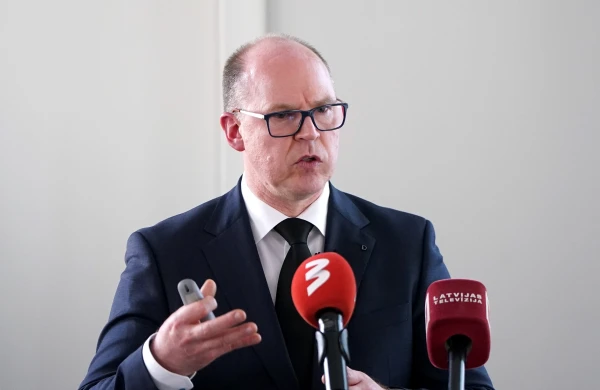
The representative of Latvia at the ECHR, Elina Luize Vitola, speaking at the Saeima Human Rights and Public Affairs Commission, also noted that our country continues to receive a significant number of complaints regarding disputes about children and parents. "We have had two unfavorable rulings; these are sensitive cases."










Leave a comment