

I always have earplugs in my bedroom. Healthy night rest for your author has been inseparable from silicone earplugs for several years. Eksporta Street, thanks to the Riga City Council, has already rid itself of heavy trucks, from which the nearly century-old functionalist house shuddered – only the tram remains, stopping at the "Washington Square" stop. Well, and the dancing with concerts!
Cheerful Andrejsala
In fact, Riga has plenty of noisy areas. The acoustic pollution map shows bright red arteries of the main streets and railways within the city; and the loudest remains the port area, located just from our old Andrejsala harbor – and further, to Kundzinšala, Voleri, Milgravis, Mangalsala, Daugavgriva.
The quietest places in our capital are: Kleisti, Bullyupe, Vecaki, Vecdaugava.
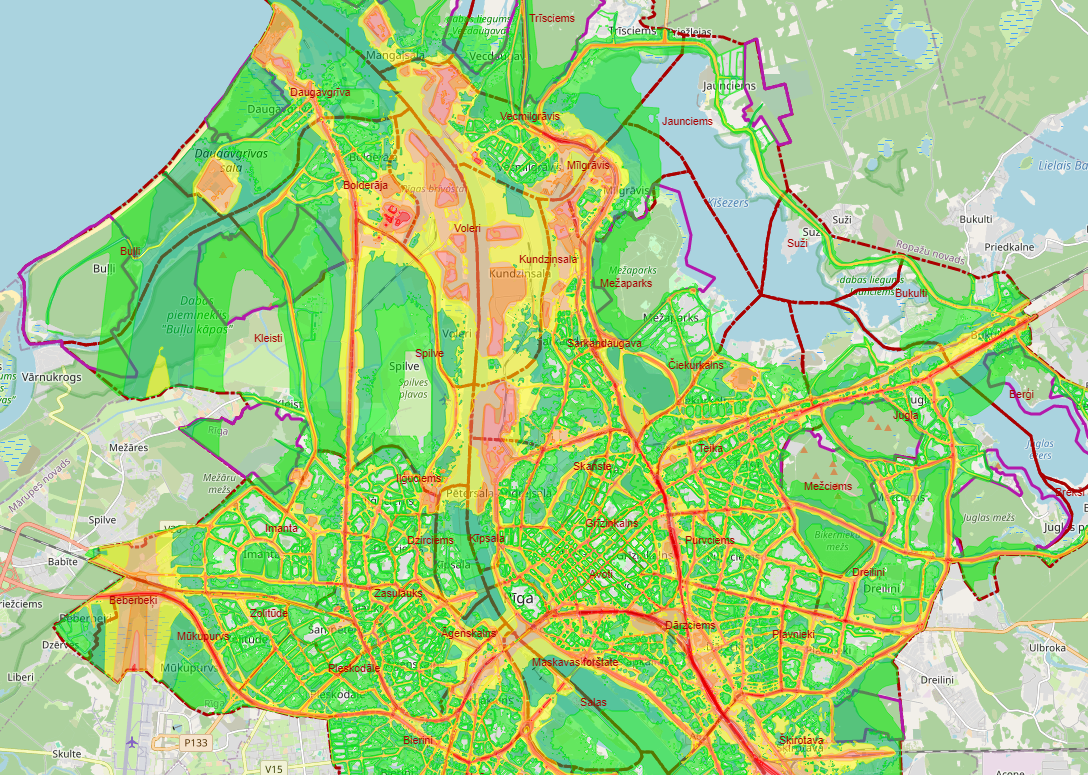
A specific feature of the former port – near Auseklī, Hanzas, Katrīnas Dambis streets – is the nearby entertainment venues that have created, as is currently fashionable to say, a cluster. A weekend in a nightclub is accompanied by booming techno, and one can enjoy performances by local and visiting stars without buying tickets. Everything can be heard anyway. By the way, former Russians, now relocants, perform very actively. You can’t earn all the money, but striving for it is necessary!
In fact, even in the entrance, there is a warning notice – where to call if the noise level is exceeded. I must admit, I even called once. However, not about the concert, but about its target audience. Because, before heading to a session, where the prices for alcohol are sky-high, people warm up right in our yard. The barrier here is only for cars, not for the partying public.
It doesn’t have a significant impact on the ecology – the early city sanitation workers, the homeless, thoroughly pick up the contents of the trash bins. However, it’s not pleasant when in summer, with the window open, you hear screams, swearing, threats, and conversations about prohibited substances. Well, I called the “municipals,” and the response was: “We will come if we can.”
The Dead Silence Didn’t Last Long
The Saeima Commission on Human Rights and Public Affairs, led by Leila Rasima (“Progressives”), has taken on the noisy, in every sense, issue. Ombudsman Bureau representative Raimonds Koniševskis noted that the issue is not new.
– I have been working for over 12 years, and the problem was already there when I arrived. Solutions were sought at least at some point. However, people complain. They try to measure in various ways. But there were no solutions.
According to R. Koniševskis, the topic became especially relevant after COVID. Here I completely agree with the tiesibsargs – there has never been such total, I would even say, dead silence – as during the peak of the coronavirus, around 11 PM, when the curfew was already in effect. Only very rarely would an emergency service vehicle pass by, and again, you could hear the ticking of the second hand of the alarm clock in the kitchen.
But as soon as the nation woke up from the pandemic, and as they say, the war canceled COVID – then, as R. Koniševskis stated, “everything started working, and people felt it very, very much.”
The Drummers of Capitalism
It should be noted that the acoustic pollution map of the capital corresponds only to constant sources of noise. However, no one is guaranteed that a large-scale construction site won’t arise within walking distance from your home with all its delights – jackhammers, angle grinders, and even “quiet” dump trucks and tower cranes in this context. Moreover, this concert of developers can last from 7 AM for 12 hours, and even on weekends. Drummers of capitalism!
– Unfortunately, this has not been accepted by the state so far, – acknowledged the professional human rights defender. “The right to rest,” by the way, is not directly mentioned in our Satversme. Unlike the Constitution of the Russian Federation (p. 5, art. 37).
Nevertheless, currently, the case of violations in the field of acoustic safety is in the Satversme Court. The Ombudsman believes that citizens' rights to private life, environmental integrity, and a healthy environment have been violated. The date of the hearings has not yet been set.
– There is a possibility to punish entertainment venues administratively. But they also have many opportunities – to pay a fine and work again, or to close the business and start again!
Club Torture of the Population
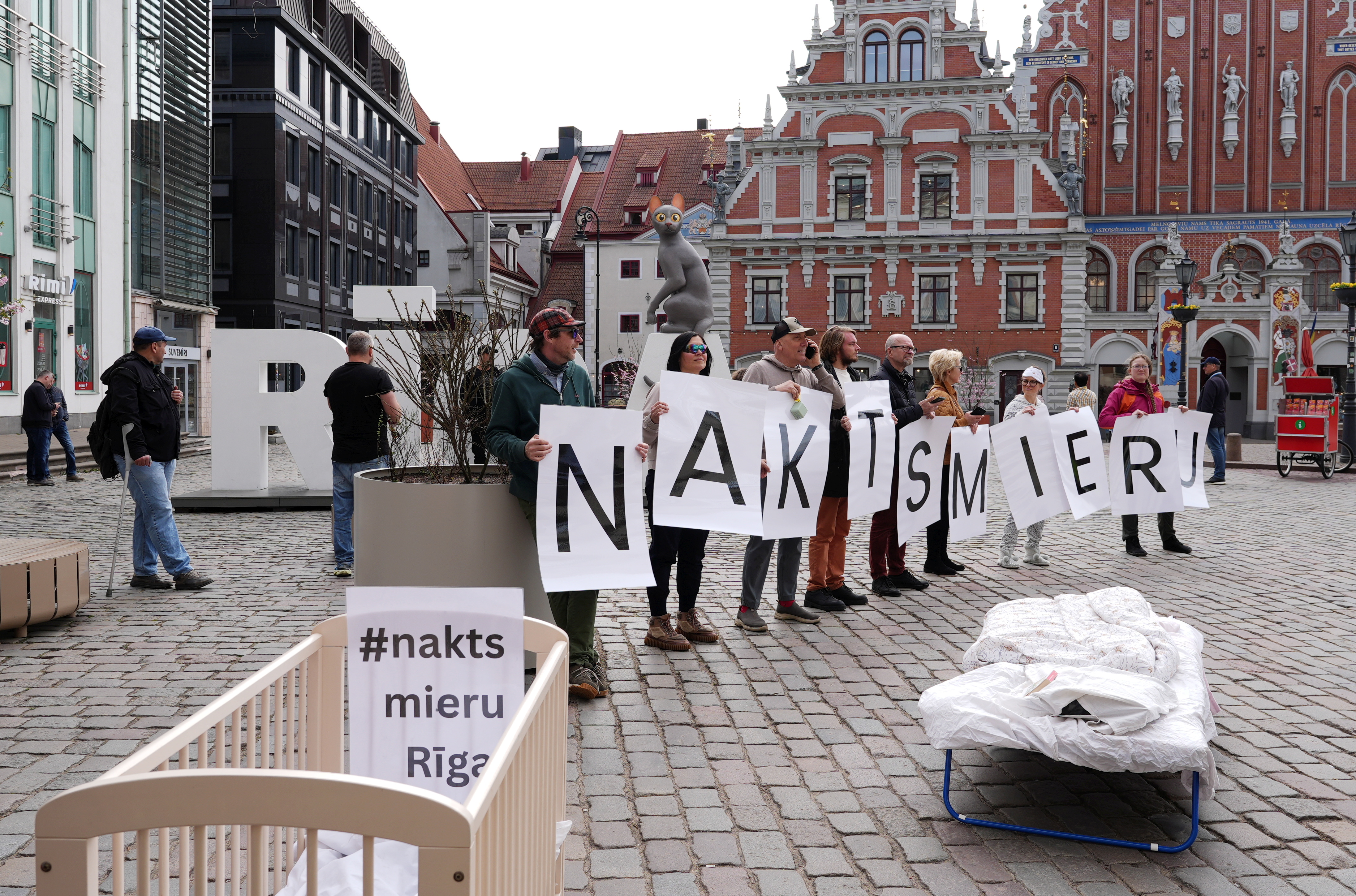
The head of the Naktsmieru society, Maija Krastiņa, has been fighting for the peace of the population for 4 years, and her “hands tremble” from what she calls “torture of the population.”
LETA.
– It’s not about the background of the environment, but about nightclubs and terraces. The regulation on nighttime peace from 11 PM to 7 AM exists only in our collective memory; there is no such law. Moreover, during the existence of free Latvia, we have not managed to define what a nightclub is?
Ms. Krastiņa stated that a huge number of Riga residents and residents of other large cities have turned to the organization. “We sit in working groups, going in circles. If the law doesn’t work, it needs to be changed!” – the public figure exclaimed.
– We can wait another 10 years, but the data shows what our life expectancy is. I urge everyone to move forward, with minimal steps. To accept what entertainment noise is. We have contacted the European Commission, the European Parliament. They responded: this is Latvia’s business to regulate something.
The Riga City Council, according to M. Krastiņa, responds in the sense that it has “tied hands,” so she strongly requests the parliament to grant municipalities the right to decide on their own initiative.
The Naktsmieru society draws attention to the fact that people who have nowhere to go live near nightclubs – pensioners, pregnant women, families with children. Increased noise levels, according to experts, lead to the risk of strokes.
How to Lower the Volume
On April 17, 2025, the Ministry of Economics began a public discussion of draft documents to limit noise.
Andreis Aronovs, head of the Riga Municipal Police, participated in the working groups. One of the options was – “for merchants to limit themselves by measuring noise.” However, the final document turned out to be completely different.
– If this noise is produced as a result of actions permitted by regulatory acts, then the person is not held accountable, – stated the chief municipal cop. Even if the nightclub is “next door” to housing – then, according to current legislation, “there are no solutions on how to limit them.”
The law on administrative offenses even provides for the detention of a person, but, as A. Aronovs admitted – there is also the possibility of appeal: “It will take 3-4 months, and in the meantime, the dancing will continue.”
It should be added that it is precisely within such time frames that the clubbing season fits, which lasts in our Riga, mainly from May to September.
To the credit of Mr. Aronovs, he also recalled the Administrative Procedure Law, according to which law enforcement officers can legitimately use force to eliminate the causes of security threats. “In our case – noise.”







Leave a comment