
Looking at the agendas of the recent plenary sessions of the Saeima and the lengthy parliamentary discussions, one might get the impression that all current internal problems of Latvia have been resolved.
Honduras is a Major Concern
First, let us remind you that the Saeima held its annual foreign policy debates, which lasted over 10 hours. Deputies, with a persistence worthy of better application, literally rushed to the podium to express their views on the situation in international politics. In general, "we are very concerned about Honduras."
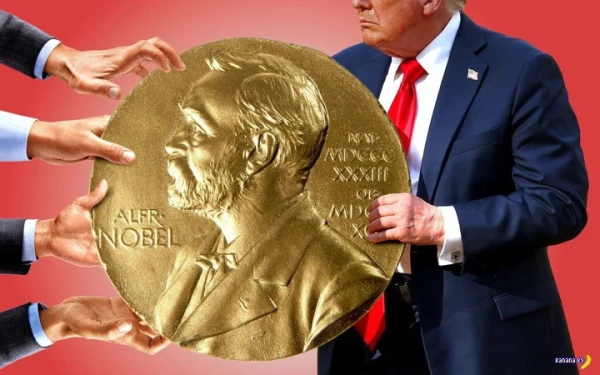
But that was not the end of it — on the contrary, it was just the beginning! On the same day that the aforementioned foreign policy debates took place, there was a highly unpleasant document for the ruling parties, especially for the two ruling parties — "New Unity" and "Progressives" — on the agenda from the opposition. This was a draft statement from the Saeima in support of awarding the U.S. President the Nobel Peace Prize.
A Dangerous Statement
It might seem, on the one hand, what’s so terrible about it? After all, we are talking about an award for not some "secondary" head of state, but the President of the United States — our main strategic ally. Why not adopt such a statement?
Especially considering that the Nobel Committee would be neither hot nor cold about this statement from the Latvian parliament, and the head of the White House, if he learns about it, would certainly appreciate it. And Latvia, as one former politician noted on air, would then be remembered positively, and if needed, he would come to our aid...
But, on the other hand, voting for a project from the opposition party means:
- first, playing by the rules of this hated opposition,
- second, there is a risk of offending the countries of Northern Europe, which expressed their dissatisfaction with Trump's actions regarding Greenland. And now they expect solidarity from other EU countries and neighboring Baltic states — first and foremost.
The most unpleasant thing for Silin and Co. was that the "Green Farmers," just like in the case of the Istanbul Convention bill, were ready to vote for this project. From the perspective of the "Green Farmers," this would be a very logical step — since the Speaker of the Saeima from the "Green Farmers," Daiga Mierina, signed a similar letter in support of the "Nobel Prize" for Trump, then the other party members could very well vote for this project.
Plans A, B, and C
The leaders of "New Unity" could not allow another split in the coalition — and again on an international issue. They began to think about, as the head of the parliamentary faction of "New Unity" Edmunds Jurēvics put it, plans A, B, and C.
According to rumors from the corridors of power, Plan A provided that the draft statement would not be discussed at either the next or the following plenary session, but to avoid offending the White House administration, the deputies would vote to send this project to the Saeima's Foreign Affairs Committee, where the document would be... buried. That is, it simply would not be included in the agenda of the committee meeting.
This has been a well-practiced tactic for years: if a certain initiative from the opposition is politically inconvenient to reject outright, the document is sent to the committee and... placed in a long drawer. Such was the fate, for example, of the amendment from the same party "Latvia First" to the Constitution stating that the state protects the family consisting of a man and a woman, as well as children.
Plan B provided that the document would be sent to the committee, but it would be significantly revised and then submitted to the Saeima in a completely different form.
Finally, Plan C involved the coalition developing an alternative statement, which, on the one hand, expresses support for Trump's and the U.S.'s peacekeeping efforts, but on the other hand — does not mention the Nobel Prize at all.
They Chose the Third Option
In the end, the coalition agreed on Plan C. It is said that the "Green Farmers" were not very pleased with the content of the document, in which the "Nobel Prize" did not appear at all. But they eventually "surrendered," realizing that they had no choice, as this alternative option was agreed to be signed by deputies from part of the right opposition — that is, from the United List and the National Alliance.
Voting against this option and supporting the first statement would mean... effectively going into opposition. And allowing the "Progressives" to unite with the National Alliance and the United List.
After the majority of the Saeima approved option C, the first statement from the opposition about Trump and the prize that was simply necessary for him, in the opinion of the ruling parties, could already be politically sunk. And that is exactly what happened last Thursday: first, the deputies adopted the alternative statement by a majority vote, and a couple of hours later, they rejected the first statement, which had initiated all this fuss.
What Will the Ambassador Say?
Does this mean that the ruling parties "outsmarted" everyone? From the perspective of internal politics, this was quite a clever move. Voters of the mentioned parties, who, to put it mildly, do not have much sympathy for Trump, would surely appreciate this move or, at least, it would not cause irritation.
However, it is unlikely that the new U.S. ambassador, who will arrive in Riga in a couple of weeks, will be pleased with such a twist. After all, it is obvious to everyone that the alternative statement was created solely to ensure that a statement in support of the "Nobel Prize" for Trump was not adopted.
It seems that the proximity of elections compels the Saeima majority to even "offend" Washington — this seems to the deputies a lesser evil than angering their electorate, which is upset with the head of the White House for, in their view, flirting with Putin and Russia.
Killing Time While Waiting for Heating Bills
All this is very interesting, but many voters may have another, more reasonable question: do the deputies of the Saeima really have no other problems?
As psychotherapist and public figure Neil Konstantinov said, more than 4,500 people die from cancer without receiving effective medications, while deputies spend days discussing global issues far removed from Latvia.
One can also add that Latvians are anxiously waiting for the January heating bills, while deputies are discussing how to please or displease Trump, all while trying to save face.
Was It Allowed?
The Speaker of the Lithuanian Seimas, Juozas Olekas, refused to sign a letter initiated by Knesset Speaker Amir Ohana and U.S. House Speaker Mike Johnson, in which they call for awarding the Nobel Peace Prize to U.S. President Donald Trump.
Lithuania is not the only country that did not sign the letter. In particular, the Speaker of the Polish Sejm, Włodzimierz Czarzasty, refused to support Trump's nomination for the Nobel Peace Prize. In his opinion, the American leader does not deserve this award.




Leave a comment