

Only a year remains until the deadline by which Latvia intended to provide its population – both in cities and in villages – with ubiquitous data transmission at speeds of at least 100 Mb/s.
Along the Via Baltica and Rail Baltica routes, zones for reliable 5G mobile communication were supposed to be created; rural areas were to be serviced with internet according to the "last mile" standard – that is, to bring fiber optic cables to the most remote homesteads.
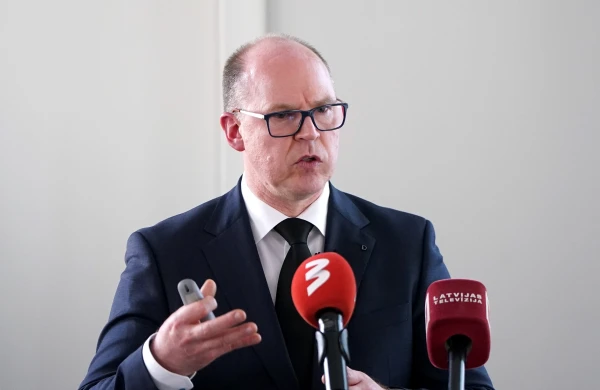
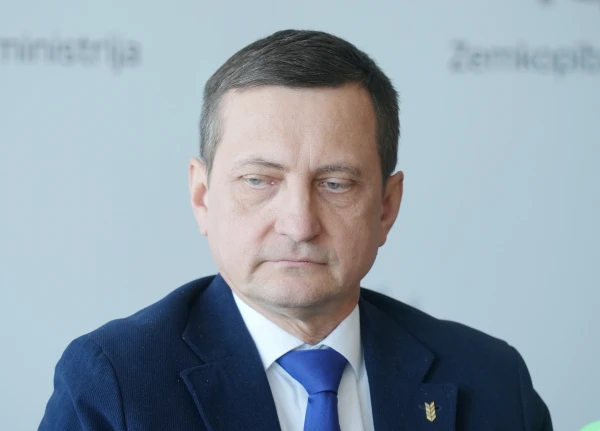
What resulted was reported to the government by Minister of Communications Aitis Švinklis ("Progressives").
Intended for the Best
The communication sector development plan until 2027 was developed by order No. 826 of the Cabinet of Ministers led by Arturs Krišjānis Kariņš ("New Unity") on November 11, 2021. Apparently, thanks to the Day of Lāčplēsis, it took on such a combative character.
To say the least – at that time, there was a period of inexpensive, COVID-related, "helicopter" money – and the destruction of economic ties that had been established for decades and even centuries throughout Eastern Europe could not have crossed anyone's mind. Currently, A. Švinklis' ministry states that the overwhelming majority of tasks have been completed "partially," and one has not been completed at all – the establishment of a technical competence center for the internet.
Lagging Behind European Standards
In Latvia, high-speed (from 100 Mb/s) internet is available to 71.4% of the population, which is below the average in the European Union (78.9%). When considering fixed internet in rural areas, it is only available in 13.1% of the territory, which is four times less than the European standard.
A separate link in the chain is corporate internet – in Latvia, high-speed connectivity can be boasted by 47.91% of enterprises, according to the Organisation for Economic Co-operation and Development, which is 17% lower than the EU average.
Interestingly, Latvia's level here turned out to be higher than that of OECD member states that significantly surpass us in economic development: the United Kingdom, Iceland, and Israel.
"In Latvia," the ministry points out, "there is slow progress regarding the provision of fiber optic cable (FTTP) deployment for households, as well as very high-capacity networks (with data transmission speeds of at least 100 Mb/s), therefore the set goal for Latvia regarding very high-capacity networks may not be achieved."
Internet in the Service of the Army
But it is clear that we need the internet – not just for playing games.
"Latvia's advantage is the mobile data network… In addition, strengthening the external border of Latvia and the EU is of great importance, where it is planned to create surveillance cameras, sensors, and other modern technologies, for the operation of which sustainable network coverage is particularly important."
The main problematic areas since the development of the government plan still remain "low population density and significant underinvestment." However, to be fair, the European Commission recognizes this circumstance as a systemic problem of the Old World. Although residents of Spain and Portugal easily access their home chat without mobile networks – in their climate, this happens naturally, as it has for millennia. And here, with outside temperatures of -20 degrees, all hope rests on high technology.
Latvian 5G
The fifth generation of communication is used by more than 71% of households in the republic, while in the EU overall, it exceeds 94%. The only country below us in this indicator is Romania.









Leave a comment