
This is stated in an extensive interview with former Minister of Defense and Foreign Affairs Artis Pabriks in Diena.
“I was very surprised,” he assesses the recent statements of the Prime Minister of Latvia and the President of Estonia regarding the start of direct negotiations with Russia. “This makes me think that there is a certain foreign policy confusion in both European politics and Latvian politics, and that’s normal, there’s no need to be ironic, because, as we know, the previous system has ended, and thus each state is searching for what our position is in this geopolitical situation...”
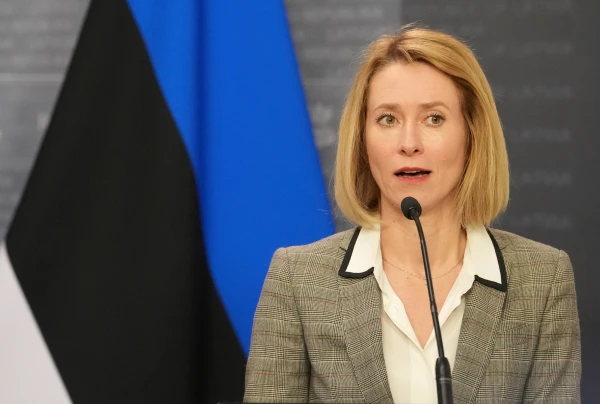
A. Pabriks reminds that the European Union already has the position of High Representative for Foreign Affairs and Security Policy, which belongs to a Baltic state. “So why are we looking for a special representative for negotiations with Russia? Is it because Kallas is incompetent? Is it because we want to promote some new person there? No, I think the only reason... is that, unfortunately, Kaja Kallas is isolated not only from Moscow, which is understandable, as it is a totalitarian state, and one can understand that they may not like one or another, but that’s not their business. Similarly, they can say that they will never talk to Baiba Braže, Silina, or Rinkēvičs, that’s their choice, but it doesn’t mean that we will change the government as we did in 1940 when we were presented with an ultimatum. The real problem is that our ally — Washington — still does not respect Kaja Kallas..."
Mr. Pabriks urges the Old World to speak in unison: “When Europe showed a united position on the issue of Greenland, we immediately achieved some changes in Washington’s policy. We cannot justify our presence at the negotiating table only by the fact that we also need to have a snack at that table. What is Europe’s plan? Vitkoff, Kushner, and Trump have a plan.”
“The Western world knows how to speak beautifully,” the Latvian figure further ironizes. “But this support for Ukraine is not what it should be, and we also see pressure from the U.S. on Ukraine, but we do not see the same pressure on Russia. Thus, it is clear that this is not pleasing at all and is shortsighted, because with such a policy we can achieve some kind of peace, but that peace will continue to fracture our unity — both transatlantic and internal unity in Europe.”







Leave a comment