

On the public initiative portal Manabalss.lv, a petition has been launched calling for the abolition of the Orphan Court (guardianship authorities) and for a comprehensive reform of the child rights protection system based on international standards and the principle of the best interests of the child, reports LETA.
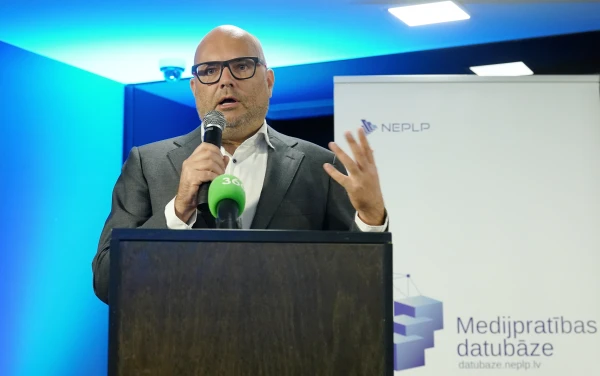
The author of the initiative is Aitis Blumfelds. He notes that in Latvia, the protection of children's rights and interests is currently entrusted to municipal guardianship authorities; however, in practice, they often do not provide a unified, professional, and child-centered approach.
In his opinion, the system is fragmented, prone to procedural and systemic errors, as well as external influence.
The initiative states that over the past year, the Ombudsman’s Bureau received more than 80 complaints regarding the quality of guardianship authorities' work. The criticism concerns both the justification of decisions and the transparency of procedures and the professional competence of institutions. Ombudsman Karina Palkova has also publicly acknowledged that the guardianship system is outdated and requires serious reform — reorganization or abolition, emphasizes Blumfelds.
He claims that decisions are often made without proper professional consideration of the child's opinion, without in-depth psychological assessment, and without unified quality standards. This creates serious and long-term consequences for the child's emotional development and trust in the state.
According to Blumfelds, the current guardianship system has lost public trust and often causes more harm than good — both to children and families as a whole. He calls for the abandonment of guardianship authorities as municipal institutions, proposing a reasonable transitional period to ensure the continuity of children's rights protection.
He suggests creating a unified state service for the protection of children's rights, similar to models in other EU countries, where child psychologists and psychotherapists, specialized social workers, child rights experts, and certified mediators in family law would work.
Blumfelds also proposes establishing clear disciplinary and material responsibility for illegal actions, unjustified decisions, or inaction in the processes of protecting children's rights. He calls for institutional transparency, including oversight of decision quality, unified professional standards, publicly accessible anonymized statistics, and reports on the system's performance.
Furthermore, it is necessary to implement a mandatory, professional, and scientifically-based methodology for ascertaining the child's opinion, appropriate to their age and level of development.
In Blumfelds' opinion, decisions on important issues concerning the rights and interests of children should be transferred to the jurisdiction of the courts, with the possibility of creating a specialized family court to handle cases in the family and child rights sphere.
As previously reported, in an interview with the LETA agency, Ombudsman Karina Palkova stated that the institution of guardianship authorities in Latvia is outdated and ideally, decisions about children's futures should be made within the judicial system.
In turn, the Association of Guardianship Workers of Latvia (LBDA) disagrees with the Ombudsman's critical assessment of the quality of this system's work and the call to transfer decision-making to the courts. According to the association, the overall quality of guardianship authorities' decisions is high.
LBDA explains that guardianship authorities in Latvia operate within a clear regulatory framework — these are authorized institutions, the functions of which are defined in the Law on Guardianship Authorities, the Civil Code, and the Law on the Protection of Children's Rights — regarding guardianship, custody, adoption, and other important aspects.
Institutional independence and legal authority are necessary for decision-making, which cannot be replaced by social services, as they have different tasks — providing social support to families and performing social work.
"Therefore, the discussion of redistributing functions requires careful analysis, rather than simplified rhetoric of 'abolition'," emphasizes the association.
As previously reported by LETA, the Saeima in December adopted amendments to the Law on Guardianship Authorities, postponing the entry into force of the provisions on the certification system for guardianship officials and the qualification commission for one year — until January 1, 2027.
The annotation to the amendments states that the introduction of a certification system was planned for 2026; however, during the preparation process, it became clear that such an approach does not correspond to the specifics of the work of guardianship authorities. The Ministry of Welfare has already prepared amendments proposing to replace certification with a unified assessment system, but the Saeima will not have time to consider them within the established timeframe.
If the deadline is not extended, requirements will come into force whose implementation is not planned, leading to legal uncertainty and potentially jeopardizing the legality of the guardianship authorities' work, as explained in the annotation.
The adopted changes provide for an extension of the transitional period by one year to ensure the continuous and legal operation of guardianship authorities until the amendments regarding the assessment system are adopted.















Leave a comment