
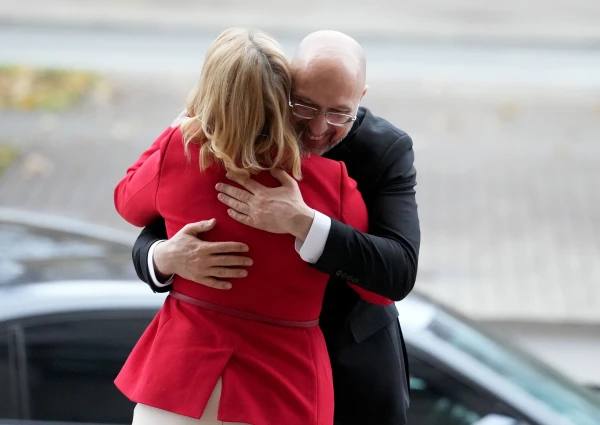
Regular questions about how long the coalition will last have united it, Prime Minister Evika Siliņa told reporters on Wednesday.
Commenting on the situation when two deputies from the coalition party Union of Greens and Farmers (UGF) decided to support the motion for the resignation of the Minister of Transport Atis Švinkas ('Progressives'), Siliņa emphasized that the main focus remains on the result and that the minister continues to fulfill his duties.
The Prime Minister acknowledged that the UGF has "somewhat" violated the established coalition practice of not supporting proposals put forward by the opposition. According to her, the party likely calculated the vote ratios in the Saeima in advance to ensure that the minister would not be dismissed.
Siliņa stated that questions about the stability of the coalition have been raised since its formation; however, the current composition is preparing its third budget. The Prime Minister emphasized that under the current distribution of mandates, it is not easy to provide politicians with greater freedom of action, but this encourages all partners to focus on key goals as they understand how important it is to work together.
Siliņa pointed out that each party in the coalition has its own electorate. "New Unity" belongs to the European People's Party group, so it is important for this party to act in accordance with Europe's strategic goals.
The Prime Minister emphasized that the positions of coalition partners do not always align, but it is crucial for everyone to ensure the adoption of the budget for the next year so that municipalities can pay salaries and plan their work. As long as there are unifying elements within the coalition, joint work is possible, she added.
Differences of opinion are a normal phenomenon in a democratic country, and this should be welcomed, as an authoritarian regime where everyone speaks with one voice would be worse, Siliņa continued. She noted that the election campaign has started early, complicating the work. The Prime Minister promised to do everything possible to ensure that society thinks less about the coalition and focuses more on the government's ability to ensure transparency in expenditures and achieve specific goals.
For his part, the President of Latvia, Edgars Rinkēvičs, stated that the coalition should first focus on adopting the state budget for the next year and only then address internal issues. He noted that society expects a capable government until election day and emphasized that there are many decisions that need to be made both operationally and strategically.
Political parties can have fundamentally opposing positions, and each is responsible to its voters, the president added. At the same time, communication and the search for solutions must go through negotiations to develop specific decisions in areas such as the economy, defense, security, education, healthcare, and culture.






Leave a comment