
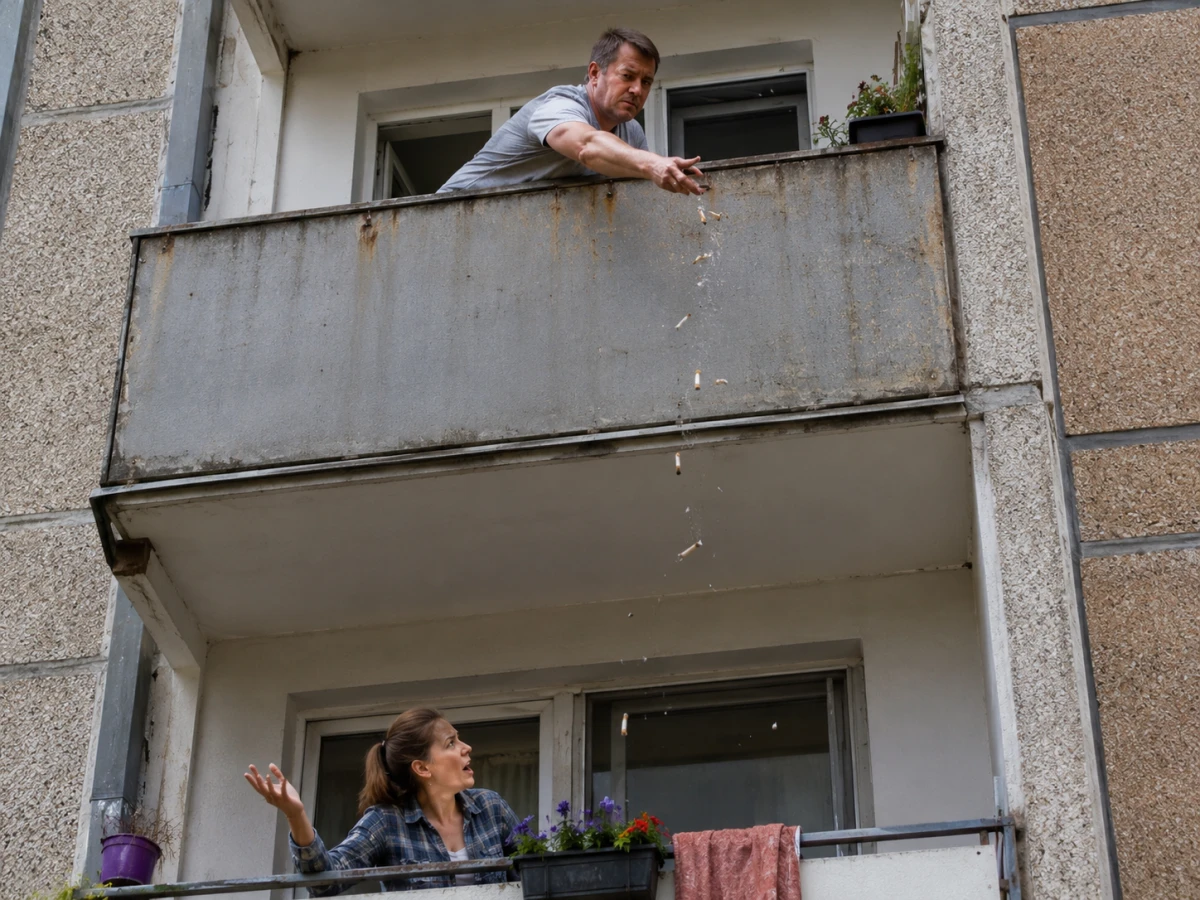
“Where can I turn if neighbors from the upper floor constantly throw cigarette butts and sunflower seed shells out of the window? And is shaking out dusty mats from the balcony considered a violation? If so, is there any punishment for this and on what basis of regulatory acts in Latvia?”
Sergey Makhnev, a representative of the Latvian Association of Lawyers, answers readers' questions on bb.lv:
– Yes, such behavior by neighbors in Latvia can be considered a violation. Throwing cigarette butts, trash, and shells, as well as polluting others' balconies can be classified as illegal disposal of waste in an unauthorized place, and in some cases, it may even pose a real fire hazard. Administrative liability may arise for this.
As for shaking out mats and carpets from the balcony, there is no direct prohibition in the regulatory acts; however, if dust, trash, and dirt fly onto neighboring balconies, parked cars, or into neighbors' windows, this may be considered a violation of public order rules, sanitary norms, or causing damage to neighbors.
In such cases, one can first address the person whose actions are causing discomfort to others. Explain what this discomfort entails and ask (first to ask, not to demand!) them to change their behavior.
Only when all means of “peaceful diplomacy” have been exhausted, and the violator continues to behave rudely, demonstratively violating generally accepted norms of cohabitation, can more radical measures be taken:
-
Contact the building manager: in many buildings, internal rules for using balconies and common property are adopted at a general meeting, and these rules are mandatory for all residents of the building without exception.
-
Contact the municipal police, especially if cigarette butts regularly fall onto your balcony and pose a fire hazard; moreover, there is a ban on smoking on the balcony if another resident of the building objects and there is a justified violation of their interests (for example, smoke enters their apartment).
The municipal police have the right to draw up administrative protocols.
- Contact the administrative commission of the municipality.
It is advisable to attach evidence of systematic violations to the application: establish (if possible) from which apartment the trash is flying, document violations with photos/videos, gather witness statements, etc. I can say from experience: collective complaints signed by neighbors are much more convincing, so they are more effective.
The regulatory documents on the basis of which the violator may be held administratively liable are:
-
Mandatory Rules of the specific municipality on maintaining cleanliness and waste management;
-
Public order rules;
-
Fire safety law norms;
-
Waste management law norms (Atkritumu apsaimniekošanas likums).
What the punishment will be depends on several factors:
-
The nature of the violation;
-
Whether it has been committed for the first time or repeatedly (or is being committed regularly);
-
What is specifically provided for the particular case in the Rules applicable in the specific municipality and in other regulatory acts.
Usually, for individuals who have committed a violation for the first time, a warning or a monetary fine is provided.
However, I remind you that the first step in solving the problem should be a conversation with the neighbor in a friendly manner and a request to change some of their habits. Perhaps this will resolve all issues, and there will be no need to contact anyone at all.








Leave a comment