Do you remember the air of our youth? Riga was a very fragrant city. You would step out into the cold, and immediately – the smell of smoke, from the boiler houses, which were then heated with coal. In the summer, especially until the mid-eighties, it smelled distinctly of garbage rot, which mixed with the exhaust from the diesel buses gave something resembling smog.
In addition, at that time, industrial enterprises were in full swing. When the breeze blew from the confectioneries "Laima" or "June 17," it was pleasant – but the stench from the leather factory "Kosmos" was not so great. And the poplars had not yet been cut down – my mother had allergies to all of that during every vacation...
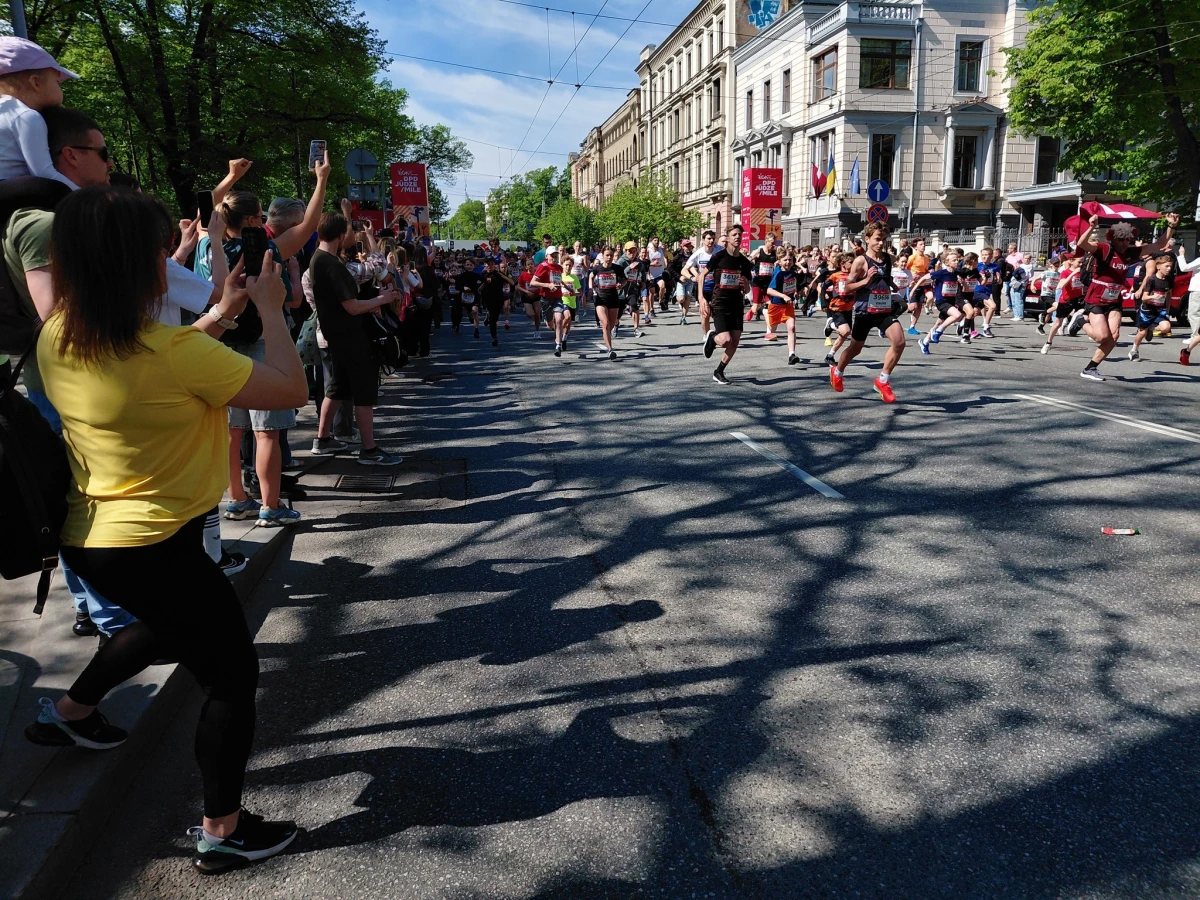
Now in the capital of Latvia, the air masses have become so clean that the city authorities are launching crowded marathons, in which participants seemingly certify the quality of the capital's atmosphere with their lungs.
Two hours of maximum pollution
The Riga Energy Agency found experimental confirmation of this: from September 2025 to March 2026, 117 high school students from the capital ran through the streets, parks, and forests, testing air samples with AtmoTube Pro sensors (they collected a total of 690,000 data points!), and also conducted a survey of 1,209 Riga residents and suburban inhabitants.
"The air quality is generally satisfactory by current standards," the scientists concluded, "however, there are short-term peaks of pollution in the measurements." Specifically – from 7:30 to 9 AM, and from 4 to 6 PM. That is, during rush hour when all of Riga gets on the road to go to work or return from it.
Similarly, the geographical distribution of pollution is uneven – it is mostly concentrated on the streets and intersections of the historic Center, where the relatively narrow road network with dense construction hinders ventilation.
The main sources of solid particles remain combustion processes. The largest share – 82% – consists of so-called PM2.5 – these are tiny solid and liquid micro-particles in the air, measuring from 0.001 to 2.5 micrometers (they are 30 times thinner than a human hair). Such particles are formed from car exhaust, factory emissions, forest fires, burning coal and sawdust, and even cigarette smoke.
What is your mobility profile?
Strangely enough, a city dweller, who should be more affluent, is actually much less likely to be a car owner than a resident of the suburbs of Riga. Specifically, 59% and 73%. In our city, the most common housing is a typical apartment building from the planned economy era – while in the suburbs, it is a private house.
Accordingly, family structures differ – Riga residents often have already raised their children (in 63% of households, there are none at all!), so there is no need to transport them to school. Surveys of residents from suburban towns revealed that they work in Riga (although they pay their main income tax in their municipality).
Thus, the "mobility profile" of surrounding settlements dictates a rather long commute to the capital – 57% spend between half an hour to an hour and a half traveling, and 20% even longer. Only 25% of suburban residents move on foot or by bicycle. In comparison – among actual Riga residents, pedestrians or users of two-wheeled transport, it's already 52%!
Personal experience
Your author currently moves, as he believes, functionally: if there is no particular rush and only a couple of places to go – our really decent public transport helps quite a bit.
When pressed for time, bad weather, or long and unusual routes – then we take the car. So, without fanaticism – purely calculated. In the trolleybus and tram, which seem capable of connecting any, even the most unimaginable points in Riga, it is sometimes so pleasant to immerse oneself in reading. Once I even realized that I was traveling from Vecmilgravis not on the 24th bus, but on the 29th – only when the display showed the stop "Langa" (referring to the river). We had long been going not towards the station, but around Kisezers...
However, during the COVID year, when all public facilities were closed, including my favorite swimming pool – I compensated for physical activity with walking, not using any transport at all. I ended up walking a minimum of 8 km and a maximum of 16 km a day. So, I do not suffer from the "high structural dependence on the car" that the study participants noted.
Why are there many young women in transport?
Why do 44% not use public transport? This impressive statistic was revealed by a social study as part of the "air" project. With such indicators, our municipal enterprise is doomed to cater to a subsidized clientele – and to be under constant financial pressure from about 20% fare evaders.
The thing is that people who have reached a somewhat acceptable standard of living are not satisfied with the logistics offered by Rīgas satiksme, the waiting times, and the conveniences during travel. "Car-oriented" remain the majority of young people, who now seem to be focused on the "green" agenda – 75% use public transport, bicycles, and walk. But in the future, more than half will choose cars – simply because they do not have the money yet.
"Who are all these people?"
In European cities with a million inhabitants, the situation is somewhat different: I recently had the chance to ride through spring Vienna on the metro and tram, and the public there is quite bourgeois. Car ownership has long ceased to be a status phenomenon in the Old World; moreover, the social profile of an advanced city dweller is characterized by their careful attitude towards nature.
On the other hand, a young Riga woman, who worked in Moscow for several years, upon returning to her native land, could not get used to the clientele of our public transport for a long time: "Who are all these people? Some bums and crazies!"
Unfortunately, marginal behavior is a quite common phenomenon in our transport – the most outstanding examples of social anthropology are the quirky Riga drunks. Fortunately, the dimensions of Riga's means of transport allow distancing from problematic characters, although if you are lucky enough to ride during that rush hour, sharp sensations are guaranteed...
What to do?
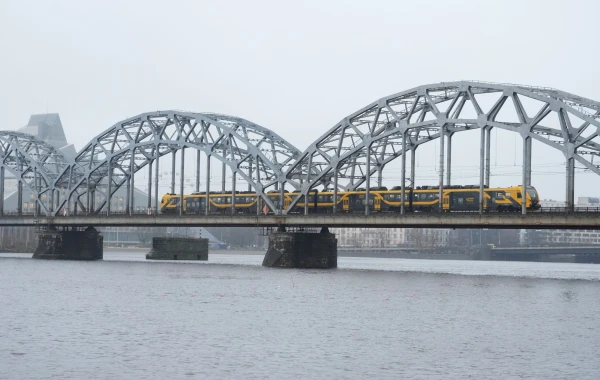
The conclusions of the air study: it can become even cleaner if the integration of Riga's public transport and suburban rail service is fully achieved. By arriving at stations transformed into "mobility points" and transferring to public transport – suburban residents will relieve the main highways leading to Riga. This will be ensured by a single ticket RS/ViVi.
Also still on the agenda is the construction of spacious free parking lots like Park & Ride, where cars can be left upon entering the capital. However, there are two fundamental obstacles:
-
Land allocation for such projects is very expensive even on the outskirts;
-
And cunning residents of nearby Riga houses will sneak into such parking lots for permanent storage of their cars.
Although, perhaps in the future, an artificial intelligence system for reading license plates will be introduced, analyzing the registration place of car owners.
And of course, the "hierarchy of micromobility" for our authorities means a creeping ban on car movement in the Center. Although this topic deserves another study.