
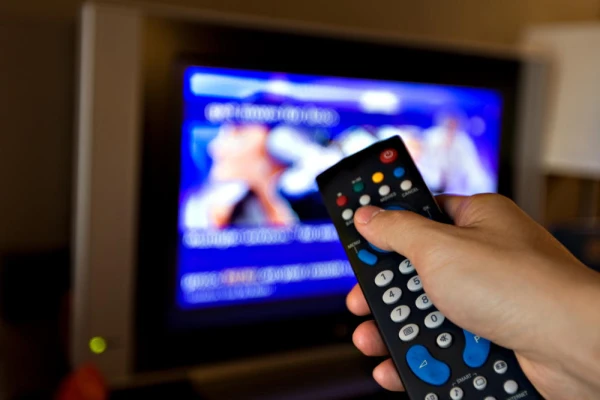
Official broadcasting will remain at least until 2030.
Due to geographical and social circumstances, there still exists a sufficiently large group of viewers in Latvia — up to 20% — who are willing to receive a non-alternative television signal, and the Cabinet of Ministers has readily accommodated them. "The availability of free terrestrial broadcasting is also important from the perspective of national security," states the document recently reviewed by the government at the request of Minister of Communications Aitis Švinkis ("Progressives").
The main technical issue is the availability of free radio frequencies — they are increasingly being occupied by pervasive mobile networks, especially with the expansion of ubiquitous 5G and even the upcoming sixth generation. However, according to European Union regulations, it is possible to maintain a zone up to 700 megahertz for "free television, based on the needs of the state."
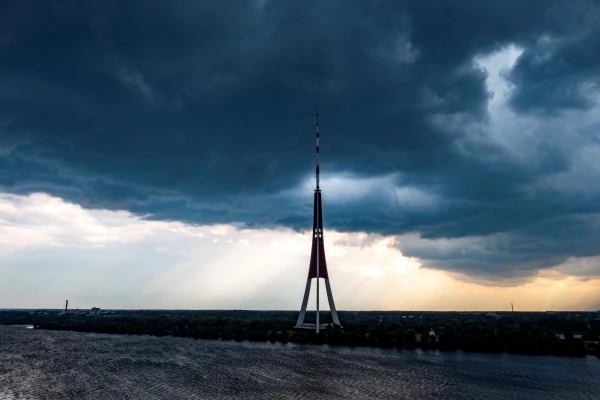
Today, the transition to the new DVB-T2 standard — second-generation digital video transmission with interactive features — is overdue in terrestrial broadcasting. In the context of Latvia, however, "significant investments in infrastructure must be considered, as well as the fact that televisions older than 10 years may not support this technology." Therefore, in the coming years, authorities will take into account that "there are low-income individuals who cannot afford to replace their television," and the Latvian State Radio and Television Centre will continue to broadcast in the familiar format.
Throughout this year, a Working Group has been active in Latvia, which included the National Council for Electronic Media, the Ministry of Culture, and various broadcasting organizations.
The winner of the competition for paid terrestrial broadcasting distribution was SIA Tet. Monthly expenses will amount to 288,177 EUR, and for this amount, it will be technically possible to provide the broadcast of 12 channels. "The risks of contract non-fulfillment are assessed as low," believes the Ministry of Communications. For consumers, this will cost 14 euros excluding VAT. However, judging by the documents presented, SIA Tet expressed concerns — will the rise in electricity prices lead to unforeseen expenses? For their part, the Ministry of Culture and Justice, as well as the Competition Council, approved the document without any amendments.
Thus, our compatriots who are still not "on speaking terms" with the internet will be able to continue to listen to the addresses of the country's top officials in connection with the New Year.





Leave a comment