
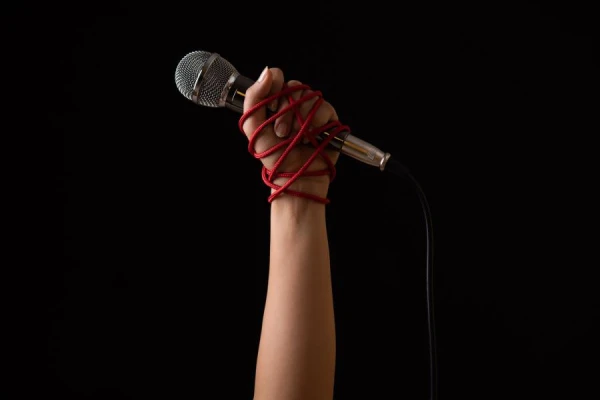
From April to June 2025, the National Council for Electronic Media (NCEM) conducted a second commissioned study on the level of media literacy among the residents of Latvia.
It analyzes media usage habits, information technology skills, the ability to obtain reliable information, the level of trust in the media and other information sources, as well as measures to improve media literacy in the country. The results of the study show that the overall level of media literacy in Latvian society can be characterized as mediocre: the majority of the population possesses basic skills that need improvement. On a scale from one to ten, the average score of participants was 5.7 points.
The number of public media content consumers is gradually decreasing, reaching its lowest level in the last six years by 2025. The audience of commercial media has also shrunk. A relatively high interest in public media was observed in 2022, when it increased amid the onset of Russia's war against Ukraine.
More than half of the respondents still believe that in democratic countries, the government can determine and control how news media reflect events. A comparison with the previous survey showed that this opinion is still widespread among a significant part of society. Overall, respondents believe that Latvian media accurately reflect the facts: information is provided uniformly, although the style of presentation and emphasis of individual sources or journalists may vary.
This year, the share of residents who consider it acceptable to limit freedom of speech in certain cases has slightly increased - such respondents accounted for 80%, which is 5% more than in 2024. At the same time, young people most often expressed the opinion on the inviolability of freedom of speech.




Leave a comment