A major reconstruction will cost one billion euros.
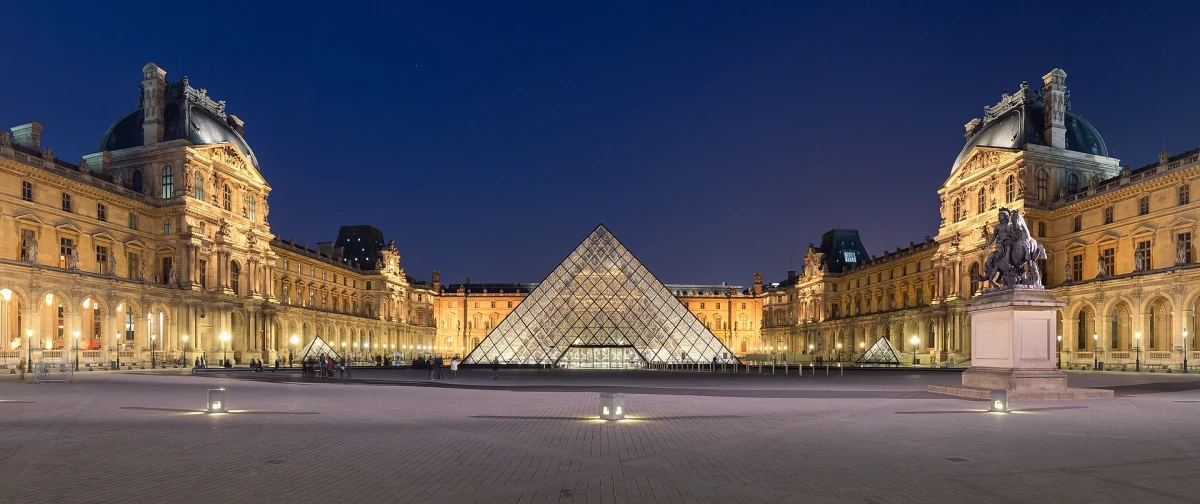
More than six months have passed since the audacious robbery of the Apollo Gallery in the Louvre, but the frantic search for the stolen jewels, valued at 88 million euros, has yielded no results so far.
However, in the immediate aftermath, four bandits involved in the unprecedented heist of the century were quickly apprehended, and a few days later, four more accomplices were taken into custody. They turned out not to be seasoned gangsters experienced in bank and jewelry store heists, but ordinary guys from troubled suburbs, typically used to back up criminal operations or in drug trafficking.
Aside from a circular saw and a blowtorch, the thieves had no weapons with them because an armed robbery carries a much longer prison sentence. While fleeing the museum, they managed to drop the most valuable "trophy" – the crown of Empress Eugenie, wife of Emperor Napoleon III. The other treasures were likely handed over to the masterminds behind the robbery.
Strangely enough, the robbers did not take the most expensive diamond in the Louvre collection, the "Regent," weighing 140.5 carats and valued at 60 million euros. It had adorned the likes of Louis XV, Queen Marie Antoinette, and Emperor Napoleon I on special occasions. They either overlooked it due to ignorance or because the "Regent" is so famous that it cannot be sold even for a third of its price.
Since the gang leader turned out to be a dark-skinned Algerian named Abdallah, living in a Paris suburb and working as an illegal taxi driver, the investigation had to abandon the "Slavic trail," which initially seemed promising.
Sixty seasoned detectives – the elite of the Central Bureau for the Fight Against Cultural Property Theft – have been deployed to search for the missing relics. Some experts are convinced that the treasures have already been smuggled abroad to one of the Maghreb countries or to Antwerp, Belgium – the diamond capital of the world. Local craftsmen are likely busy extracting stones from the jewels – about 8,500 diamonds, as well as emeralds, sapphires, and other gems – to sell them retail, possibly online.
Police believe that the royal treasures may appear on the market in one form or another no sooner than in a few years. For his part, President Emmanuel Macron hastily promised, "We will return the artworks, and those responsible will be punished." In the past, stolen artworks were most often found in the first days after the theft.
Meanwhile, all surviving exhibits from the Apollo Gallery have been swiftly hidden in armored safes at the Central Bank of France.
"How to Rob the Apollo Gallery"
Once-popular writer Georges Chole (1931–2012), author of a hundred adventure novels for youth, outlined through his character in 1975 a scenario for robbing the Apollo Gallery. As if following his advice, amateur robbers acted fifty years later. "Listen to me carefully," the author’s lesson went. "It’s as easy as pie. Just lean a ladder against the museum wall from the riverbank side and climb to the second floor. Then break a window, and getting inside the museum will be no trouble at all. The display case with the jewels, located just ten meters from the window, can be easily smashed with a hammer. Extract the tiaras and crowns and exit the same way." Did this "instruction" accidentally fall into Abdallah's hands?
One of the French TV channels found a clever way to view the story of the unprecedented heist through the eyes of a professional criminal. Journalists invited former robber, 52-year-old David Decloux, who after a ten-year sentence behind reliable (unlike the Louvre's) bars was released, retrained as a comedian, and now successfully performs on the French stage with tales of his heists on banks and jewelry stores. The former gangster inspected the crime scene in the Louvre and delivered an unflattering verdict: "Museum windows are like Swiss cheese. There are bars, but they don’t protect anything. And you can easily get in through the roof." "If you were the director of the Louvre," joked one of the television program participants, "France wouldn’t be a laughingstock."
How could the robbers pull off the heist of the main French museum in just eight minutes, which spends millions on security each year and where 1,285 guards are employed according to the staffing schedule?
It is possible that the management lost vigilance over time. The last theft in the Louvre occurred in 1998 when Camille Corot's painting "The Road to Sevres," valued at about two to three million euros, was stolen. The chances of tracking down the missing masterpiece today are close to zero. The then-director of the museum, academic Pierre Rosenberg, ordered to strengthen the security system and announced that from then on, "it would be harder to steal from the Louvre," and eventually, it would be impossible. The academic clearly underestimated gangster know-how.
In any case, experts believe that the attack on the Louvre was not a bolt from the blue – about 1,300 artworks are stolen annually in France from museums, galleries, churches, castles, and private collections. The most visited museum in the world has never been an impregnable fortress. Nevertheless, the theft will go down in the annals of the Louvre, from which the "Mona Lisa" was stolen in broad daylight in 1911, after which its fame echoed throughout the universe.
Louis XX is concerned
The robbery of the Louvre undoubtedly deals a painful blow to the "New Renaissance" project, which aims to modernize the Louvre and the entire museum district, presented by the head of state in January last year. "We will forget nothing," Macron promised, "neither the palace renovation, nor fire safety, nor the protection of treasures, nor visitor convenience."
Let us recall that the project proposes creating a special underground hall for the "Mona Lisa" with a separate entrance and ticket. However, this initiative immediately met with objections from some specialists. The museum stands on the banks of the Seine, whose floods could threaten the Louvre's main masterpiece.
The presidential project, estimated at one billion euros and dubbed "pharaonic" by observers, immediately faced the realities of an acute socio-economic crisis, including an unprecedented national debt of three trillion euros. "Can the Louvre be saved?" – asks the weekly "Valeurs actuelles" in its latest issue, but does not provide an answer.
Some politicians and government members view the robbery as a symbol that France is heading towards disaster. For instance, Justice Minister Gérald Darmanin laments that the incident at the Louvre further undermines France's image. In turn, the new Minister of Culture, Catherine Pegard, stated the need to revise the "New Renaissance," which should primarily protect the museum. She acknowledged that the robbery of the Louvre has become a new shock for the world, comparable to the fire at Notre-Dame Cathedral.
The Duke of Anjou, head of the House of Bourbon, a member of the Spanish royal family, and a direct descendant of Henry IV and Louis XIV in the tenth generation (supporters call him Louis XX, he lives in Venezuela, works at a local bank, and considers himself the legitimate heir to the French throne), has also spoken out. He mourns the "moral decline" in France and accuses its political class of failing to safeguard the national heritage.
Where to find a billion?
Finally, unions have rallied against the "New Renaissance" – a serious force in any French institution, including cultural ones, whether it be the Paris Opera, the Odéon Theater, or the Louvre and the Musée d'Orsay. Unions have leverage and can at any moment disrupt a performance or block access to the museum.
"Macron is using the 'New Renaissance' for self-promotion and presenting himself as the savior of the Louvre," claims union leader Christian Galani. "The management and the Ministry of Culture have buzzed in our ears about how all problems will be solved with the advent of the 'New Renaissance.' We oppose creating a separate hall for the 'Mona Lisa,' where it will be isolated from the rest of the collection. I think the 'New Renaissance' project will be dead in a year when Macron's presidential term expires."
"For many years, we have constantly warned about the endless problems of the museum," says another union member, Gary Guillo. "Recently, much has been said about the outrageous theft and increased security, but the main danger is the wear and tear of the building, the threat of fire, and sewage breakdowns."
A few years ago, visitors witnessed water dripping from the glass roof into a bucket in one of the early Italian painting halls, which a quick-thinking guard promptly placed. "It leaks every time it rains," she explained.
Be that as it may, I am sure that the ambitious Macron will not miss the opportunity to write his name in the history of the Louvre. But where will he find 1.15 billion euros to implement the "New Renaissance"? So far, the state budget, considering strict austerity, is expected to allocate a modest 100,000 euros. Additionally, since the beginning of this year, the ticket price has been raised from 22 to 32 euros for all visitors except residents of EU countries. However, this price increase has been deemed "incorrect and discriminatory" by the museum itself.
Apparently, as with the restoration of Notre-Dame, they will turn to billionaire patrons for assistance. It is expected that benefactors from Abu Dhabi, which acquired the right to use the word "Louvre" in the name of its own museum for one billion euros (the amount is paid in installments), will also help. Further – from the forest and the pine tree: ordinary French citizens will be called upon to contribute to the rescue fund.