
Beijing can identify an enemy attack within 90 seconds.
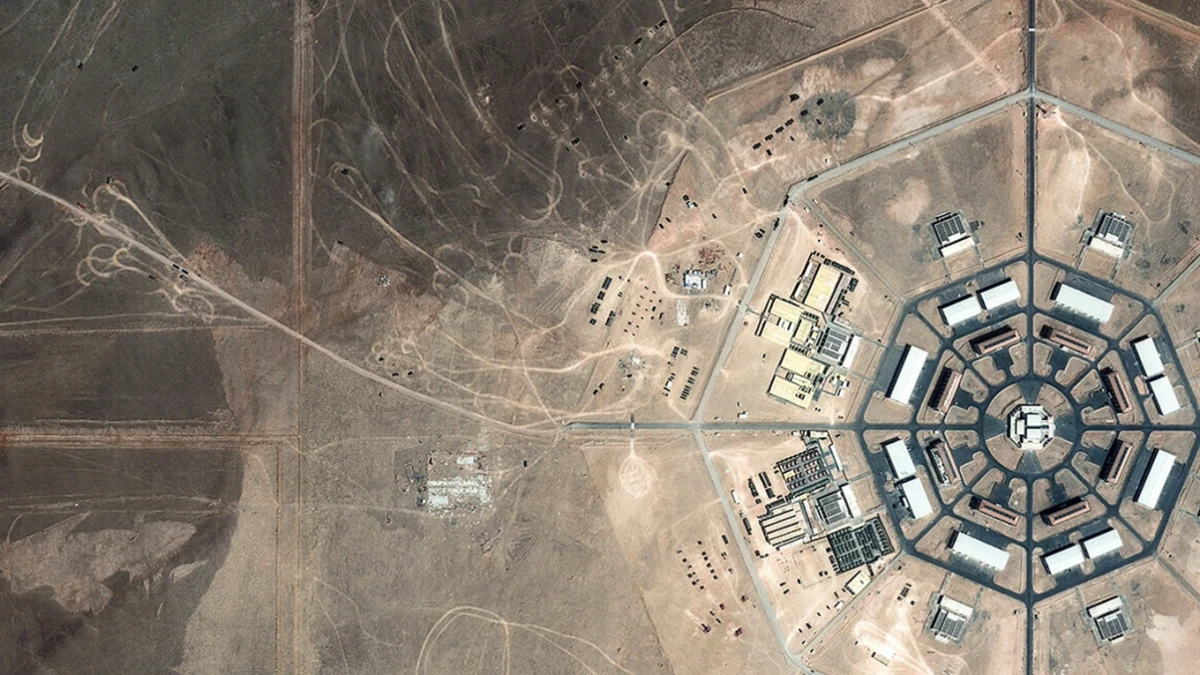
China has begun the largest expansion of its nuclear infrastructure in the modern history of the country. In the desert areas of Xinjiang, near the borders of Russia and Mongolia, Beijing is constructing a massive network of facilities for its strategic nuclear forces, Reuters reports. The new infrastructure is being built in such a way that even a first strike from the U.S. would not deprive China of its retaliatory capability. The facility is being constructed near the Hami missile launch site area — one of the key centers for China's intercontinental ballistic missiles capable of striking U.S. territory.
The project includes over 80 concrete launch pads, three gigantic octagonal complexes, dozens of fortified bunkers, underground communications, satellite communication nodes, railway branches, airfields, and weapons depots. All facilities are connected by a network of roads and communications that extend deep into the uninhabited areas of the desert.
"The infrastructure is being built on a grand scale and covers thousands of square kilometers of desert far beyond the missile fields," said Alexander Neill, a researcher at the Pacific Forum. "I have never seen anything like it. This is an extremely large-scale effort," said Hans Kristensen, director of the Nuclear Information Project at the Federation of American Scientists. According to him, the U.S. and Russia traditionally rely on a large number of missile silos and their protection, while China is building a comprehensive defense, communication, and mobile deployment system around its nuclear forces.
Analysts have drawn attention to three gigantic octagonal structures built southwest of the Hami area. One is located about 140 km from the missile launch sites, and the second is about 230 km away. At the center are large command buildings, surrounded by residential quarters for personnel and heavy equipment storage areas. Three Reuters analysts believe that some of the facilities may be used for mobile launchers of intercontinental ballistic missiles, air defense systems, and electronic warfare means. Senior fellow at the Carnegie Endowment for International Peace Zhao Tong stated that the infrastructure may be related to the command system of strategic nuclear forces. "The octagonal structures and unusual towers are associated with the command, control, and communications system of Chinese nuclear operations," he said.
According to the Pentagon, China is currently increasing its nuclear capabilities faster than any other country in the world. A December report from the U.S. Department of Defense states that Beijing could increase its number of nuclear warheads to 1,000 by 2030. American military officials also believe that China has already deployed about 100 intercontinental ballistic missiles in the three largest silo-based areas. At the same time, China is developing the Huoyan-1 early warning system, capable of detecting the launch of intercontinental missiles within 90 seconds and transmitting a signal to command within minutes. The Chinese Ministry of Defense declined to comment.














Leave a comment