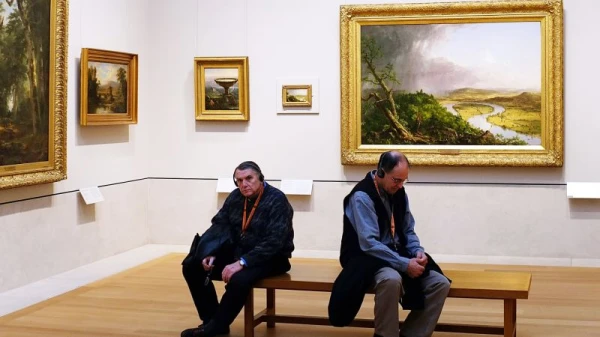
The brain stops absorbing new facts and details.
Before our eyes are masterpieces, but inside — a persistent desire to leave. Museum fatigue is not a myth, but a real feature of human perception, familiar to art lovers around the world.
A trip to the museum is perceived as a special event: buying a ticket, planning a route through the halls, and anticipating a meeting with the beautiful. However, already at the exhibition, we may catch ourselves thinking that we want to leave sooner. This is not shameful and does not indicate a lack of taste. The matter lies in museum fatigue — physical, emotional, and cognitive exhaustion that can arise from prolonged viewing of the exhibition.
The term "museum fatigue" appeared in 1916 thanks to Benjamin Gilman, who described it in the article Museum Fatigue. The specialist observed visitors at the Boston Museum of Fine Arts and found that poor organization of museum space requires additional physical efforts from the audience: bending, standing on tiptoes, etc. In the 1980s, American and European specialists continued to study museum visitor behavior and gradually reached a new level in combating the problem. Nevertheless, museum fatigue remains a common phenomenon.
Why Does the Desire to Leave Arise?
Typically, quick fatigue from being in a museum is primarily related to physical discomfort: heaviness in the legs, dryness in the eyes, headaches, or hunger. "Working with visitor experience is meticulous work," explains Anastasia Mityushina, curator of the Garage Museum of Contemporary Art. "Sources of discomfort can vary: poor climate, confusing navigation, a lack of benches, and a ban on adults sitting on the floor, which is more accepted abroad. I also get very tired from ambiguity, curatorial sloppiness, or the inappropriateness of chosen architectural solutions. Sometimes exhibitions can be extremely monotonous or excessive."
Physical fatigue can also be provoked by crowding, which causes visitors to invade each other's personal space. Julia Petrova, director of the Museum of Russian Impressionism, shares: "In the last two years, guest interest in exhibitions has been so great that for everyone's convenience, we have to introduce timed visits and regulate the number of people in the halls. In an ideal museum, there should be no crowding. No one has ever said, 'Let’s go to the exhibition; there are so many people — let’s relax!'
At the same time, museum fatigue has not only physical but also cognitive manifestations: one of them is a decrease in attention span while viewing exhibitions. A modern person may find it difficult to concentrate in a museum due to the habit of consuming quick content, which allows for instant impressions without much effort. Therefore, occasionally getting distracted from the exhibition is quite normal, believes Anastasia Mityushina. "Everyone behaves very differently in a museum. Sometimes I see a group of girls who want to take more impressive photos. Sometimes a group of students who are passionately discussing something, or a couple on a date whispering sweet nothings, while someone else wanders through the exhibition with large headphones," she recalls. "Audiences of all ages now look at art with varying degrees of concentration. However, some scold themselves and worry about the lack of a perfectly cohesive perception or about how to conform to outdated norms of decorum and beauty."
"When a person is face-to-face with a work, for example, examining a painting on their phone screen, they can devote as much attention to the work as they deem necessary," explains Valeria Fomina, author of the art history Telegram blog erizo verde. "When visiting a museum or gallery, we, on the contrary, face reality: the crowd of other visitors, the shouts or conversations of people on topics far removed from the exhibition, fatigue from walking through the halls, and so on. And here a person encounters the first discomfort — they cannot devote the necessary amount of time to the work; the visit is no longer as intimate as when viewing the exhibition announcement. Lighting, noise, drafts — some may be deliberately bright, others unnoticed but palpable. In this case, even the most devoted art lover will ask themselves: 'Why does the desire to leave arise?'
Another cognitive manifestation of museum fatigue is information overload: the brain stops absorbing new facts and details. Around the clock, we receive a vast amount of information on the internet, and when we try to view dozens of exhibits, read detailed descriptions, labels, and guides, the brain simply exhausts itself. But one should not set themselves up in advance that a trip to the museum will be very energy-consuming, advises Alexandra Zotova, head of youth programs at the Pushkin State Museum of Fine Arts: "Difficulties arise when a person comes to the museum already with the mindset that it is something too complicated, boring, or 'not for them.' Sometimes this is related to past experiences, for example, if the first visit was too formal or unfriendly. In such cases, interest in art may simply not continue."
Some come to the museum to confirm their status as cultured and educated individuals, while others come to post photos on social media. "Unfortunately, there is a trend that if a person takes a shot, they may not continue to view the exhibition," Valeria Fomina explains. "But there is also the opposite mindset — towards productivity: if a viewer comes to an exhibition, they should not only document it and publish it on social media but also study the entire exhibition thoroughly."