Scientists concluded that it is most likely a case of sample contamination.
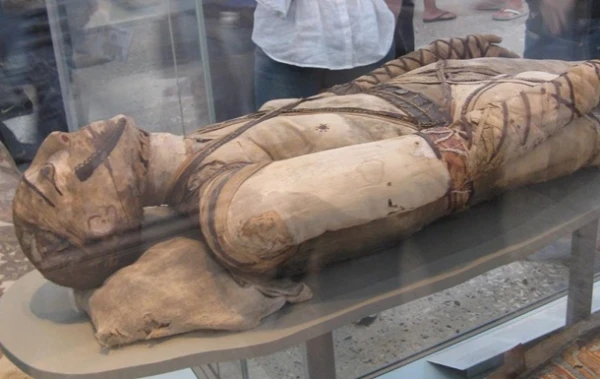
A team of scientists led by toxicologist Svetlana Balabanova announced the discovery of traces of cocaine, nicotine, and cannabis in the mummies of Ancient Egypt. The remains date from the period between the 11th century BC and the 4th century AD.
The discovery immediately sparked a wave of discussions, as cocaine is traditionally associated with the coca plant, which only grows in South America. This gave rise to hypotheses about possible transatlantic contacts of the ancient Egyptians; however, no archaeological evidence for this has been found.
Further studies did not confirm the presence of cocaine or THC in the mummies. Scientists concluded that it is most likely a case of sample contamination. Hair, for example, can absorb foreign substances from the environment, and these traces can persist even after cleaning.
The situation with nicotine is more complex. It turned out that this substance is found not only in tobacco but also in some plants common in Europe, Asia, and Africa. Thus, ancient Egyptians could have come into contact with nicotine without any connections to the New World.
The methods of preserving mummies may have also played a role. In the 19th century, they were often treated with tobacco powder and plant insecticides to protect against decay. It is these substances that may have left chemical traces, which were later interpreted as evidence of drug use.
As for cannabis, there is evidence that it may have been used in Ancient Egypt for medicinal purposes—specifically for pain relief or infections. However, these data have not received definitive confirmation in modern analyses.
Today, scientists agree that the sensational results of the 1990s were likely the result of imperfect research methods and external contamination.