

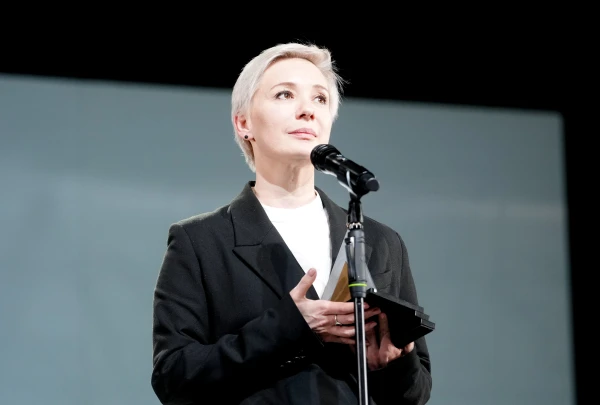
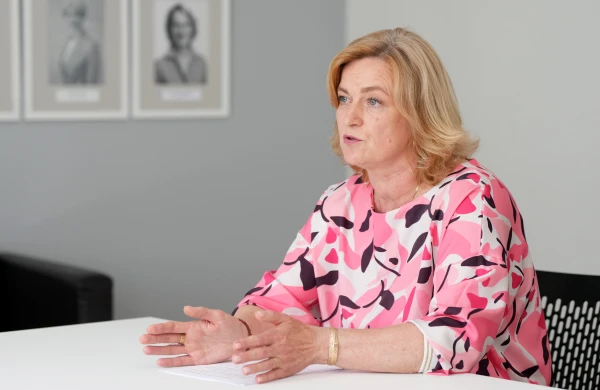
May 9 is approaching — a date that in modern Latvia after 2022 has become not so much a day of memory as a day of public tension. Journalist and social commentator Bozhena Rynska, living in Latvia, published an emotional text on social media about how the attitude towards this day has changed and why, in her opinion, the memory of the war has become entangled in political confrontation.
According to Rynska, over the years of Soviet occupation, various people came to Latvia — not only the "riffraff," as Latvian politicians sometimes emotionally claim, but also qualified specialists, intelligentsia, military families whose children later became doctors and people with pro-European views.
However, she writes, along with this, the republic also saw the mass importation of a "low-culture proletariat" to work in Soviet factories. It is this environment, in Rynska's opinion, that formed that part of the Russian-speaking community which many Latvians today associate with the concept of the "Russian world."
After 2022, Rynska believes, it is this part of society that turned Victory Day from a day of mourning and memory into an occasion for demonstrative behavior and political provocations. She recalls spontaneous actions at the dismantled monument, songs, and demonstrative gatherings that Latvian society perceived not as a memory of the fallen, but as an attempt to "mock" the titular nation.
The author notes that the Latvian authorities attempted to limit such manifestations — albeit "rather clumsily." The country officially commemorates the victory over Nazism on May 8, however, the state, according to Rynska, emphasizes that it respects people's right to mourn on May 9.
The journalist herself shares that for two years she has been visiting a small military cemetery, where she, along with others, takes care of the graves and brings flowers. According to her, the cemetery is always clean — local residents, including Latvians, take care of it.
At the same time, she prefers not to go to large memorials, such as in Jurmala. The reason is constant provocations: St. George ribbons, attempts to organize mass events and turn the day of memory into a political statement.
Rynska specifically writes about the ban on the St. George ribbon in Latvia. In her opinion, the historical military symbol has recently become closely associated with Russian military propaganda and the slogan "we can repeat it," and therefore is perceived as a threat in Latvian society.
Mass actions and public performances of military songs are also banned in the country. The author admits that she used to love these songs very much, but after 2022, she began to perceive them differently.
“Europeans hear a threat in them. And I somehow stopped singing them — it feels like they deceived me,” she writes.
According to her, today May 9 in Latvia exists "by the formula of quiet luxury": "Flowers — allowed, tears — desirable, songs — in a narrow circle, dances — only mentally, Katya — whispered into the collar."
The main thing, the author believes, is to remember the fallen with dignity and not to turn this day into a demonstration "in spite of the Latvians."
In conclusion, Rynska writes about her dream — to someday march in the column of the "Immortal Regiment" in the "Beautiful Russia of the Future," which, according to her, was originally conceived by "a very decent person" and only later appropriated by state propaganda.
"And also in the Beautiful Anti-War Peaceful and Civilized Russia of the Future, I will gladly sing 'Katya' together with everyone," she concludes.
As previously reported by bb.lv, Bozhena Rynska believes that the negative image of Latvia is the fault of its politicians and Russian propaganda.





Leave a comment