
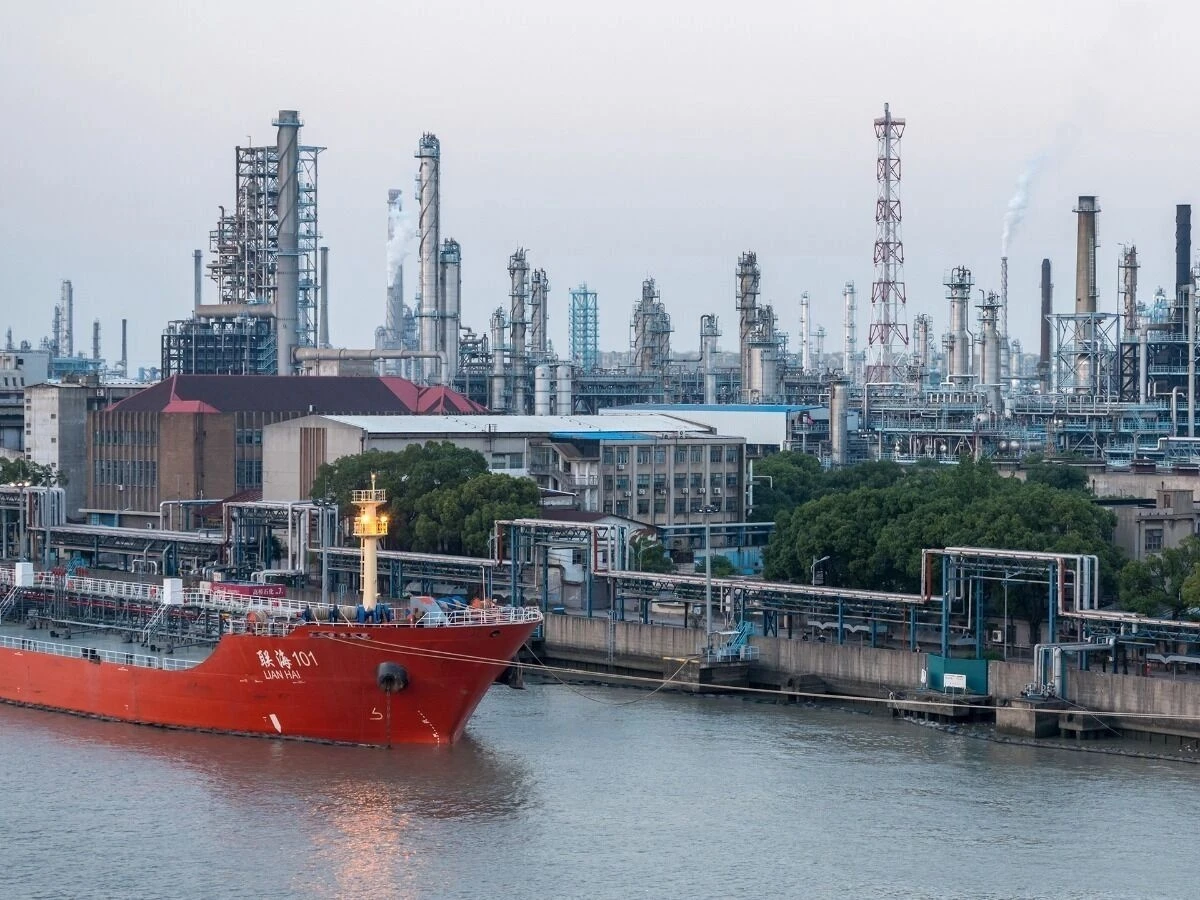
China has quietly reduced its oil imports by about a quarter compared to pre-war levels, yet this has not led to a decrease in domestic reserves, which may indicate a significant drop in demand for the resource, Bloomberg reports citing sources.
More Sold – More Remains
The article notes that in recent weeks, Chinese state oil companies have been reselling part of their oil batches to competitors, indicating an oversupply — which is unusual in conditions of scarcity. As industry leaders told the publication, Beijing's actions have limited the rise in oil prices and affected trading.
Data from Vortexa, a commodity market analysis company, shows that China is buying about 8.2 million barrels of oil daily from third-party suppliers, while before the war, it was acquiring 11.7 million.
As Bloomberg writes, a reduction in imports would make sense if Beijing were using its oil reserves or cutting commercial stocks, but that has not happened. On the contrary, according to satellite data, China's reserves continue to grow.
Electric Vehicles Don’t Need Gasoline
In response to the question of how China manages to import much less oil than before while not depleting its reserves, the publication reminded that in the past, China purchased far more oil than it needed, creating reserves for emergencies. Currently, the country's reserves amount to nearly 1.4 billion barrels, significantly exceeding the 400 million barrels in the U.S. and 260 million in Japan, the agency's material states.
However, there is another reason for China's reduction in oil imports, the publication writes.
Unnamed oil traders told Bloomberg that Beijing's economic activity is likely lower than previously thought, leading to reduced oil consumption.
The catalyst for this slowdown, according to the publication, could be the impact of the war in Iran on a number of China's clients in the region, including the Philippines, Vietnam, and Thailand. Additionally, the rise in popularity of electric vehicles, improvements in public transport, and the ability to work from home have allowed Chinese families to better cope with rising oil prices, Bloomberg notes.
A Unique Case
As assessed by the International Energy Agency (IEA), oil demand in China in March and April decreased year-on-year by about 110,000 barrels per day — to 17 million barrels. However, even this decline does not explain such a significant reduction in imports, the publication writes.
According to some experts surveyed by Bloomberg, the decrease in demand is also related to the Chinese petrochemical industry, which has contributed the most to the growth in oil consumption over the past five years. However, the Chinese case is unique — in addition to using oil and LNG as raw materials, there is parallel production in the country that uses coal.
At the same time, the agency suggests that China is likely gradually using its strategic reserves, including from underground storage facilities that cannot be seen from satellites. Nevertheless, "today China is rebalancing the oil market," Bloomberg concluded.













Leave a comment