
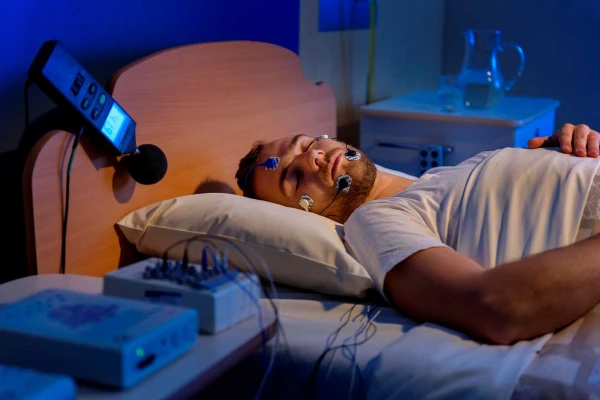
They look the same: a motionless body, closed eyes, silence. They are often confused even in medical dramas. However, coma and lethargic sleep are completely different states, separated by a thin but critical line. And this difference affects almost everything: doctors' forecasts, treatment tactics, and the answer to relatives' question: "Can he hear me?"
Normal and Pathological States of Consciousness
Normal states of consciousness are considered to be active wakefulness with clarity of perception and attention or natural sleep from which a person can easily awaken.
Pathological changes in consciousness include:
- Clouding of consciousness — slight decrease in attention, moderate suppression of wakefulness.
- Confusion — pronounced disorientation and difficulties in following simple commands.
- Lethargy — excessive sleepiness; the patient can be awakened with moderate stimulation but quickly falls asleep again.
- Stupor — sharp decrease in activity, prolonged sleep, drowsiness even between sleep episodes.
- Coma — complete absence of response to external stimuli, critical condition.
All these states indicate varying depths of suppression of the central nervous system. In modern medicine, it is important to describe the specific reactions of the patient to stimuli rather than simply assigning a "label."
Differences Between Coma and Lethargic Sleep
| Criterion | Coma | Lethargy |
|---|---|---|
| Nature | Life-threatening condition, organic brain damage | Functional disorder, psychogenic or neurological |
| Causes | Trauma, stroke, hypoxia | Brain malfunction without severe damage, hysteria, catatonia, infection |
| Brain State | Activity is sharply reduced, no sleep-wake cycles | Activity is preserved, with rhythms close to sleep or wakefulness |
| Physiology | Vital functions are impaired, often requiring ventilation | Vital functions are slowed but present: breathing, heartbeat, swallowing reflex |
| Main Difference | Inability to awaken, absence of consciousness | Possibility of spontaneous awakening, partial presence of consciousness |
Can a Person Hear?
- In a coma — sounds are not perceived. In borderline states, stimuli may activate deep structures of the brain, but this is not conscious perception.
- In lethargic sleep — there is no evidence, but sometimes patients after awakening described hearing sounds around them. Most cases are accompanied by complete amnesia.
Modern neuroimaging methods allow for accurate differentiation between the two states. In the case of coma, the prognosis is always serious, while lethargy remains a rare mystery. Accurate diagnosis is the first and most important step toward understanding a person's condition.















Leave a comment