
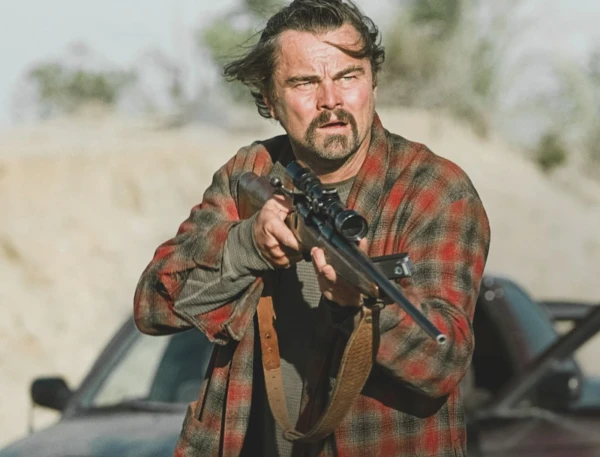
"One Battle After Another". Directed by Paul Thomas Anderson, starring Leonardo DiCaprio, Sean Penn, Benicio del Toro. USA, 2025.
The Audience Will Decide
This autumn, on both sides of the Iron Curtain, two highly relevant, ideologically charged films about the struggle for traditional values were released. Both are very long, with a difference in duration of just one minute: one lasts 162 minutes, the other 163. In both films, the main fighter for values is played by an A-list celebrity with a loudly declared political position – associated with the Russian-Ukrainian war.
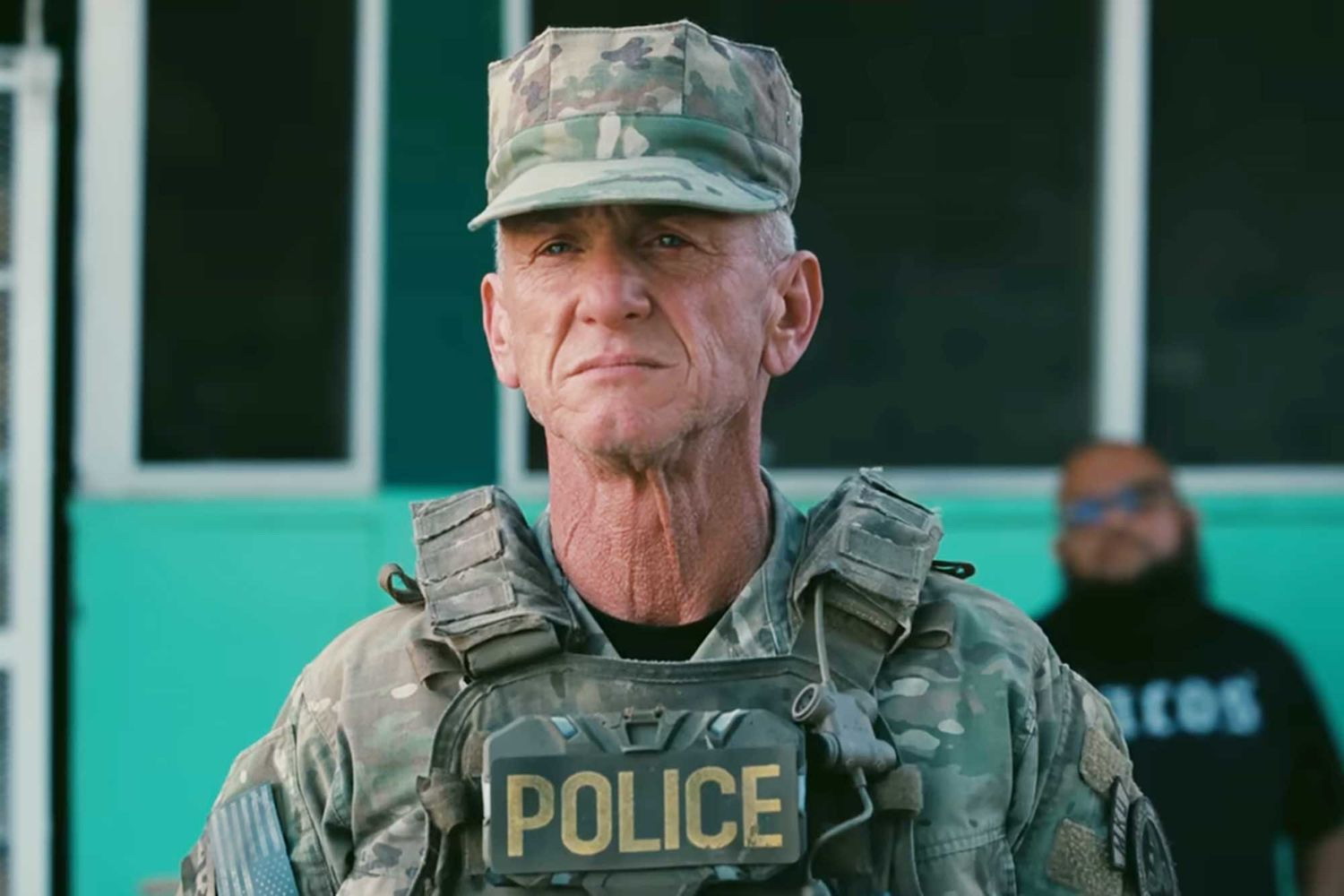
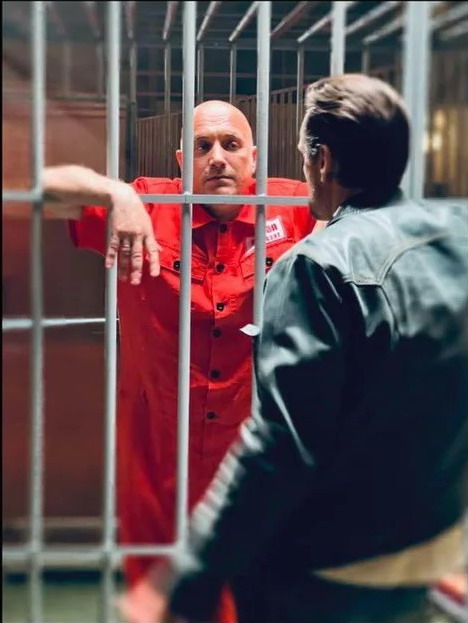
In the American film, it is Sean Penn, who has flown multiple times since the war began to the middle of the Dnieper, exchanging his Oscar for a Ukrainian order. In the Russian film, the tradition is defended by the character of Zakhar Prilepin, who nearly paid with his life for his views on the brotherly nation.
Both autumn premieres made a splash and showed impressive box office results. The American film titled "One Battle After Another" took the "gold" in the national box office during its opening weekend, only losing to one film by its author Paul Thomas Anderson – the acclaimed "There Will Be Blood." Critics, especially liberal ones, greeted "One Battle" with enthusiasm, immediately declaring it the film of the year.
The Russian film "Tolerance" also pleased liberal observers, as it was watched by less than two hundred people during its opening weekend – an average of three viewers per screening. Two weeks after its release, the film, about which no one had spoken positively, was pulled from distribution.
Players from Different Leagues
Considering that the director of "Tolerance" Andrei Grachev fiercely defends traditionalism, conservatism, and other ancient piety, while Paul Thomas Anderson mocks it, it is easy to conclude: Russian and American mass audiences are equally susceptible to liberal depravity.
In reality, the moral of the fable is, of course, different. It is not about the values themselves, but about their defenders. Grachev, whose filmography sparkles with diamonds like the comedy "The Perfect Wife" and the sports thriller "Bodybuilder," and the laureate of all major world film festivals, an eleven-time Oscar nominee, exalted by snobbish critics, PTA (Paul Thomas Anderson) – are players, to put it mildly, from completely different leagues.
Prilepin, undoubtedly, is a man of valor – but of a different flight than those who starred in "One Battle" – Sean Penn, Leonardo DiCaprio, and Benicio del Toro. And most importantly: "One Battle" can be praised or criticized (for its unevenness and chaos), whereas there is simply nothing to say about "Tolerance." Except for one thing: this absurd product was created solely for the purpose of utilizing government allocations for agitation and propaganda. Experts estimate the budget of "Tolerance," concealed by its authors, at 200 million rubles.
The Shadow of Trump
And yet, it is impossible to dismiss ideology and politics when discussing the successes of "One Battle." Simply because "One Battle" is not only a 175-million Hollywood epic with superstars, not only a parody of a political thriller (although there is plenty of irony here, especially at the beginning), but also a loud statement on current issues, a socially relevant film that resonates with the news feed.
The film about the confrontation between left and right extremists hit the screens two weeks after the murder of Charlie Kirk, in the midst of the "cold civil war" in the States that it is dedicated to. If "One Battle" owes its box office success primarily to its star-studded cast, it owes its critical ecstasy precisely to its ideological relevance.
Formally, it is an adaptation of "Vineland," a novel by Thomas Pynchon from 1990 about veterans of the youth revolution of the 1960s in the era of Reagan's triumph; but nothing from its text remains in the film. The time frame of "One Battle" is not the past, but a conditional, undated present. From Pynchon, Anderson borrowed only the general plot layout: aging leftist revolutionaries against the backdrop of a victorious counter-revolution – now associated not with Reagan, but with Trump. At least, associated with Trump by today’s audience – despite the fact that the film was shot before last year’s fateful presidential elections.
A Strong Woman of the Right Color
The aging leftist, a former activist-extremist-terrorist – shaggy, in a plaid robe and with a rifle slung over his shoulder – is played by DiCaprio. His political opposite – a traditionalist, racist, sadist (presumably: a Trumpist) in the rank of colonel and with a short gray haircut – is Penn, who visibly enjoys embodying the exaggerated image of the enemy.
On this side of the screen, both actors – as well as director PTA and three-quarters of Hollywood – are, of course, liberals and progressives, and it is not difficult to guess their common ideological orientation in the film. Both DiCaprio's character and Penn's character appear caricatured, but the former is a benign caricature, while the latter is sinister. However, if any character is shown not with mockery but with admiration – it is, without a doubt, a strong woman of the right black color.
And yet, "One Battle" cannot be called a flat propaganda piece: it is primarily not about how terrible the right is, but about the vicious circle that ideological irreconcilability leads to. And this is yet another reason to choose PTA over Grachev and Prilepin – regardless of what values you hold yourself.












Leave a comment