
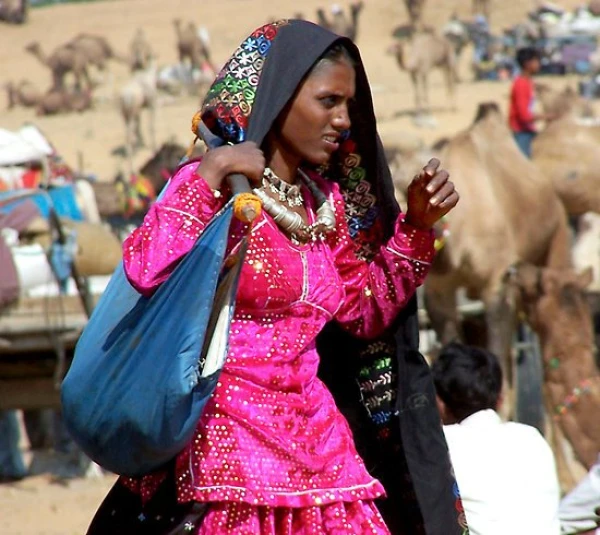
Their occupations are related to music, fortune-telling, and garbage.
There is little information about the Roma living in Africa in open sources — being a rather secretive people, they avoid excessive attention, but nevertheless, they can be found on the "black continent."
Terminological Confusion and the Geography of the Roma
Who are the Roma? In the 18th century, the creation of a science dedicated to this ethnic group began with the study of the Romani language, and not without reason. The community, scattered around the world, is united primarily by language, culture, and traditions. Since this ethnic group resides in countries from Asia to Latin America, it has many names and self-designations.
The first thread connecting the Roma to Africa lies in the names given to them by other peoples. The Spanish designation gitano and the English gypsy originated from a modified word Egyptian. Additionally, in Turkish and Arabic, the word kipti means both Roma and Copt. The Middle East and Europe shared the assumption that the Roma came to them from Egypt. This idea has been actively reinforced in European literature since the 15th century: writers and researchers referred to the Roma not only as Egyptians but also as Nubians.
There is a colossal amount of literary evidence where Europeans mistook Africans for Roma and vice versa. Marginalized in European countries, African and Roma characters represented the same archetypes, and actors performed the same dances. An example can be found in the character from the comedic play "The English Moor."
But is it true that the Roma came to Europe from Africa? Such assumptions exist not only due to Europeans but also based on the oral traditions of some Roma communities. However, modern genetic studies of European Roma refute this idea and suggest that migration to Europe occurred through the Middle East.
African Roma
The term "Dom" can be used, as despite the controversies, some Roma refer to themselves this way. They reside in North Africa — mostly in Egypt (according to evangelical organizations, there are more than 1 million Dom there). The description of the lifestyle of Egyptian Dom was made by the orientalist Alfred von Kremer in 1864, but he can hardly be called impartial. The occupations he attributes to the Dom are either related to art (singing, dancing) or mysticism (fortune-telling). A more modern study by Nabil Sobhi Hanna (1982) describes the Dom engaged in trade, metalwork, and blacksmithing.
In 2022, studies of these Cairo residents showed that they worked on short-term contracts as garbage collectors, shearers, saddlers, musicians, and dancers. By working on short-term contracts, they maintained mobility within their residential areas. There are also mentions of Dom in Sudan. Their occupations coincide with those of Egyptian Roma.















Leave a comment