
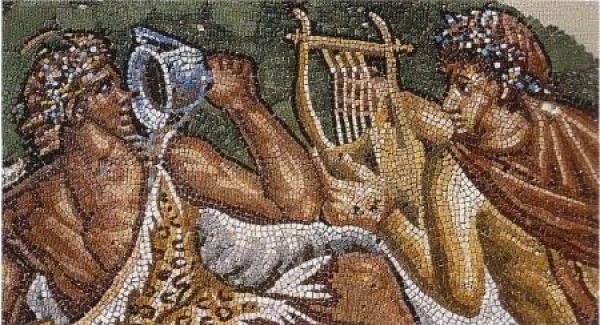
Drying in the sun acts as a natural filter: ultraviolet light and moisture loss kill pathogenic microflora.
Japanese biologists have replicated the ancient technology of producing wine from raisins to understand the mechanism of its fermentation. Researchers showed that dried grapes, unlike fresh ones, accumulate wild yeasts on their surface and are capable of turning water into alcohol without the addition of any starter cultures.
In modern winemaking, yeast Saccharomyces cerevisiae is added to the must for fermentation, with pure strains specifically cultivated. In ancient times, such an opportunity did not exist. Moreover, spontaneous fermentation of fresh grape juice is a risky process: the necessary yeasts for wine are rarely found on the skins of fresh berries, while there is plenty of mold and bacteria that turn the juice into vinegar.
So how was wine made then? For example, it was made from raisins. Such wine ("passum") was produced in Carthage and Ancient Rome. The mechanism that allowed alcoholic beverages to be obtained in this way without modern technologies remained unclear.
The authors of the study, published in the journal Scientific Reports, conducted a series of experiments simulating ancient winemaking. They dried batches of grapes under different conditions— in a sterile incubator and in the open air under the sun— to determine where the yeasts come from. To understand the origin of the microorganisms, they used genetic sequencing: comparing the DNA of microbes on the surface of fresh grapes and raisins.
The scientists soaked the raisins in sterile water and observed the processes occurring. The experiment showed that the "raisin water" begins to ferment within two to three days without the addition of any supplements. In the final product, the ethanol content reached 95 grams per liter (approximately 12% alcohol).
Genetic analysis revealed the key role of the drying process. Fresh grapes are dominated by mold fungi and yeast species that are not capable of strong fermentation. However, drying in the sun acts as a natural filter: ultraviolet light and moisture loss kill pathogenic microflora. At the same time, resilient wild yeasts from the surrounding environment (carried by wind or insects, for example, wasps) settle on the surface of the sweet, drying berry.
Comparing the drying methods confirmed this hypothesis: grapes dried in a sterile incubator did not ferment, as no living microbes remained on them. Only those dried outside fermented. The study confirms that drying grapes is not just a method of preservation but an ancient biotechnology for selecting microorganisms. This process naturally alters the composition of the berry's microbiome, suppressing competitors and creating an ideal environment for wine yeasts. Thus, ancient winemakers used raisins as a reliable source of starter culture for producing some alcoholic beverages.














Leave a comment