
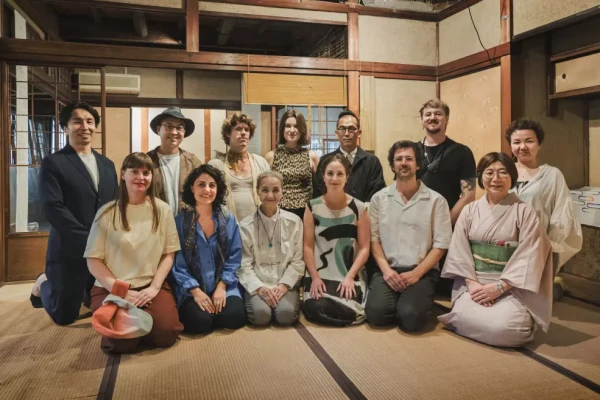
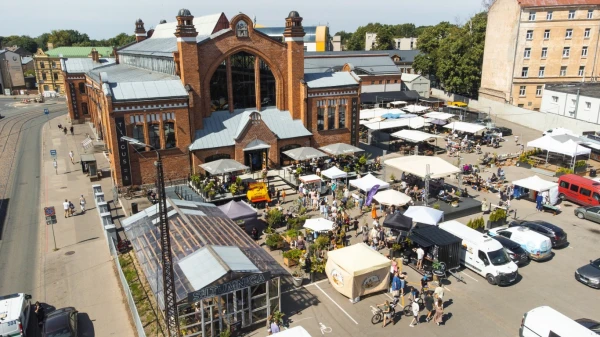
Until May 3, the international exhibition 'Artistic Intelligence' will be held at the 'Riga Stock Exchange' museum, dedicated to the interaction of indigenous knowledge, craftsmanship, and modern design, as well as the search for sustainable opportunities for the future in the fashion and textile industry.
The exhibition in Riga is one of the stops on the European tour of the project, and it can be visited alongside the exhibition 'The Snow is Melting. Japanese Art.' which is taking place in the Great Hall of the museum. The exhibition 'Artistic Intelligence' is the result of an international research residency implemented by the organization KNOTTO in collaboration with the European Union Pavilion at 'Expo 2025' in Osaka as part of the World Expo. Five artists, designers, and craftsmen from different European countries were selected through an open competition and spent a month in Japan, working with Japanese masters and creating joint research projects based on various cultural experiences.
The project addresses the question: how can ancestral knowledge help the modern fashion and textile industry? The exhibition emphasizes that traditional crafts are inherently sustainable. They are based on natural resources, manual labor, skill transmission, and long-term quality. Unlike short-term consumption, crafts remind us of values where not only the final result matters, but also the process of creation, the origin of materials, and the person applying this knowledge.
The title 'Artistic Intelligence' was chosen as a call to recognize the fragility and importance of manual labor, skills, and the people who preserve them. The project highlights that many craft traditions are currently at a critical moment: as masters age and the transmission of specialized skills declines, both the existence of individual crafts and the entire chain of interconnected knowledge are at risk.
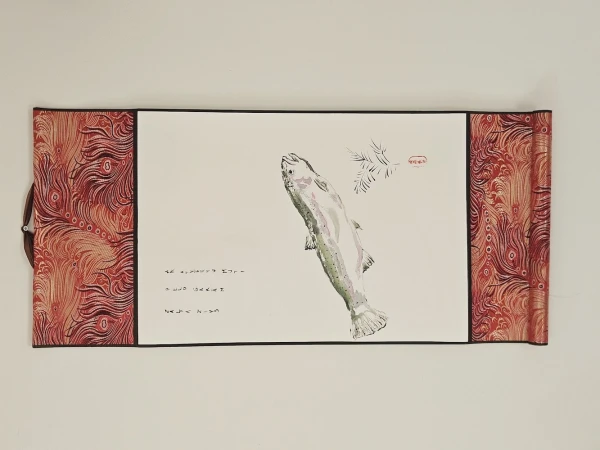
The exhibition presents five stories of intercultural collaboration between European and Japanese creative professionals. Each of these projects highlights different approaches to craftsmanship – from silk weaving to ikebana, from socially responsible production to material recycling. At the same time, they all affirm that craftsmanship is not just a legacy of the past, but a living, evolving, and contemporary practice capable of creating new dialogues between cultures, generations, and ways of thinking.













Leave a comment