
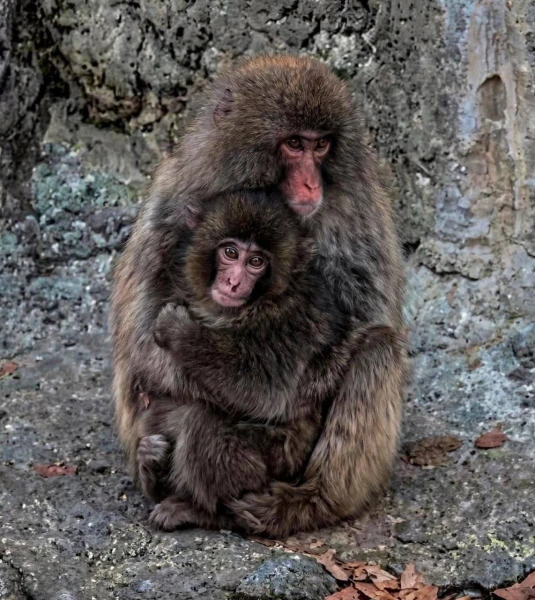
Thanks to human assistance, he will be fine.
Panchi-kun, as he is called in Japan, was born in July 2025 at the Ichikawa Zoo. Since then, he has been raised by the zoo staff: Panchi's mother did not take care of him.
For a long time, Panchi's only friend was a plush orangutan toy. The baby still carries his friend everywhere and cuddles with it while sleeping.
The toy was given to him by the zoo staff. Usually, baby Japanese macaques cling to their mother's body immediately after birth. They need contact with something warm and soft. Therefore, when Panchi's mother rejected him, the zoologists brought him a toy to help him cope better with his anxiety.
It is not hard to guess why Panchi's story is so touching. Photos of the little macaque tenderly hugging his plush "mother" move even the hardest of hearts. Social media users empathize with the lonely baby.
For a long time, other macaques did not accept Panchi, and he was completely alone. Fortunately, this story is heading towards a happy ending: one adult macaque took notice of Panchi and began to care for him.
Now she hugs both Panchi and his toy. Other members of the troop have noticed this and have also started to play with Panchi.
Primate behavior specialist John Mitani emphasizes that female primates are among the best mothers in the animal kingdom.
Typically, monkeys are very attentive to their offspring and try not to leave them alone in the first months of life.
Cases where a mother abandons her offspring are very rare among Japanese macaques, writes Huffpost.
As explained by Alison Behn, a professor of biological anthropology at the Australian National University, there are circumstances that may cause a female primate in captivity to reject her baby.
It is known that Panchi was born during the height of summer heat. Such weather could have increased stress for his mother. Ultimately, the female may have entered survival mode for future reproduction.
The fact is that in a stressful environment, the chances of survival for newborn offspring are lower. The monkey might have reasoned that there is no point in expending energy on a baby that may not survive; it is better to ensure her own survival and have new offspring later.
Additionally, Panchi's mother gave birth for the first time. Japanese macaques live long and develop slowly, and maternal qualities typically emerge with age.
However, there are still many factors that could have influenced the female's decision. If this had happened in the wild, baby Panchi would likely have been doomed. He could have died either from starvation or from aggression from peers.
However, sometimes even in natural conditions, other females with maternal instincts adopt abandoned babies. In some cases, adult males—relatives or simply friends of the female—take on the care of the offspring.
But what will happen to Panchi? Thanks to human assistance, he will be fine. There is no need to be alarmed by videos showing other monkeys attacking him. Such behavior is normal for macaques, and no abnormal aggression towards Panchi is exhibited. He is gradually but surely integrating into the social group of his peers.






Leave a comment