
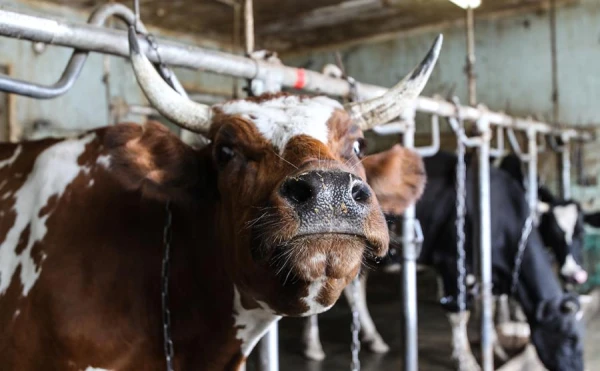
The European Commission has initiated the largest reform in the transportation of livestock in the last two decades. Plans include banning the transport of livestock in heat, as well as reducing travel time so that animals can rest, feed, and drink. This was reported by the Spanish veterinary portal Animal’s Health.
In particular, it is proposed to reduce the time that animals spend in transit. This implies that during long journeys, animals will need to be unloaded for rest, feeding, and watering. Special rules will also be introduced for animals intended for slaughter, as well as for vulnerable individuals, such as calves and pregnant females. Additionally, the requirements for transport containers will be reviewed to ensure they are adapted to each species of animal.
The new rules also take into account climatic conditions. In particular, if the average daily temperature exceeds 30 °C, transport should only take place at night. If the temperature drops below -5 °C, the duration of the journey should not exceed 9 hours.
Another innovation involves the implementation of digital technologies to create a unified database for tracking the movement of animals and monitoring the movement of vehicles in real time.
According to the publication, the new rules will help improve the welfare of 1.6 billion animals that are moved both within the European Union and beyond its borders each year.
The Commission also responded to the citizens' initiative “Fur-Free Europe,” which calls on the European Union to take measures to ban the keeping and killing of animals for fur production, as well as the sale of fur products within the EU. It is reported that the Commission has tasked the European Food Safety Authority (EFSA) with preparing a scientific opinion on animal welfare in fur production, based on which the most appropriate measures will be proposed. The document will be published in March 2025.








Leave a comment