
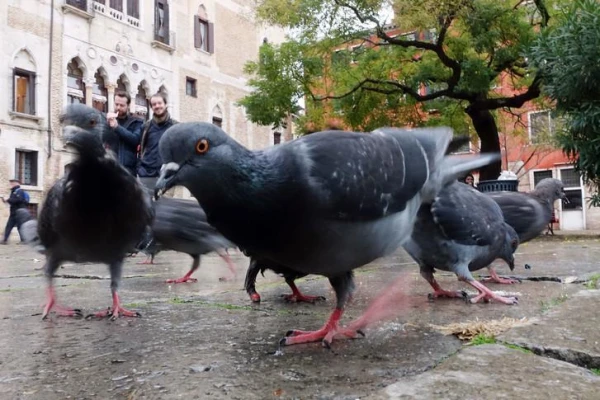
Pigeons inhabiting urban parks and squares create an atmosphere of coziness. However, these birds can pose a serious threat! Pigeons are carriers of numerous diseases and infections.
When touching a pigeon (which, however, is not so easy to do), you are unlikely to contract a disease. These birds transmit infections through their droppings, so if you notice someone feeding them at a playground, it is better to politely explain to that person why it is not recommended.
Pigeon droppings, which contain bacteria or viruses, are often seen on balconies, windows, and car windshields. Unfortunately, even if you remove it from the surface (this should be done while wearing gloves and preferably a mask), it can still contaminate the air, especially if there is a lot of it. Inhaling fine particles of droppings is the most common way pigeon pathogens are transmitted to humans.
According to the medical publication Medical News Today, the most common pathogens that can cause diseases in humans are:
Escherichia coli. Infection most often occurs when bird droppings contaminate food or water. This can be avoided by thoroughly washing food before consumption.
Saint Louis encephalitis. This disease is transmitted by mosquitoes that come into contact with birds. Unfortunately, this inflammation of the nervous system is dangerous for all age groups and can be fatal for people over 60 years old.
Histoplasmosis. This respiratory disease, caused by a fungus from pigeon droppings, often leads to death.
Candidiasis. Another fungal disease that affects the skin, respiratory system, intestines, and urogenital system.
Salmonellosis. This disease is often confused with food poisoning and can be prevented by thoroughly washing food.
But if pigeons carry so many dangerous and even deadly diseases, how can people coexist with them for so long and peacefully? Firstly, some of these diseases can only be contracted by individuals with weakened immune systems. Secondly, many who become ill do not even realize that pigeon droppings are the cause. Thirdly, modern hygiene standards and means allow for effective control of the pathogens found in pigeon droppings.
Nevertheless, if you want to avoid trouble, simply follow these simple recommendations: do not feed pigeons near your home, do not clean bird droppings without protective gear, wash your hands and food thoroughly, and most importantly — never eat icicles!











Leave a comment