
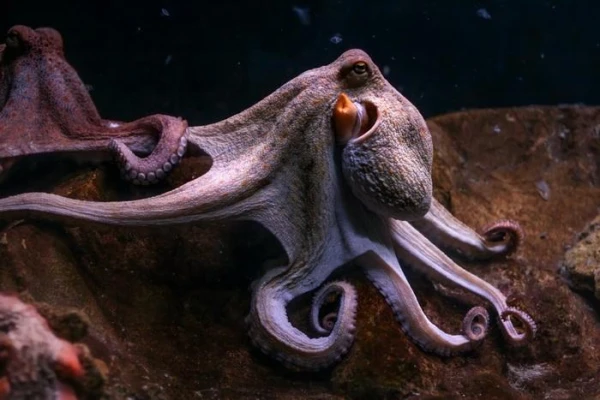
Octopuses communicate with each other using color signals, gestures, and touches.
There is an opinion that octopuses, despite their mental abilities and ingenuity, are low-social creatures. Indeed, they rarely interact with their kind, and their outstanding ability to change color seems, at first glance, to be intended solely for deceiving predators. At the same time, their closest relatives — cuttlefish and squids — actively use color signals for communication.
Moreover, octopuses are known for their tendency towards cannibalism, which implies the possibility of eating other octopuses; in such a case, it is unlikely that they need to communicate in any way — what negotiations can there be with someone you are about to eat? However, as it turns out, despite their apparent unsociability and hostility, they have a system of color and gesture signals designed specifically for communicating with each other.
Peter Godfrey-Smith from the University of Sydney and his colleagues became interested in the “language” of octopuses after a diver, diving in Jarvis Bay, Australia, reported unusual behavior of these mollusks.
Zoologists caught several specimens of Octopus tetricus and placed them in an aquarium for observation convenience. As a result, they managed to describe a unique language of colors and gestures that octopuses used in various situations. For example, to settle disputes, which, oddly enough, occurred in a strictly defined part of the aquarium: octopuses would go there, stretch as high as possible, and “darken their faces.”
The octopus that performed this action first demonstrated hostility towards its rival (it is worth noting that in cuttlefish and squids, a dark color also symbolizes aggressive intentions). If the second octopus reacted similarly, it could lead to a fight, but if it, on the contrary, faded and curled up, the conflict would end peacefully — the one who “faded” would simply leave the “arena.” Moreover, if any object appeared in the “dispute zone,” the octopuses would use it to appear even taller, meaning the mollusks employed makeshift tools in their “disputes.”
However, octopus communication was not limited to such displays: they often extended their tentacles towards each other, changed colors, touched each other (although not very often), and sometimes one of them literally hugged the other and threw it out of the occupied spot, while the meaning of such a procedure remains somewhat unclear, as the one doing it often did not stay in the same place.
In an article published in Current Biology, the authors claim that octopuses “communicate” with everyone, meaning males interact with males, males with females, females with males, and females with females. In general, our perception of octopuses as being unsociable and openly hostile to each other is evidently not entirely accurate.











Leave a comment