
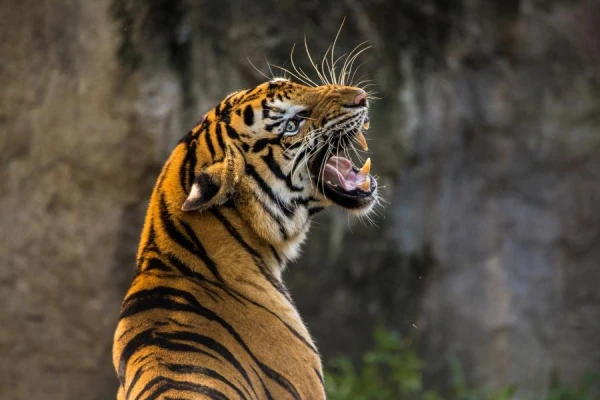
Predator populations are threatened by poaching and habitat fragmentation.
According to a recent assessment by ecologists, the population of wild tigers remains in critical condition. Despite all efforts, the recovery rate is only 14%, which keeps the species classified as endangered. While the situation has stabilized in protected forests of South and Southeast Asia, this fragile balance means humanity has prevented disaster, but true success is still far off.
A New Perspective on Tiger Conservation
The International Union for Conservation of Nature (IUCN) has introduced a new tool — the "Green Status of Species." Unlike traditional assessments of extinction risk, this metric measures how close a species is to full recovery in its natural habitat and the role conservation efforts play in this process. This shift in focus from merely preventing extinction to actively restoring populations is explained by Luke Hunter from the Wildlife Conservation Society.
Scientists have found that threats to tigers are unevenly distributed across regions. Instead of counting individuals, specialists have focused on analyzing territories — they have identified key ecological areas where population recovery is most realistic. This approach allows for the identification of locations where three critically important factors converge: effective protection, sufficient food supply, and the possibility of peaceful coexistence with humans.
The role of tigers in nature cannot be overstated. As apex predators, they regulate the populations of herbivores — deer and wild boar. This, in turn, allows vegetation to recover and supports the health of the entire ecosystem, including water and soil quality. Long-term observations confirm a direct correlation: the more ungulates in the forest, the higher the density of the tiger population.
Restoring the food base is key to the slow but steady growth of the striped predators' population.
Main Threats
Poaching remains a deadly threat — poachers hunt both tigers and their prey. Even a slight increase in predator mortality can lead to irreversible decline in small local groups, writes Earth.com.
Habitat fragmentation is equally dangerous — when continuous forest areas are sliced by roads, plantations, and settlements. This isolates tiger groups from one another, hinders their movement and reproduction, leading to genetic degeneration.
Legal protection for tigers exists in all countries within their range; however, laws only work where there is necessary funding, technical equipment, and professional staff. Corruption and insufficient training of rangers undermine even the most progressive regulations.
The attitude of local residents plays a crucial role. Where people gain economic benefits from coexisting with tigers — through ecotourism, forest products, or government compensation — tolerance towards predators increases. Conversely, where tigers pose only a threat to livestock and lives, conflicts and retaliatory killings are inevitable.
A Long Road to Recovery
A 14% recovery rate is not a quick result. Tigers reproduce slowly: a female raises her offspring for years, not months. This path requires patience and long-term investment.
"Our assessment shows that tigers, although their population is critically depleted, have not yet lost their battle for survival," emphasizes Hunter.
Scientists identify two main areas of focus for tiger conservation. These are protecting ungulates — combating poaching and regulating livestock grazing in reserves. Connecting tiger habitats is also necessary — creating ecological corridors and special crossings that allow predators to move safely.
The "Green Status" provides reserves with a clear planning tool — it shows where efforts are yielding results and where strategy adjustments are needed. If current efforts are maintained and strengthened, tiger recovery could transform from a miracle into a managed process — constant, methodical, and irreversible.














Leave a comment