False morels and true morels are among the first mushrooms to appear in the forests. Inexperienced foragers often confuse them, although false morels are poisonous and their consumption is dangerous.
“Morel is classified as an edible mushroom; however, some of its species are considered conditionally edible due to the presence of the toxic substance hydrazine,” explained mycologist Tatyana SHABASHOVA. “In contrast, the false morel is a poisonous mushroom that contains the dangerous toxin gyromitrin.”
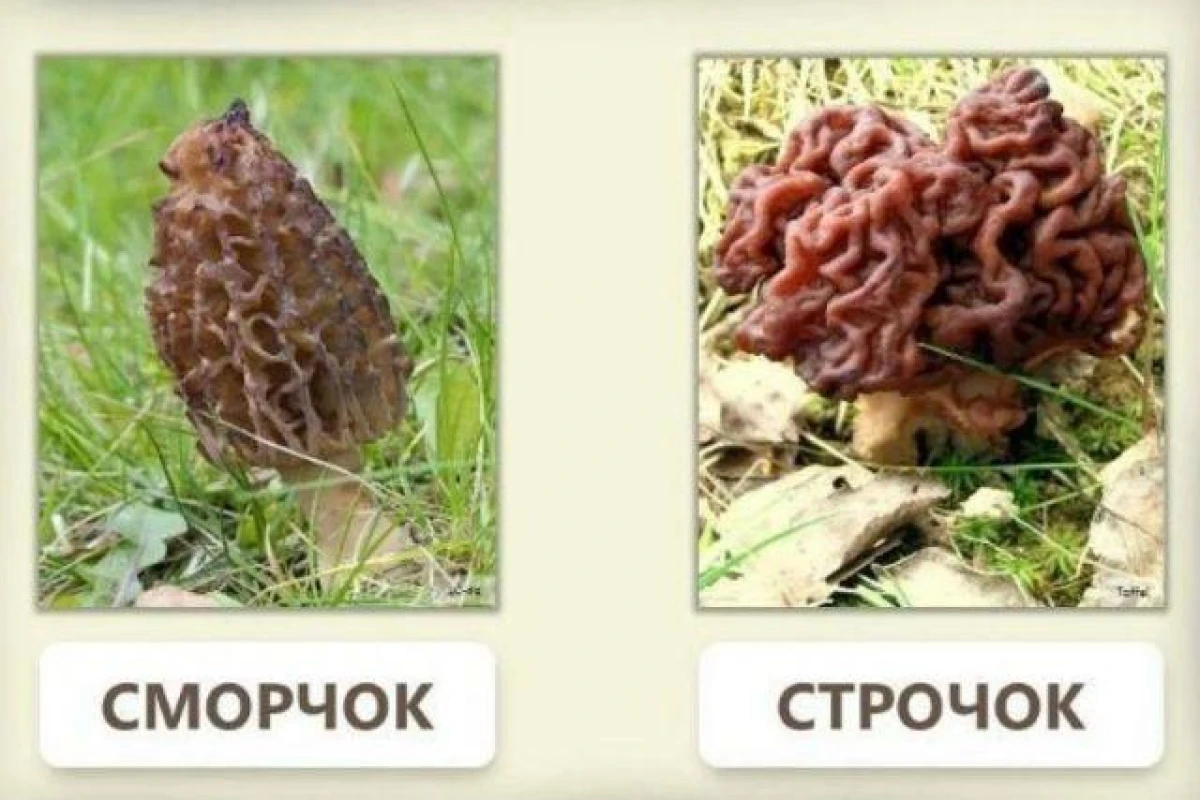
The cap of the false morel resembles the shell of a walnut and ranges in color from light brown to dark brown. It is twisted both outside and inside, and the edges tightly adhere to the stem. Overall, the mushroom looks like a ball. The stem of the false morel is sturdy and stocky.
The cap of the true morel, on the other hand, is wrinkled, elongated, and conical, resembling honeycombs of various sizes. The color of the cap varies from yellow to gray-brown. If you cut a morel in half, you will find that it is hollow inside. The stem of the morel is thin and slightly embedded in the ground. All species of morels, including the tall, gourmet, and conical varieties, are considered conditionally edible and require preliminary cooking.
Before consuming mushrooms, it is essential to take precautions: subject forest gifts to double cooking, and after each boiling, drain the broth and thoroughly rinse the mushrooms under running water.