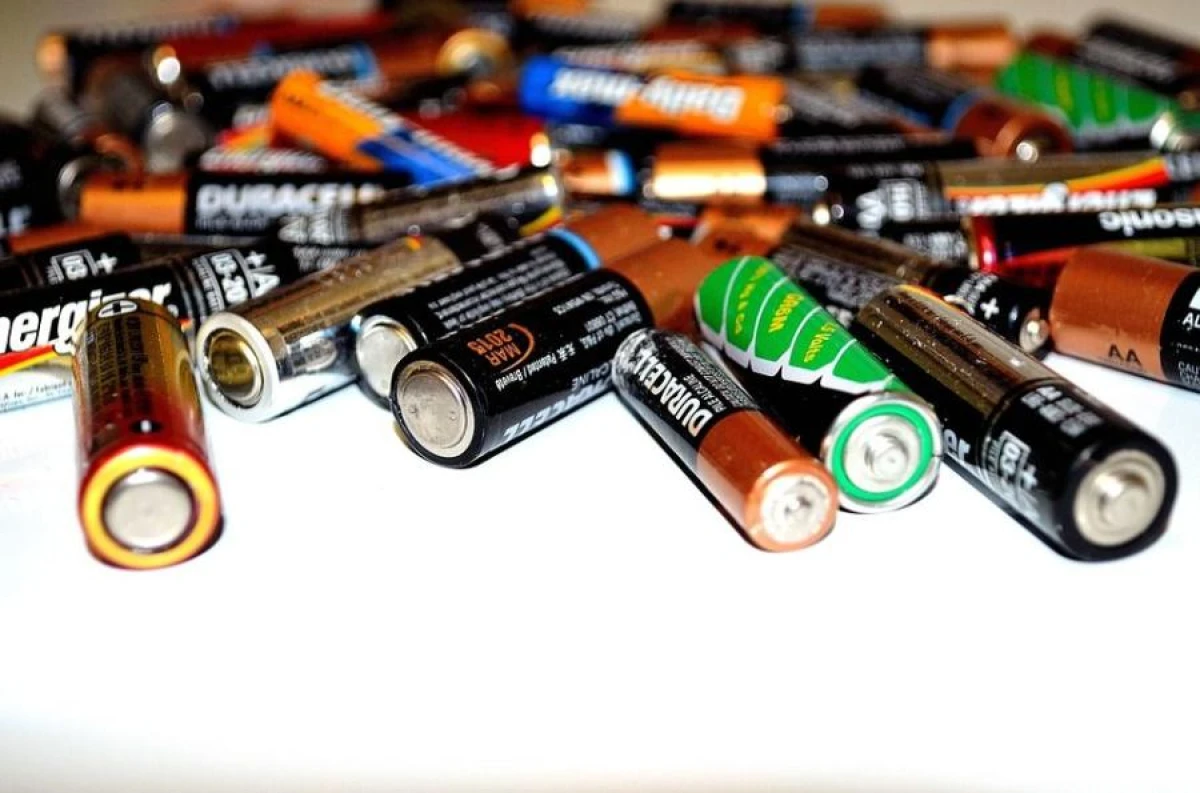
In batteries, irreversible chemical reactions occur, while in rechargeable batteries, they are reversible.
Batteries and rechargeable batteries convert chemical energy into electrical energy. A potential difference arises between the electrodes immersed in the electrolyte, and when the terminals are connected by a conductor, current begins to flow. Ions continue to move from the electrolyte to the electrodes, preventing the potentials from equalizing. Once the supply of ions is exhausted, the battery discharges.
When current flows through a battery, the substances inside it do not restore: for example, in manganese-zinc batteries, the zinc electrode simply dissolves during operation. In contrast, in rechargeable batteries, the electrolyte and electrodes can be returned to their original state. In a lead-acid battery, the active components are plates (one is lead, the other is coated with lead dioxide). During discharge, the active substances are converted into lead oxide. However, if the battery is connected to a charger, ions of oxygen and hydrogen are released from the electrolyte. Hydrogen reduces the cathode material back to lead, while oxygen oxidizes the anode material to lead dioxide.
When charging a cylindrical lithium-ion battery, lithium ions move from the cathode to the anode, which is made of carbon materials, and are embedded in its layered structure. During discharge, these ions return back to the cathode.