
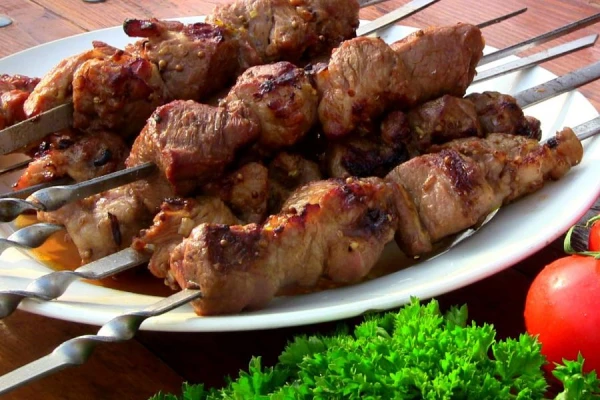
Food consumption can influence sweating — it can lead to changes in sweat odor and increased secretion. Specialists highlight the so-called meat sweat. About what this phenomenon is, who it threatens, and how dangerous it is, told therapist Alexey Popov.
If you have ever experienced excessive sweating after consuming meat, you are familiar with a condition known as 'meat sweat.' If not, you are either lucky or do not eat large amounts of meat.
Meat sweat is a little-studied phenomenon, likely because science focuses on more significant discoveries. It is a natural process of our body's functioning. In this regard, there is no scientific term for 'meat sweat,' but the name has become popular among competitive eaters of hot dogs and burgers, as well as regular patrons of meat restaurants consuming large portions of steaks and sausages. Additionally, the term entered common usage thanks to a character from a well-known series who sweated profusely after eating an entire turkey on Thanksgiving.
Meat sweat most often manifests as a feeling of heat, sweating, and increased heart rate after consuming meat. Some may experience abdominal discomfort and nausea.
There are several reasons for this phenomenon. It is believed that the human body uses about 10% of its daily energy expenditure for digestion and absorption of food, releasing heat as a byproduct. This phenomenon is called diet-induced thermogenesis. The American Journal of Clinical Nutrition defines such thermogenesis as an increase in metabolic activity after eating. This means that body temperature rises after a meal as the body actively works on digesting it.
The proteins found in meat are complex molecules made up of various chemically bonded elements. All these bonds must be broken down by enzymes into amino acids, which are then metabolized by the body. This process requires maintaining a high temperature of 37 to 40 °C. Digesting meat requires about seven times more energy than digesting fats and carbohydrates. Therefore, during digestion, heat production increases, and to avoid overheating, the body begins to cool down through increased sweating. Additionally, the amino acids obtained can be immediately used for synthesizing the body's own proteins, which also releases extra heat. Scientists have named this process 'protein-induced thermogenesis.'
Another reason may be the process of chewing tough meat. This is serious work for the jaws, requiring energy and leading to heat production. Participants in competitive eating of large portions of meat compare this process to working out at the gym or going for a run.
One should not forget about the temperature of meat dishes, which are always served hot and quickly enter our bodies. This causes a slight temperature spike, especially in people prone to fast eating.
There is an opinion that increased sweating during meals may be related to food allergies or intolerances. However, sweating is rarely a symptom of allergies, so this viewpoint has not gained widespread acceptance. Less commonly, there is a condition known as 'Frey's syndrome' or auriculotemporal syndrome, which can occur after surgery on the parotid gland if the nerves controlling this gland are damaged. This leads to excessive sweating on the cheeks, forehead, and around the ears, especially after consuming acidic, spicy, or salty foods.
The duration of the thermal effect from meat can last six hours or more. Therefore, if you ate meat in the evening, you might sweat all night.
How to Prevent It?
There is no real treatment for meat sweat, but measures can be taken to prevent it.
It is recommended to reduce portion sizes of meat or spread them throughout the day. It is better to eat a small portion of meat every 2–3 hours than one large portion at once. It is important to balance the diet with vegetables and whole grains to enhance the feeling of satiety.
Paradoxically, leaner cuts of meat produce more heat than fatty ones, as fatty meat is easier to digest.
One should avoid combining hearty meat dishes with alcohol or spicy seasonings. Alcohol has a strong thermogenic effect, and pepper, by irritating certain nerves, creates a feeling of warmth inside the body, which can increase sweating.
Excessive salt intake with meat can cause water retention in the body, which is then released through increased sweating.
Try to eat meat dishes in a cool and comfortable environment.
Engage in sports to improve overall physical fitness and metabolic processes. Normalize your weight, as reducing overall body fat leads to a decrease in basal body temperature.
And do not forget about walks in the fresh air after consuming meat dishes.
Nevertheless, there are many other causes of increased sweating known as hyperhidrosis. Besides genetic predisposition, hyperhidrosis can be triggered by various endocrine diseases, tumor and infectious processes in the body, as well as medication use and even psychogenic factors. Therefore, if you regularly experience excessive sweating during meals, you should undergo an examination to rule out serious diseases.











Leave a comment