
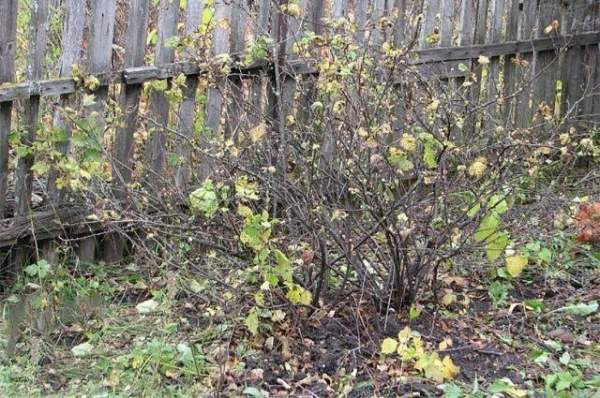
Before the buds begin to swell, remove old leaves and burn them, and carefully loosen the soil under the bushes.
Remove dry and damaged branches caused by pests or diseases. On black currants, tear off and destroy swollen buds affected by mites. If there are many such buds, it is recommended to dig up and burn the entire bush. To combat pests that have accumulated since autumn, spray the bushes with nitrophen (200 g per bucket of water). This remedy effectively suppresses the development of aphids and fungal diseases. When the buds open, spray the berry bushes with 10% carbophos (75 g per bucket of water) to combat various pests. Other chemical preparations can also be used; check with stores.
To prevent the appearance of anthracnose on red and white currants, as well as on gooseberries, spray the bushes with 1% Bordeaux mixture. The procedure should be repeated after a week. The most effective remedy against powdery mildew on gooseberries during this period will be treatment with calcined soda (50 g per bucket of water) with the addition of the same amount of soap. A remedy based on cow manure diluted with three times the amount of water has also proven effective. Repeat the treatment after 7-8 days.
During the budding phase, cover the ground under the bushes with polyethylene film, roofing felt, or parchment. This measure will prevent pests such as the fireworm and sawfly from emerging from the soil. After flowering, the cover can be removed.









Leave a comment