Sharing the experience of agronomist and gardener Alexander Khorobrovets.
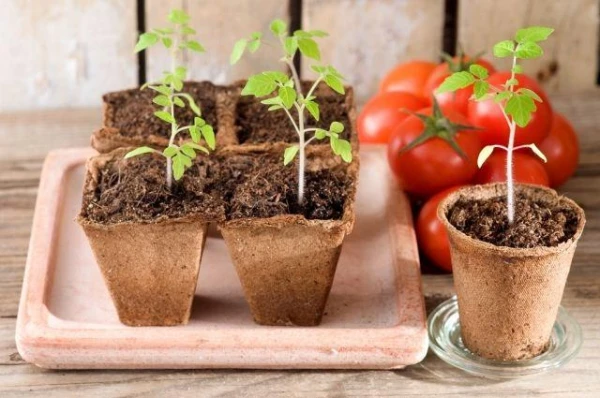
Selected large seeds are treated in a manganese solution (1 g per half a glass of room temperature water). The seeds are kept in the solution for 25-30 minutes, after which they are thoroughly rinsed and soaked for a day at a temperature of 18-20°C. Then, for hardening, the container with moist seeds, laid in two layers of gauze or filter paper, is placed in the refrigerator or another location with a temperature of 0 to 1°C for 12 hours. After that, they are transferred to a warm room with a temperature of 18-20°C for a day, and then placed back in the cold overnight and in the warmth during the day. This temperature regime is changed periodically until the seeds begin to germinate. After that, they are planted in boxes with soil, which usually occurs 50-55 days before transplanting the seedlings into open ground or a greenhouse.
The seeds are planted at a depth of up to 1 cm and at a distance of 4 cm from each other. When transplanting, the distance is doubled. It is advisable to place 8-10 granules of superphosphate under the roots of the plants.
The seedlings should not be kept in a warm room around the clock to prevent them from becoming weak and elongated. The optimal temperature during the day is 18-20°C, and at night — 8-10°C. This regime can be maintained by opening a window at night. Every two to three days, the seedlings are watered with room temperature water, and if the plants are developing poorly, they are fed with a complete mineral fertilizer (nitrogen-phosphorus-potassium).
As soon as the air temperature exceeds 10°C, the boxes with seedlings are taken out to the terrace or balcony first for 3-4 hours, and then for a longer time. In warm weather, the seedlings are left outside even at night. If they were transplanted into boxes, these are moved to the plot.