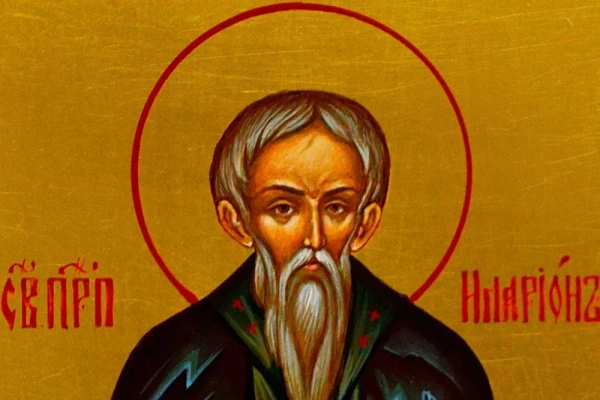
On February 13, Orthodox churches honor Saint Nikita of Pechersk, who lived at the turn of the 11th and 12th centuries. In the folk calendar, this day is known as Nikita the Firefighter or Nikita's Day. During this time, ancestors protected their homes from disasters and sought help in family matters.
On February 13, Orthodox churches commemorate Nikita of Pechersk, the Bishop of Novgorod, who is venerated as a saint.
According to historical sources, in his youth, Nikita of Pechersk took monastic vows and spent a long time in solitude. However, one day he faced temptation and refused to read the Gospel. After the demon was expelled by the priests, he returned to his former life — becoming merciful, diligent, and devoted to God.
Upon learning of his obedience and readiness to pray continuously, the Lord endowed him with the gift of miracles. He began to heal people from spiritual and physical sufferings. When Great Novgorod was left without a bishop, Nikita of Pechersk led the local church.
Folk Calendar: Nikita's Day
In the folk tradition, the holiday dedicated to Nikita of Pechersk was called Nikita's Day and Nikita the Firefighter. During this time, ancestors protected their homes from forest spirits and sorcerers.
Special attention was paid to the ridge on the roof. It was believed that if an unclean force saddled it, the house would be in danger. Therefore, on Nikita's Day, people drew crosses on windows and doors.
To protect themselves, they placed axes under the threshold. Brooms and brushes were hidden, and nettle, wormwood, and thistle were spread on the windows. Twigs of plants that served as charms were hung at the entrance to the house.
Nikita's Day: What Is Allowed
Nikita of Pechersk is considered the patron of fire. In the past, people knew that the saint could protect them from fires, which were greatly feared. Therefore, Nikita's Day began with a visit to the church. In prayers addressed to the saint, who once prevented a terrible fire in Great Novgorod, they asked for protection for their families from natural disasters.
Saint Nikita of Pechersk is also regarded as the intercessor for the grieving. People turn to him for comfort in difficult times, from misfortunes, evil people, and invisible enemies. He helps to avoid temptations and persecutions.
Women and girls, upon learning of their partners' infidelity, would turn to local healers on Nikita's Day, who performed special rituals. It was believed that after this, men would stop "looking elsewhere."
Since Nikita the Firefighter is associated with fire, ancestors avoided everything related to it. No bonfires were lit on this day. Only healers could do this, using fire to drive away evil spirits, and such rituals were conducted away from homes, usually on the edge of the forest.
Nikita's Day: Folk Omens
Nikita's Day can tell about the weather. Ancestors observed sparrows and crows during this time. If crows were cawing restlessly, it foretold a snowstorm.
Sparrows would "tell" of a cold snap. If the birds were insulating their nests, it was a sign of severe frost.
The fire in the stove could also indicate the weather. On Nikita's Day, despite the fear of fires, women prepared food while men watched the fire. If it had a white hue, it meant that a thaw would soon come. A red color in the fire foretold frost.
On the night of Nikita the Firefighter, prophetic dreams are said to occur. It is important to remember what was dreamed to avoid mistakes. Clues can be found in dreams.
What Not to Do on Nikita's Day
One of the main prohibitions on this day is fire. One should neither play with it nor flirt with it. On Nikita's Day, it was also forbidden to:
Insult people, shout, and quarrel — this will lead to poverty and illness.
Speak loudly and make noise — one may attract unclean forces.
Leave the house empty — sorcerers may take advantage of this and cause misfortunes.
Borrow money — it will be difficult to return it.
On Nikita's Day, older people tried to warn inexperienced youth, who might succumb to provocations that could lead to irreparable losses.