
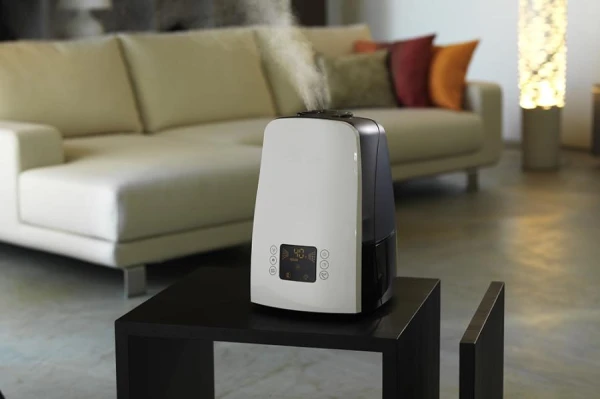
You may have heard of devices for dehumidifying air that reduce humidity indoors, or humidifiers that increase it. But what is relative humidity? And why is this parameter so important for our health?
There are many terms describing the moisture content in the air that can help you determine whether you need to reduce the humidity level in your home. We will explain why maintaining a consistent humidity level in your dwelling is beneficial for health and overall well-being, as well as how it helps keep your home in optimal condition.
Knowing the humidity level indoors is just part of the overall picture. By linking this indicator with temperature, you can better understand how much moisture is present in the air of your home.
Humidity is defined by two main parameters:
absolute humidity,
relative humidity.
Absolute humidity is a simple measurement of the amount of water vapor present in the air at any given moment, expressed in grams of water per cubic meter of air. In contrast, relative humidity takes into account the maximum level of humidity at a given temperature. Scientists describe relative humidity as the "degree of saturation of the air" with water vapor. Thus, if the relative humidity reaches 100%, the air can no longer hold more moisture, and it begins to condense into droplets on surfaces.
Relative humidity is an important indicator for researchers. But why is it so important to monitor the level of relative humidity in your home? In fact, humidity levels can significantly affect indoor comfort, as well as our health and overall well-being.
According to a 2016 study published in the journal Temperature, even highly trained athletes struggle in the heat when high relative humidity creates "stress on thermoregulation and blood supply systems." In this study, scientists demonstrated how high temperatures lead to dehydration due to increased sweating, as well as fatigue, muscle cramps, and heat exhaustion. What is the reason? Sweat from our bodies tries to evaporate and cool the body, but if the air is already saturated with moisture, there is nowhere for it to evaporate.
Even in the absence of heat, high humidity can cause problems in the home. Dust mites thrive in such conditions and can cause skin irritation. Moisture in the air can also lead to nasal congestion, itching in the eyes or skin, shortness of breath, and sneezing. High humidity levels also promote mold growth, which, in addition to irritating people with allergies and asthma, can damage your home, especially if it is built from cellulose-rich materials.













Leave a comment