
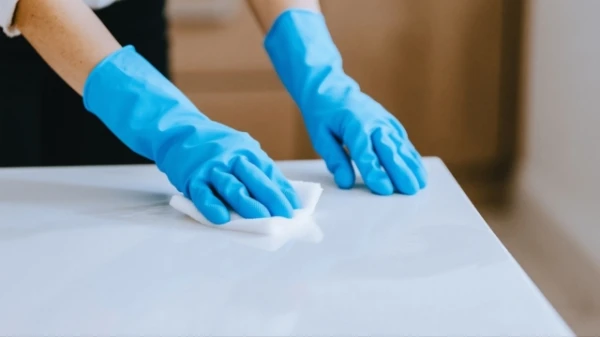
A study by Yale University led by Dr. K. Brandon Ogbunu reveals important details about virus survival on surfaces, showing that the process is significantly influenced by the combination of surface material and ambient temperature.
Using bacteriophages — viruses that infect bacteria — for experiments, scientists established key patterns. Copper at high temperatures proved to be the most unfavorable environment: at 37 degrees Celsius, half of the viral particles lost their activity in less than 30 minutes on a copper surface. In contrast, low temperatures significantly extended the lifespan of viruses: at 4 degrees Celsius on stainless steel and plastic, their activity remained for many hours. However, the ability to reproduce is not the same as survival.
The study revealed an important nuance: a virus that retained activity on plastic at 37 degrees could then increase its numbers in new host cells by more than 100 times in one hour. This means that surface stability and infectivity are not always the same.
Thus, traditional cleaning rules based solely on time may be incomplete. The risk of infection transmission through surfaces varies depending on the specific combination of material and room temperature, which must be taken into account when designing public spaces and hospitals.
The results help explain why, for example, copper door handles in clinics are indeed effective, while cold storage or refrigerators may be places of potentially longer virus preservation.















Leave a comment