The New Year is a serious test for the body. An abundance of snacks and drinks can negatively affect the stomach and liver, as well as lead to weight gain. How to prepare yourself for the series of winter holidays and distribute your strength so that only positive impressions remain? Nadежда Zemskova, a neurologist and nutritionist, shares her advice.
Preparatory Activities
1. It is not advisable to abruptly reduce the amount of food consumed; instead, focus on the content of the portions.
A major mistake is trying to save calories in anticipation of the holidays, only to overeat at the festive table later. Strict diets are inappropriate. This will be a serious stress for the body: the transition from starvation to overeating. It is much wiser to maintain your usual routine. A few weeks before the New Year, try to improve your diet: reduce the amount of sugar, fried and fatty foods, and increase your intake of fish, legumes, and whole grains. Pay special attention to vegetables and fruits.
2. Overindulgence is not the best way to prepare the body.
The opposite behavior, where a person starts overeating in advance to “train” their stomach for excesses, poses an even greater danger. This can lead to gastritis and ruin all the long-awaited holidays.
3. Increase your water intake in the days leading up to the holidays.
When there is a lack of water, the kidneys begin to function less efficiently, and the elimination of waste products slows down. As a result, a glass of champagne on New Year's Eve can lead to a hangover, and a piece of cake can feel heavy in the stomach. It is important to drink water specifically – not tea, coffee, or sugary sodas.
4. Do not sit down at the festive table hungry.
On December 31, do not skip breakfast and lunch. Be sure to have a snack a couple of hours before the feast – this will help you eat less excess food on New Year's Eve.
Light Snacks
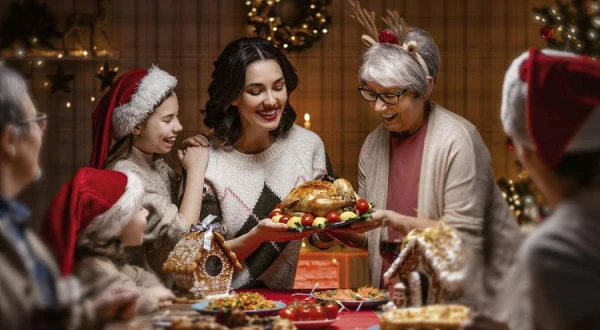
Convincing someone to celebrate the New Year without Olivier salad is a hopeless task. However, it is not advisable to fill the table with mayonnaise salads. Along with one or two “nostalgic” snacks, add less caloric options: salads with seafood, grains, and fresh vegetables, dressed with olive oil (ideally with lemon juice, which aids digestion). You can also make the dressing for Olivier lighter by mixing mayonnaise with yogurt. Complement traditional New Year's snacks with lighter and fresher dishes.
A light table does not mean a poor one; rather, it will be exquisite: instead of sandwiches – small canapés with slices of fresh cucumber instead of bread; instead of fatty smoked brisket – baked chicken roll or boiled tongue. It is better to leave the bread basket on a separate table – with such abundance, guests will not even remember it. However, a plate of fruits or sliced vegetables with a yogurt dip should take center stage.
For the main course, avoid heavy side dishes, fillings, and sauces. If goose with potatoes is your culinary hit that guests are waiting for, offer an alternative: serve green beans and grilled vegetables or a fresh salad alongside the baked potatoes.
A three-tier cake for dessert is not the best choice. Even if it comes to that, after such a conclusion, everyone will immediately go to sleep, taking with them the heaviness of the layers and cream. It is better to keep healthy sweets (dark chocolate, pastila) or winter fruits (persimmons, tangerines) on hand.
Children at the Festive Table
For a child's health, eating at night is not the best gift, but once a year, it is okay to break the routine.
Make sure that the menu does not include foods that cause allergies or other unpleasant reactions in children.
Place age-appropriate food next to the child's plate and take care of children's drinks.
For the youngest, it would be appropriate to provide a separate hot dish: they may prefer their favorite pasta over fried duck.
A children's table is a good idea when there are many little guests in the company. If you seat a couple of children separately, it may seem like a punishment.
On New Year's Eve, do not deprive children of sweets. But let them be light desserts: cupcakes, fruit jelly.
Sober Approach
A glass of champagne is for many an integral part of the New Year. The main thing is to remember that wine and other alcoholic beverages are meant for toasting, not for washing down food. It is better to quench your thirst with plain still water.
Alcohol makes us lose control over our appetite and overeat, and endless sitting at the festive table leads to excessive alcohol consumption. It creates a vicious circle: we eat – let’s drink, we drank – we need to snack. Therefore, toast less frequently.
I would not trust the advice to eat a fatty soup, a sandwich with lard, or a piece of butter shortly before the feast to avoid intoxication. It is not scientifically proven that fat prevents alcohol absorption in the stomach walls. However, it does create a load on the liver, just like alcohol. It is better to drink a glass of water with lemon before sitting at the table: this will reduce appetite and kickstart the digestive system. Then make sure that the amount of strong drinks and water consumed is equal. Sweet soda will not replace water: the sugar it contains acts as a catalyst for intoxication.
Recovery Program
You have overloaded your body, and it will be grateful for a detox. However, I am not an advocate of strict express diets: they will disrupt the body's functioning even more. You can get rid of the excess in the following simple ways:
Follow a light diet: vegetables, smoothies, fish dishes.
Drink 1–2 glasses more water than usual.
Watch your fiber intake (about 200 g per day in the form of greens and vegetables).
In the 3–4 days before the end of the holidays, try to normalize your daily routine and sleep. This affects metabolism as much as nutrition.
Don’t forget about physical activity.