
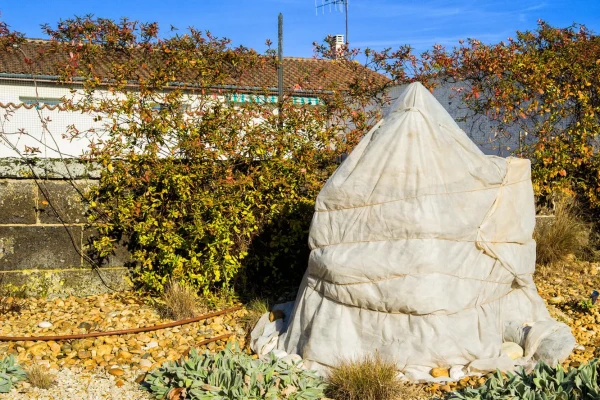
If you want your plants to survive the winter and wake up healthy in spring, you need to cover them properly for the cold period. It is important to follow some advice and avoid unforgivable mistakes.
Covering plants for winter is not the same as putting a cover on them. It's not enough; crops need to be properly prepared for changing living conditions.
It is important to remember that there are no universal methods and timelines for covering — each gardener will have to make decisions independently. To ensure that these decisions are correct, one must understand what and why needs to be done, and which actions may harm the plant.
With the onset of stable autumn frosts, it is time to prepare the crops in the garden for wintering. We cover heat-loving plants. However, when covering, one must consider the nuances. If this work is done incorrectly, the plants may freeze, become waterlogged, or dry out.
Mistake 1. Neglecting the preparatory stage
Not only novice gardeners but also experienced dacha owners often overlook this stage — and it's a mistake. Let's highlight the key points of preparation.
First, it is necessary to fertilize the plants with phosphorus-potassium fertilizers.
Then water them to ensure they are charged with moisture until spring.
It is also necessary to prune dry branches, stems, and remove all fallen leaves.
Don’t forget that plants also need to be sprayed for pests and diseases.
Mistake 2. Unsuitable materials for covering
Many habitually cover plants with whatever is available, and those plants that do not survive until spring are blamed on an excessively harsh winter. Let's face the truth: not all improvised materials are good for covering. In combination with others — yes, their use is justified.
Let's list the properties of good covering material:
it does not create condensation;
it retains heat well;
it allows air to pass through (breathes) but protects from the wind;
it protects from rain (does not get soaked).
If you have chosen factory materials, familiarize yourself in advance with the characteristics of various types — non-woven, polyethylene film, and so on.
Mistake 3. Incorrect timing for covering
Choosing the right time for covering is not easy. If you cover too early, the plants may dry out. If you are late, the plants may freeze.
Unstable weather, when frosts that seem to have become permanent are suddenly replaced by a prolonged thaw, is no longer rare.
The only way out of the situation is to cover the plants within the recommended timeframes, and during sudden thaws, either remove the cover or arrange for ventilation. It is important to select the correct timing for each crop individually.










Leave a comment