
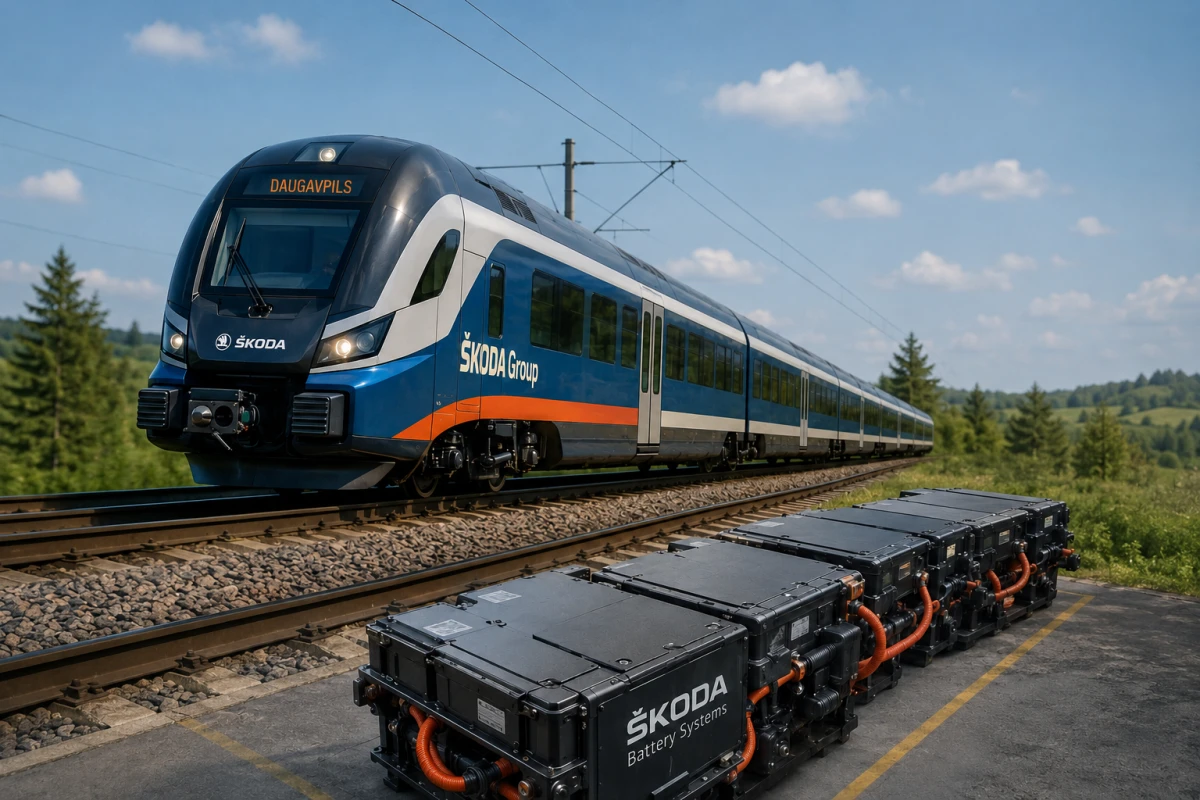
The Czech company Škoda Vagonka will begin production of new battery trains for Latvia in spring 2027. The first trains are planned to be tested on the Latvian railway in 2028, with full delivery of the order by 2029.
The project for new battery trains for Latvia is moving from the design stage to production. The Czech manufacturer of railway rolling stock, Škoda Vagonka, announced that assembly of the first trains will begin in the spring of next year. The company is currently working on the final design of the trains, which are expected to replace some diesel trains on the non-electrified sections of the Latvian railway in the future.
According to the company's CEO Martin Bednarz, the factory in Ostrava is capable of assembling and testing about 150 cars annually, and it takes approximately eight weeks to manufacture one car. He estimates that the production capacity is sufficient to meet both current and future orders.
The first two to three battery trains are planned to be delivered to Latvia for testing in mid-2028. After the testing is completed, serial production and delivery of the remaining trains will begin.
In total, Latvia has ordered nine trains. The contract also includes the option to purchase an additional seven trains if the necessary funding is found. A decision on the additional purchase must be made by the end of 2028.
What is important to know: battery trains will be able to continue operating where there is no overhead line. On electrified sections, they will receive power from the wires and then automatically switch to batteries.
This is why the new trains are primarily planned to be used on the routes to Daugavpils and Cesis, where charging infrastructure is to be created. In the future, such trains may also operate on routes towards Rezekne and Valmiera.
Škoda notes that the company has been developing battery technologies for about 15 years. Initially, batteries were used in trams and trolleybuses, and the first battery trains were supplied to Czech Railways a few years ago.
According to the manufacturer, the lifespan of the batteries is approximately 10–15 years. After the capacity decreases to 80%, the batteries will be replaced and sent for recycling.
Although battery trains are 15–20% more expensive than conventional electric trains, the manufacturer considers them the most economically viable solution for routes where building a new overhead line is too costly.
The contract for the supply of nine battery trains worth €89.4 million was signed in December last year. The project is funded by the European Union's Cohesion Fund and the Latvian state budget.
If the project is fully implemented, Latvia will be able to significantly reduce the use of diesel trains on regional routes and make rail transport more environmentally friendly.










Leave a comment