
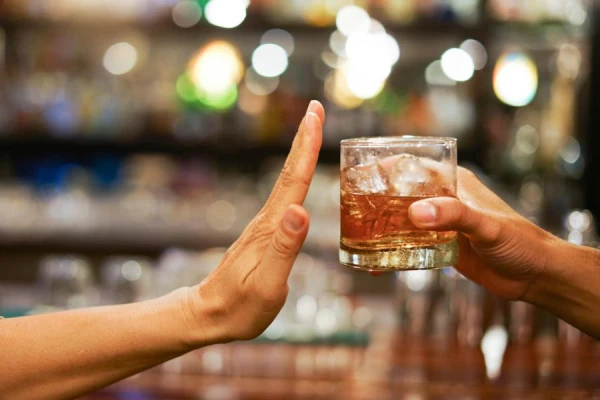
Before us is one of the greatest mysteries of civilization: if the active ingredient in alcoholic drinks is the same, why do they cause such different effects?
Any seasoned drinker will confirm: intoxication is a subtle thing. And for some reason, it heavily depends on what exactly you consumed and how you snacked.
Of course, there are individual characteristics of the body. But for most, the results are consistent: beer relaxes, vodka knocks you out, and cognac relieves tension but somehow adds clarity to sensations. Irish whiskey inspires feats, while Scotch encourages contemplation. Champagne often brings out a playful mood in girls, while strong beer — for some reason — almost never does. A mystery! But we will reveal it to you a bit later.
The Connection Between Drink and Emotions
In general, studies on the effects of different drinks were conducted by British scientists back in 2017.
Respondents, numbering 29,836 people, noted their observations by filling out questionnaires. They could choose several types of reactions at once. Here’s what came out in the end.
Strong drinks give a sense of confidence (59.08% of respondents), a surge of energy (58.36%), and a perception of themselves as sexual (42.42%). Also, for many (47.82%), strong alcohol is associated with unpleasant sensations (i.e., with hangovers).

Red wine often causes a feeling of fatigue (60.08%), but also relaxes (52.8%), gives confidence (27.88%), and a sense of sexuality (25.2%).

White wine brings relaxation (32.67%), confidence (28.27%), and sexuality (23.73%).

Beer provides relaxation (49.87%), confidence (44.54%), but also fatigue (38.92%). On the other hand, a surge of energy from beer is experienced by 24.76% of respondents, while increased sexuality is felt by only 18.86%.
We should highlight the emotion of aggression separately. It was associated with strong drinks by 29.83% of respondents, with red wine by 2.57%, with white wine by 2.74%, and with beer by 6.73%.
Alcoholics Have It Best. And Worst
The study also showed that people with alcohol dependence experience more intense emotions, both positive and negative, from alcohol.
What Determines the Nature of Intoxication
The mechanism of intoxication is well studied: ethanol slows down the speed of neural connections and causes an euphoric effect. That is, we become duller and happier. And where exactly the alcohol comes from shouldn’t matter.
So what’s the trick? To begin with, we can highlight two factors that can influence the quality of intoxication. These are the speed at which alcohol enters the bloodstream and its concentration in the drink.
With everything else being equal, a shot of vodka has a completely different effect than a portion of cognac or whiskey consumed in the same volume. Distillates contain fusel oils that slow down the absorption of alcohol. Even if you drink them in one go, the effect will still be softer than that of vodka. Oils and fats generally significantly slow down intoxication, so if you have a good snack before drinking, the intoxication will be overall more pleasant. But, of course, it will also be weaker: snacks steal the strength.
Well, the concentration of alcohol is clear. The stronger the drink, the faster the absorption, all else being equal, and, accordingly, the brighter the euphoric effect: more fun, energy, aggression. Again, unless it is slowed down by fusel oils.
Better a Candy than Nothing
Surprisingly important is also how much time the alcohol spent in the stomach before it reached the intestines and began to be absorbed into the bloodstream. In our stomachs (especially in men), there is an enzyme that breaks down ethanol — alcohol dehydrogenase. So the longer the drink stays in the stomach, the weaker and softer the intoxication.
For example, beer contains many carbohydrates that slow down stomach emptying, hence the soft effect. And if you also consume chips and fatty sausages, it’s just beautiful. Well, if you don’t think about calories, cholesterol, carcinogens.
This also explains the difference in intoxication from strong beer and champagne. The latter is significantly stronger — 11-12% — and, if not snacked on, does not linger in the stomach. And then the bubbles facilitate the rapid transport of alcohol into the bloodstream.
However, no one has yet explained why red and white wine produce different effects. Let’s hope that new generations of researchers will solve this crucial problem!
And finally. Note: if alone, the liquid rushes into the intestines almost immediately, then a snack (any) delays stomach emptying. It has to digest it. So it’s always better to snack than to wash it down. Even an apple or a candy is better than nothing.





Leave a comment