Celery is a plant that is used in cooking in its entirety, from seeds to root. It is rich in vitamins and minerals, but this product also has contraindications. Let's consider the benefits and harms of celery, how to prepare it, and how to store it properly.
Main Facts About Celery
Celery is a biennial plant from the Apiaceae family, a close relative of dill, coriander, caraway, carrot, parsley, fennel, and parsnip. It is currently cultivated on almost all continents, although it is believed to be native to the Mediterranean region.
Caloric Content and Nutritional Value of Celery per 100 g
calories — 50 kcal;
proteins — 0.5 g;
fats — 0.2 g;
carbohydrates — 1.3 g;
dietary fiber — 1.4 g.
Benefits of Celery
Celery is rich in vitamins B, K, C, A, E, and PP. This plant is a good source of calcium, magnesium, iron, potassium, and zinc. Additionally, the product contains selenium, limonene, oxalic acid, flavonoids, and furanocoumarins. Due to this composition, regular consumption of celery may help prevent cardiovascular diseases, strengthen bones, and reduce the risk of developing type 2 diabetes.
Despite all its beneficial properties, it should be noted that celery is a strong allergen. Its allergenic properties remain even after thermal processing, so it is recommended to introduce it into the diet in small portions.
1. Strengthens the Immune System. Celery contains at least 12 different antioxidants that reduce the risk of chronic diseases such as heart disease, diabetes, obesity, and certain types of cancer. Vitamin C and beta-carotene play an important role in maintaining skin health and the immune system.
2. Reduces the Risk of Cardiovascular Diseases. Celery is rich in potassium and vitamin K, which are essential for heart health. Potassium helps maintain normal blood pressure. Consuming potassium-rich foods reduces the risk of stroke by 13%. Vitamin K also helps prevent cardiovascular diseases by preventing calcium buildup in blood vessels, which can lead to narrowing of the vessels and slowed blood flow, increasing the risk of heart attack or stroke.
3. May Affect Blood Sugar Levels. Celery is an excellent source of magnesium, which helps regulate blood sugar levels. Magnesium enhances the cells' response to insulin — the hormone responsible for glucose uptake. A lack of insulin increases the risk of developing type 2 diabetes. Studies show that a magnesium-rich diet reduces the likelihood of this disease by 14%.
4. Reduces the Likelihood of Anemia. Celery contains a lot of iron, which is necessary for the production of red blood cells that carry oxygen throughout the body. A deficiency of red blood cells can lead to iron-deficiency anemia, while a diet rich in iron reduces the risk of its development.
Who Should Avoid Consuming Celery
Celery juice can draw water into the digestive tract and cause loose stools. These side effects may be more pronounced in people with certain conditions, such as irritable bowel syndrome (IBS).
Additionally, celery contains a lot of sodium (80 mg per 100 g) — 6.2% of the daily norm. Studies show that consuming it in large amounts can lead to increased blood pressure, especially in people sensitive to salt.
Those taking anticoagulants should be cautious with foods high in vitamin K (including celery). This does not mean they should be completely excluded from the diet, but it is important to consume them in consistent amounts and frequency for the medications to work effectively.
How to Properly Consume Celery
The highest amount of nutrients is found in fresh celery. When frozen, the product retains most of its properties, while thermal processing leads to the loss of some vitamins and trace elements.
Celery can be used to make salads, soups, side dishes, juices, and can also be dried for use as a spice. For example, you can make a simple and healthy smoothie from celery, apple, cucumber, carrot, and kiwi. Blend all the ingredients and slowly eat the resulting mixture with a spoon — this way, the feeling of fullness will come faster.
How to Choose Fresh Celery
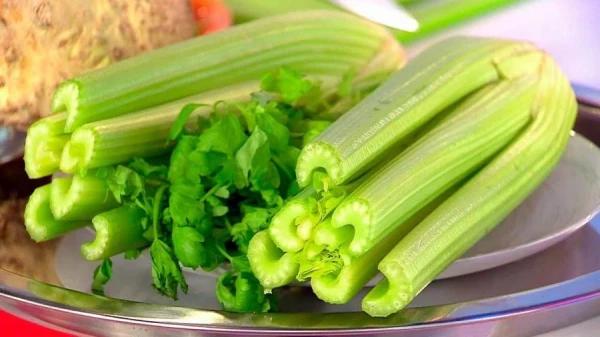
Fresh celery should be bright green, with firm leaves free of dark spots and damage. When separating the stalks from each other, a characteristic crunch should be heard.
It is best to consume celery immediately after purchase. Before use, it should be rinsed under running water and dried, for example, on a towel. Then wrap the product in aluminum foil and place it in the refrigerator. In this form, the beneficial properties of celery will last for up to 10 days.