In an effort to give up sweets, many replace candies with dried fruits and candied fruits. At first glance, such a replacement seems more beneficial. However, even with dried fruits, one should not overindulge. Expert Irina Lyulina explains the consequences this may lead to.
Fruits play an important role in a healthy diet, including their processed forms, as reported by Doctorpiter. The most common options are dried fruits and candied fruits. How do they differ from each other and which one is better to choose?
“Both candied fruits and dried fruits are healthy products that are recommended to be included in the diet, as they are sources of vitamins, minerals, organic acids, and peptides,” notes acting dean of the Faculty of Natural Sciences at GUP Irina Lyulina. “They can be stored for a long time while preserving their taste and nutritional qualities.”
Another significant advantage of both candied fruits and dried fruits is their fiber content, which helps normalize digestion and prevent constipation.
“When consuming these products, it is important not to exceed the recommended norm and to know that these fruits are not contraindicated for you,” warns our expert.
However, which is more beneficial — dried fruits or candied fruits? To answer this, it is worth considering the technology of their preparation.

Candied Fruits: High Sugar Content
“Candied fruits are made by soaking fruits in sugar syrup and then boiling them. It can be confidently said that such a product represents a double blow to the pancreas due to its high sugar content,” warns Irina Lyulina.
However, on the market, one can find candied fruits made from vegetables, such as cherries, carrots, and pumpkins. These desserts have a lower glycemic index, making them less harmful to the pancreas.
“Vegetable candied fruits (for example, from zucchini) can be colored and flavored with various additives to mask the zucchini taste with that of orange or pineapple,” our expert explains.
Dried Fruits: Excess Fructose and Harmful Additives
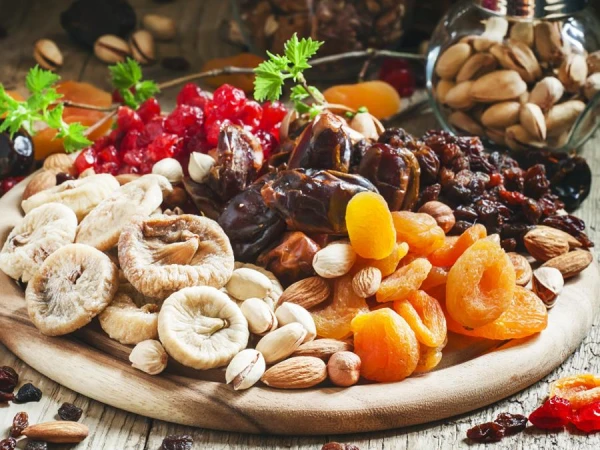
The process of preparing dried fruits involves dehydration (removal of moisture) and subsequent drying. There are many methods. One is natural, where fruits are dried in the sun or shade, but this takes a lot of time. The other is industrial, where fruits are subjected to heat treatment in dryers or dehydrators (about 4-6 hours).
“However, dried fruits are not so harmless, especially if they are made from fruits rich in fructose, such as grapes, figs, and apricots,” warns Irina Lyulina. “Consumption of such products should not exceed the norm — up to 50 grams per day.”
Moreover, dried fruits may contain excessive amounts of sugar. Sometimes fruits (such as dates, apricots, prunes) are soaked in sugar syrup before drying to enhance their taste and appearance.
Another argument in favor of homemade dried fruits is the absence of pest treatment.
“Many dried fruits produced on an industrial scale are treated with sulfur to protect against insects,” says the expert. “Therefore, it is up to you to decide whether to buy ready-made sweets or make them yourself. Homemade dried fruits are a more advantageous choice. You will always be sure that this is a clean, inexpensive, and fresh product.”