
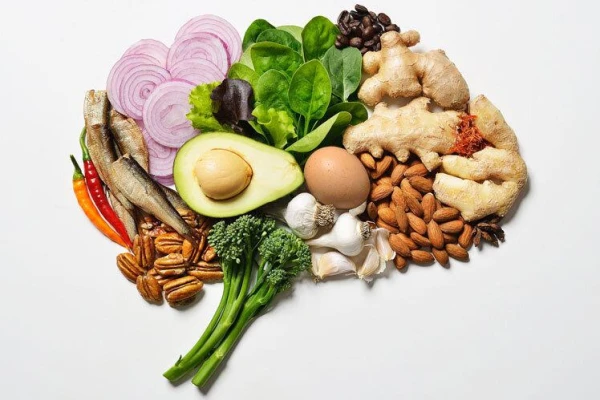
Nutrition has a direct impact on brain health. For example, excess sugar and trans fats can negatively affect memory, while vegetables, on the contrary, contribute to its maintenance. Scientists have conducted numerous studies related to nutrition and identified the most beneficial foods for the brain. We have prepared a selection of significant scientific articles on this topic.
Tea, apples, and berries improve hippocampal function
A three-year study involving 3,562 people aged around 71 showed that those who follow a diet rich in flavanols found in tea, apples, and berries are less prone to age-related memory problems. Scientists found that flavanols enhance hippocampal function and strengthen short-term memory. Additionally, green tea is rich in L-theanine, which promotes relaxation and protects brain cells.
However, chocolate is not recommended as a memory-enhancing food, as flavanols are often destroyed during its processing.
Herring provides essential fats for the brain
About 60% of the human brain is made up of fat, and half of that fat consists of omega-3 acids. The brain uses them to form nerve cells necessary for learning and memory. A deficiency in omega-3 is associated with worsened learning ability, depression, and decreased cognitive function with age.
Therefore, it is important to include sources of omega-3 in the diet to maintain cognitive functions. It is recommended to consume fatty fish such as salmon, trout, albacore tuna, herring, and sardines at least twice a week. Japanese researchers concluded in 2020 that people who regularly consume such fish have more gray matter and nerve cells in their brains responsible for decision-making, memory, and emotions.
Coffee is rich in antioxidants
Brain health is supported by caffeine and antioxidants. Scientists claim that these substances contribute to:
* Alertness. Primarily because caffeine blocks adenosine, a substance that causes drowsiness.
* Good mood. A cup of coffee can increase the levels of certain hormones (such as dopamine) responsible for overall well-being.
* Concentration. Coffee helps to tackle tasks more effectively.
* Reduced risk of neurological diseases. Three to four cups a day may decrease the likelihood of developing Parkinson's and Alzheimer's diseases.
Turmeric promotes the growth of new brain cells
This bright yellow spice contains curcumin, which can cross the blood-brain barrier, allowing it to directly affect the brain and benefit its cells. Studies over the years have shown that curcumin:
* Promotes the growth of new brain cells, which undoubtedly impacts cognitive abilities;
* Is beneficial for memory enhancement. For instance, a joint study in 2018 by Indian and American scientists showed that curcumin slows the decline of cognitive functions in Alzheimer's patients;
* Eases the course of depression. Curcumin increases serotonin and dopamine levels, improving mood. Studies have shown that curcumin can even reduce symptoms of depression and anxiety.
While adding turmeric to the diet may be beneficial, it is worth noting that the curcumin content is not high enough to notice the pronounced positive effects described by scientists.
Broccoli and pumpkin seeds provide vitamin K
Broccoli and pumpkin seeds are sources of vitamin K. Several studies involving elderly individuals link high consumption of vitamin K-rich foods with improved memory.
In addition to vitamins, pumpkin seeds are also an excellent source of magnesium, iron, zinc, and copper. Each of these nutrients plays an important role in brain health:
* Zinc is necessary for transmitting nerve signals. Its deficiency is associated with many neurological diseases, including Alzheimer's and Parkinson's diseases.
* Magnesium is important for learning and memory. Low magnesium levels can trigger migraines and depression.
* Copper is used by the brain to control nerve signals. An imbalance in copper levels increases the risk of neurodegenerative diseases.
* Iron deficiency can cause disruptions in various brain functions.
Nuts contain healthy fats, antioxidants, and vitamin E
Nuts, especially walnuts, are attributed with memory-enhancing properties. For example, Chinese researchers studied the diet and health of 4,822 people aged 55 and older and concluded that consuming about 10 g of nuts per day significantly improves cognitive functions. Another study showed that women who regularly consume nuts over several years have sharper memory compared to those who avoid them.
Nuts contain vitamin E, as well as omega-3 fatty acids and various antioxidants that protect brain cells from damage.
Oranges as a source of vitamin C and B9
Oranges are rich in vitamin B9 (folic acid), which helps improve memory and slows neurological disorders. One medium orange provides the daily requirement of vitamin C, which is necessary for the normal functioning of the brain. Australian scientists established a link in 2019 between high levels of vitamin C in the blood and improved memory, attention concentration, and decision-making speed.
Researchers emphasize that the body cannot synthesize vitamin C, so it is important to obtain it from natural sources. Besides oranges, many of this vitamin are found in lemons, cabbage, kiwis, rose hips, strawberries, tomatoes, and bell peppers.
Eggs enrich the brain with folic acid and choline
There are not many studies linking egg consumption with brain health. However, scientists confirm the positive impact of the nutrients found in chicken eggs on the brain.
Eggs are a source of vitamins B6 and B12, folic acid, and choline. Without these vitamins, the normal synthesis of chemicals and regulation of sugar levels in the brain is impossible. Deficiencies in choline and folic acid, which older adults sometimes suffer from, can lead to dementia. Consuming foods rich in these substances is associated with improved memory and cognitive abilities.
The recommended daily intake of choline is 425 mg for most women and 550 mg for men, with one egg yolk containing about 112 mg of choline.
What else can be done to improve memory
The Harvard Medical Journal highlighted several additional ways to improve memory. Besides a balanced and varied diet, the following are beneficial:
* Continuous learning of something new;
* Repetition of important information;
* Mnemonic techniques for memorization based on associations;
* Active participation in social life.
Source: Tchk
















Leave a comment