
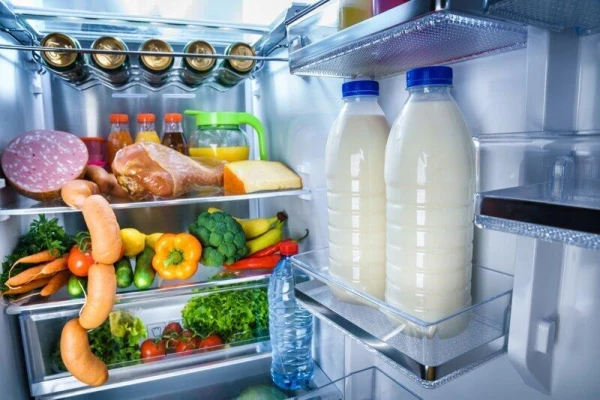
There are products that are not recommended to be kept in the refrigerator, as they may spoil faster or significantly lose their taste qualities when stored this way. This applies to a number of fruits and vegetables.
Avocados should not be placed in the refrigerator, as the fruits may darken and need to be thrown away. It is better to wrap the avocado in paper or newspaper and store it at room temperature.
Another product that does not tolerate cold is bananas. In the refrigerator, they start to darken quickly, even if you brought them home with clean yellow peels. Bananas will last much longer if left on the kitchen counter. However, do not place them in a bag; it is better to wrap the stems in paper.
Exotic pineapples are also not suitable for storage in the refrigerator. The humidity in this place is too high, which promotes rapid decay. Therefore, if you buy a pineapple, store it at room temperature, and after cutting, try to eat it as soon as possible.
Additionally, you should not place a freshly bought melon or watermelon in the refrigerator. Even ripe fruits will lose their taste and aroma. It is clear that eating them all at once is difficult, so after cutting, they will need to be put in the cold; otherwise, they will spoil. However, until that moment, their own skin will protect them.
Strawberries, the main summer berry, are also recommended to be stored on the kitchen counter. Only wash the berries you are going to eat, and do not remove the green stems too early—this way, strawberries will stay fresh longer.
On the other hand, persimmons, grapes, apples, and citrus fruits keep well in the refrigerator. It is best to place persimmons in the fruit and vegetable compartment without a bag. Citrus fruits should also be on the top shelf at a temperature of five to six degrees. Grapes need a slightly lower temperature, around one to two degrees Celsius. Apples are best stored on the top shelf separately from other fruits and vegetables.











Leave a comment