
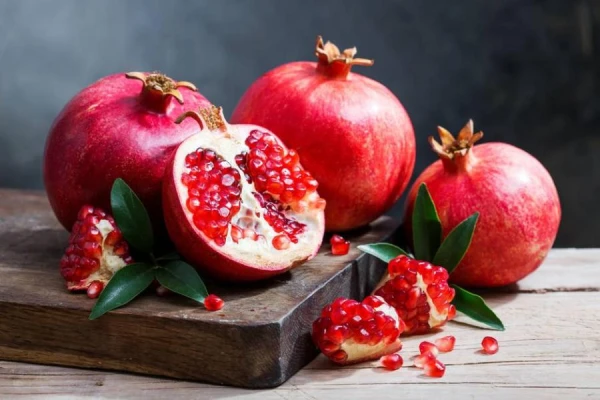
The winter season is the season of pomegranates. During this time, they are the freshest and most available. It is worth taking advantage of this and including them in your diet more often.
Moreover, pomegranates contain a wealth of valuable substances that protect cells from aging, positively affect the heart and blood vessels, and possess many other beneficial effects.
Unique Composition
"Pomegranate has a unique chemical composition," explained endocrinologist-dietitian Maria Brizhan. "It contains vitamins C, K, and B group, antioxidants such as ellagitannins (mainly punicalin and punicalagin), which protect the body's cells from aging processes, have a powerful anti-inflammatory effect, and positively influence the cardiovascular system. Pomegranates are also rich in minerals — potassium, iron, magnesium, phosphorus, calcium, manganese, sodium, selenium, chromium, silicon, copper, and zinc. There are organic acids (citric and malic), and fiber that helps improve the digestive system's function."
The doctor noted that the beneficial properties of pomegranates were recognized by people in ancient times, and they even made this fruit a sacred symbol of life, wisdom, and faith. For example, painters often depicted pomegranates in the hands of monarchs and as patterns in temples (particularly King Solomon). The pomegranate is considered one of the early Christian symbols of the Resurrection of Christ and eternal life. In China, the pomegranate symbolizes fertility, abundance, and happy offspring, and it is often given to newlyweds with wishes for many children. Persian legends state that warriors who ate pomegranates before battle gained great strength and invulnerability. The pomegranate is also regarded as the king of fruits in Armenia. In Judaism, the pomegranate is especially revered as a symbol of faith, believed to contain 613 seeds, equal to the number of commandments in the Torah.
Protects the Brain and Heart
While ancient people made such conclusions intuitively, modern scientists have been able to prove many of these properties of pomegranates.
"For example, studies have shown that the antioxidants in pomegranates reduce the risk of developing Alzheimer's disease by protecting brain cells from damage," continued the dietitian. "Laboratory studies have revealed an anti-tumor effect when using pomegranate extract. There is noted hypotensive action (lowering blood pressure), as well as a positive influence on the lipid profile (levels of fats, such as cholesterol in the blood) when consuming pomegranates. Pomegranate juice helps preserve memory in older adults by regulating tryptophan metabolism. Consuming pomegranates increases athletes' endurance and aids in quick recovery after workouts."
Extracts are Beneficial Too
Scientists are also actively studying pomegranate extracts — concentrated extracts from the berries, peel, and seeds of the fruit.
"A significant antidepressant effect has been noted with the use of water extract of pomegranate due to the presence of polyphenols with estrogenic activity," says Maria Brizhan. "Ethanolic extract of pomegranate seeds has dose-dependent anticonvulsant activity."
In November 2025, a study was published in the journal Nature Aging, where European and American scientists studied the effect of urolithin A on the immune system. Urolithin A is an organic compound formed by the transformation of ellagitannins from pomegranates by intestinal bacteria. During the study, 50 healthy middle-aged adults received urolithin A (1000 mg per day orally) or a placebo for 4 weeks. A pronounced positive effect on the immune system's condition was noted in subjects taking urolithin A. This manifested in the renewal and increased production of active immune cells capable of destroying virus-infected cells as well as tumor cells. The utilization of fatty acids as an energy source increased.
"By the way, ellagitannins are found not only in pomegranates but also in some nuts (walnuts, pecans, almonds) and berries (raspberries, blackberries, cloudberries)," comments Maria Brizhan on the study's findings. "Moreover, cloudberries and blackberries contain 5-6 times more ellagitannins than pomegranates. But the main thing to consider is that consuming foods containing ellagitannins does not guarantee their conversion to urolithin A. This is an individual characteristic of the human body and depends on the composition and activity of its intestinal microbiota."
How to Choose a Pomegranate?
The dietitian advises on how to choose the fruit correctly when buying: "Pay attention to the condition of the skin. It should be thin, slightly dried, and rough to the touch, uniform in color with a slight glossy sheen, and the crown (the top part of the fruit where the flower used to be) should be red, dry, and opened. The presence of cracks, brown spots, and dents on the skin indicates an overripe fruit and the beginning of the rotting process."
Also, according to the specialist, the weight of the fruit indicates its ripeness. Heavier fruits (600-700 g) are preferred as they contain more juice.
Take the pomegranate in your hands. It should feel firm to the touch, sound hollow when tapped, and have almost no smell. A characteristic crunch of the seeds may be heard with light pressure.
How to Eat It?
The pomegranate is such a versatile fruit that it can be consumed not only on its own but also added to salads and hot dishes, such as meat.
"However, it should be noted that the juice and pulp of pomegranates contain up to 20% sugars, which requires caution when consumed by people with type 2 diabetes or insulin resistance. Some individuals may experience allergic reactions to pomegranates," warns Maria Brizhan.













Leave a comment