
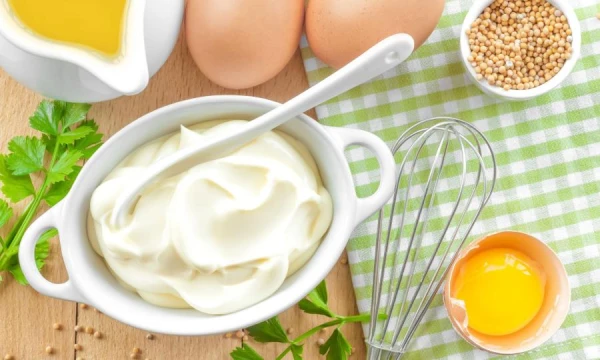
Despite the common belief about the high fat content in mayonnaise, most of it consists of polyunsaturated fatty acids, such as omega-3 and omega-6, which can positively affect heart and vascular health.
Mayonnaise is a controversial product that is popular in various countries. Many have acquaintances who claim that this white sauce is harmful to health. However, not all “mayonnaise phobics” consider the positive aspects of this product: for example, mayonnaise is rich in vitamin E, which is a powerful antioxidant, as well as polyunsaturated and monounsaturated fatty acids that are essential for maintaining heart health. Let’s examine the myths about mayonnaise that should be left in the past!
Myths and Interesting Facts About Mayonnaise
Mayonnaise is a dairy product
Despite its creamy texture and the fact that the sauce can sometimes be found in dairy sections, unlike other creamy additions such as sour cream, mayonnaise does not contain any dairy components. This makes it safe for people with lactose intolerance. The sauce consists of eggs and oil, which form an emulsion: the lecithin found in egg yolk acts as an emulsifier, allowing the oil to combine with water and giving the product a creamy consistency.
Mayonnaise should be stored in the refrigerator
Concerns about the rapid spoilage of mayonnaise often lead people to store it in the refrigerator. However, experts state that this is not necessary for commercial mayonnaise: such sauces have high acidity, making this precaution unnecessary. The acid acts as a natural preservative, and the presence of lemon juice or vinegar in mayonnaise allows it to be safely stored at room temperature.
Nevertheless, it is worth warning those who want to free up space in the refrigerator: although mayonnaise is unlikely to spoil at room temperature, storing it in the refrigerator does indeed extend its shelf life.
Mayonnaise is harmful to health
Due to its high fat content, mayonnaise has long been considered an unhealthy product, especially compared to low-fat ketchup or mustard. However, the popularization of low-carbohydrate, high-fat diets (such as the keto diet) and the negative impact of added sugars (such as in ketchup) may lead us to reconsider mayonnaise.
It is rich in vitamins E and K, and if made from olive oil or avocado oil, it will also contain omega-3 fatty acids, which contribute to improved heart health and reduced inflammation in the body. However, most store-bought bottles and packets of this sauce are often based on canola or soybean oil, the latter of which is typically highly processed and contains a lot of omega-6 fatty acids.
Do not succumb to the temptation to choose only low-fat mayonnaise. If you want the healthiest option, it is better to go for a sauce made with olive oil or avocado oil. After all, you can make mayonnaise yourself using pasteurized high-quality eggs and oil that is suitable for your body.












Leave a comment