
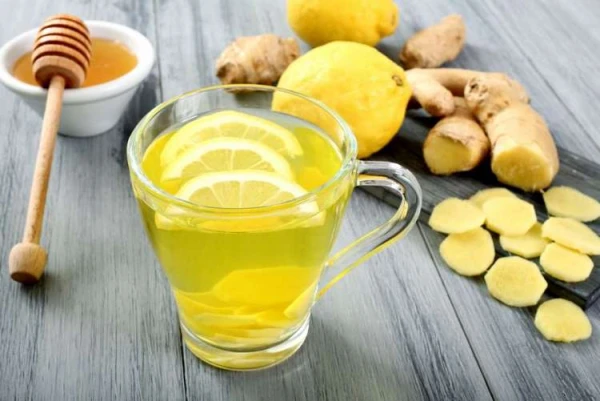
Ginger root is rich in vitamins, macro- and microelements, as well as amino acids. Its characteristic sharp aroma is due to the presence of essential oil (1.2-3%). This composition makes ginger a true treasure trove of beneficial substances necessary for maintaining health.
Ginger essential oil is an excellent immune stimulant, often used for colds as well as bronchial and lung diseases. Ginger helps improve digestion, activates the production of gastric juice, normalizes blood circulation, and has diaphoretic, analgesic, expectorant, and antiemetic effects. In terms of beneficial substances, ginger is close to garlic — it also destroys microbes and enhances the body's defenses against infections, but it does not have such a sharp smell and aftertaste, and its use is much broader: it can be used in both desserts (candies, gingerbread, pies, jams) and beverages.
Ginger: Health Benefits and Contraindications for Men and Women
Modern research on the medicinal properties of ginger is mainly conducted by Indian specialists. Most materials about ginger are published in foreign languages. To find out if you can consume ginger (for example, with hypertension) and in which cases it is contraindicated, it is best to consult your doctor. However, foreign studies show a positive effect of ginger on the stomach (for example, in dyspepsia), as well as on the digestive and respiratory systems. There are also cases of successful treatment of colds in children over 3 years old, but in such cases, the concentration of ginger is reduced by half.
Nevertheless, Indian specialists warn that ginger should be taken with caution in cases of bleeding and peptic ulcer disease, as it may increase the acidity of gastric juice.
Ginger is contraindicated for women in the late stages of pregnancy.
We remind you that ginger is available not only in fresh form but also as a powder. Fresh ginger has a more vibrant aroma, while dried ginger is sharper. We offer several time-tested recipes.
Ginger for Colds
In India, ginger tea is the most popular winter beverage, and many add a bit of ginger to coffee. Ayurveda enthusiasts praise it tirelessly. However, their recipes sometimes contain more ingredients.
At the very onset of a cold, try the following ginger drink recipe with spices:
3 tablespoons of grated ginger (the skin should be slightly scraped off, as all the main substances are in it), 9 cardamom seeds (for wet cough, you can add 9 cloves and 1 teaspoon of cinnamon, and for dry cough — 2 teaspoons of marshmallow root powder) placed in a pot. Pour in 3 cups of boiling water and simmer on low heat for 10 minutes. Then remove from heat and strain, pouring into a thermos. Divide the resulting portion into 4 parts and drink throughout the day — after meals, warm, adding 1 teaspoon of ghee (or 1 tablespoon of thick cream) and 1 teaspoon of honey (if allergic to honey, replace it with cane sugar) to 1 cup.
For those who prefer something “spicier” — a hotter ginger tea recipe with honey:
Take 2 grams each of ginger powder, red chili pepper, and turmeric, boil for 1–2 minutes in 1 cup of milk. Drink 3 times a day with honey and butter.
Ginger Bath for Colds
You can also take a ginger bath for colds. It works similarly to a mustard powder bath. For a ginger bath, take 2–3 tablespoons of ginger powder, boil for 5 minutes in 1 liter of water, and pour the prepared broth into a warm water-filled bath. Lie in it for 15 minutes and get out without taking a shower. Pat your body dry with a towel and lie down under a warm blanket.
Ginger for Stomach Disorders
Dilute a cup of natural bio-yogurt with warm drinking water in a 1:1 ratio. This will result in a consistency similar to low-fat kefir. Add 1/4 teaspoon of ginger powder and 1/4 teaspoon of nutmeg. Take it in the morning before meals. This remedy helps with bloating and dyspepsia, and is also a supportive diet after gastrointestinal disorders.
Ginger for Weight Loss
Ginger tea combined with lemon balm — ATTENTION, GIRLS! — helps suppress cravings for sweets. To control appetite, you can drink tea prepared according to the following recipe 15 minutes before meals:
Pour 1 teaspoon of crushed ginger root with a cup of boiling water. Add 1 teaspoon of honey, a slice of lemon, and a couple of fresh mint leaves.
Pain Relief with Ginger
The balm “Golden Star” helps many with headaches, especially in the temple area. To avoid the sharp smell of camphor, replace it with a ginger remedy. Try grating ginger finely and mixing it with warm water to a paste-like consistency. Apply the paste evenly on gauze, lie down, and place it on the painful areas: on the temples, in the center of the forehead. After a while, the burning sensation will pass — ginger does not cause burns, irritations, or redness.
For lower back pain, a ginger compress is made. To prepare it, take 2 teaspoons of ginger powder, 1 teaspoon of turmeric, and 1/2 teaspoon of chili pepper. Mix the powders with warm water to a paste consistency. Apply the mixture to a cotton cloth, place it on the painful area, and wrap it with something like a sash to ensure the compress fits snugly against the painful spot.








Leave a comment